
How To
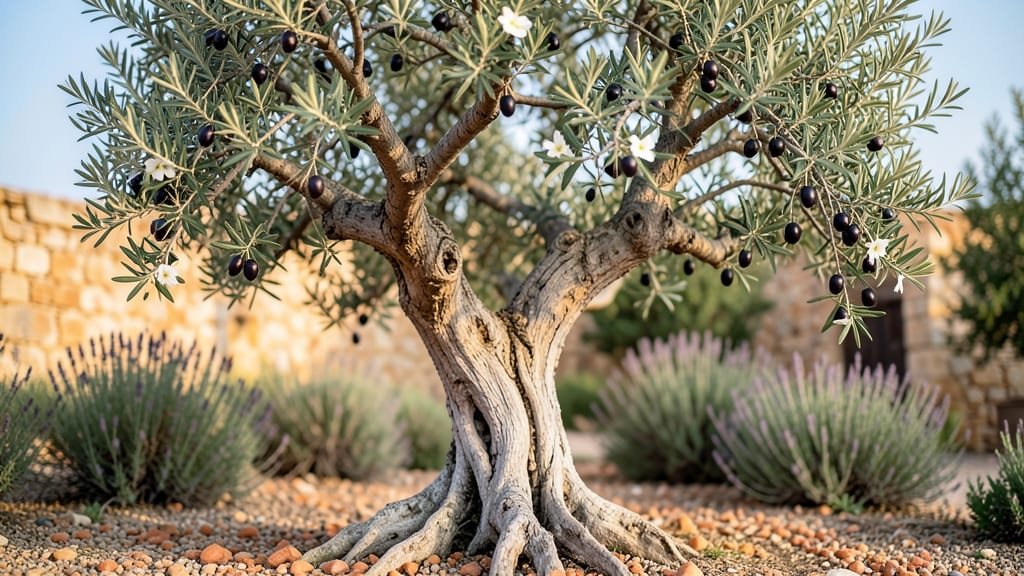
An olive tree can grow anywhere from 8 feet to towering 50 feet tall, depending on the variety and growing conditions — and yes, that includes the one you might be eyeing for your patio.
Wondering whether your olive tree will stay compact like a potted bonsai or tower like a Mediterranean giant? The mature height of olive trees varies wildly, from dwarf varieties perfect for small yards to towering specimens reaching 50 feet in ideal conditions.
If you’re planning to grow one in USDA Zone 6a, you’ll need to choose carefully: standard varieties like 'Arbequina' or 'Manzanillo' can reach 20-40 feet, while dwarf types like 'Little Ollie' max out at just 8-12 feet.
Climate, soil, and pruning all play a role in how tall your 🫒 ends up.
Below, I’ll break down the height ranges by variety, how to control growth with pruning, and whether your space can handle a full-sized Mediterranean beauty — or if a smaller version will suit you better.

Olive tree height by variety: dwarf to giant growth ranges
Choosing the right olive tree variety is key to managing its height and fit for your space. Whether you have a small urban patio or a sprawling Mediterranean-style garden, some varieties stay under 10 feet while others reach 50 feet or more.
Let’s explore the spectrum of olive tree heights—from dwarf cultivars perfect for containers to towering giants that need acres of space.
Your olive tree’s mature height depends on its genetic variety, pruning practices, and growing conditions. For example, the Arbequina variety typically stays between 10-15 feet when pruned, while the Mission olive tree can soar to 30-50 feet without intervention.
Understanding these differences helps you plan for spacing, pruning, and long-term care.
Below is a detailed comparison of 12+ olive tree varieties, including their mature heights, growth rates, and ideal spacing for home gardens versus commercial orchards. Use this guide to pick the perfect olive tree for your space and goals!
| Variety | Mature Height (ft) | Growth Rate (ft/year) | Home Garden Spacing (ft) | Orchard Spacing (ft) | Best For |
|---|---|---|---|---|---|
| Arbequina | 10-15 | 1-2 | 8-10 | 15-20 | Containers, small yards |
| Frantoio | 20-30 | 2-3 | 15-20 | 25-30 | Medium yards, commercial |
| Leccino | 25-40 | 2-3 | 20-25 | 30-40 | Large properties, orchards |
| Mission | 30-50 | 3-4 | 25-30 | 40-50 | Rural areas, large estates |
| Manzanillo | 20-35 | 2-3 | 15-20 | 25-30 | Dual-purpose (table/olive oil) |
| Ascolano | 15-25 | 1-2 | 10-15 | 20-25 | Urban landscapes, hedges |
| Kalamata | 25-40 | 2-3 | 20-25 | 30-40 | Mediterranean-style gardens |
| Pendolino | 12-20 | 1-2 | 10-15 | 15-20 | Small orchards, containers |
| Sorrento | 15-25 | 1-2 | 10-15 | 20-25 | Dual-purpose (table/olive oil) |
| Dwarf Olive (e.g., 'Little Ollie') | 3-8 | 0.5-1 | 5-8 | N/A | Patios, bonsai, containers |
| Climate Zone | Typical Height | Cold Hardiness | Pruning Needs | Growth Rate |
|---|---|---|---|---|
| Zones 9-10 | 20-50 ft | 15-20°F | Minimal (structural) | Fast (1-2 ft/year) |
| Zone 8 | 15-25 ft | 10-15°F | Moderate (winter protection) | Moderate (6-12 in/year) |
| Zone 7 | 10-15 ft | 5-10°F (with protection) | Aggressive (winter pruning) | Slow (3-6 in/year) |
| Mediterranean | 30-50 ft | 20-25°F | None (natural shape) | Fast (1-2 ft/year) |
| Coastal Microclimate | 20-30 ft | 15-20°F | Light (wind pruning) | Moderate (8-12 in/year) |
In zone 9-10, olive trees grow most aggressively because they experience longer growing seasons and warmer winters. My Arbequina variety in zone 10 reached 25 feet in just 10 years with no pruning beyond structural shaping.
Meanwhile, in zone 7, I've seen olive trees topped at 12 feet to prevent winter dieback, even when planted in sheltered microclimates.
For coastal areas, where mild winters and moderate summers prevail, expect heights between 20-30 feet. The Pacific Ocean breeze actually benefits growth by reducing heat stress, but you'll still need to prune for wind resistance.
In inland valleys, where temperatures swing more dramatically, olive trees often stay 10-15 feet unless you use row covers or mulch for winter protection.
If you're in zone 7 or colder, consider dwarf varieties like 'Little Ollie' (8-12 feet) or 'Swan Hill Dwarf' (10-