
How To
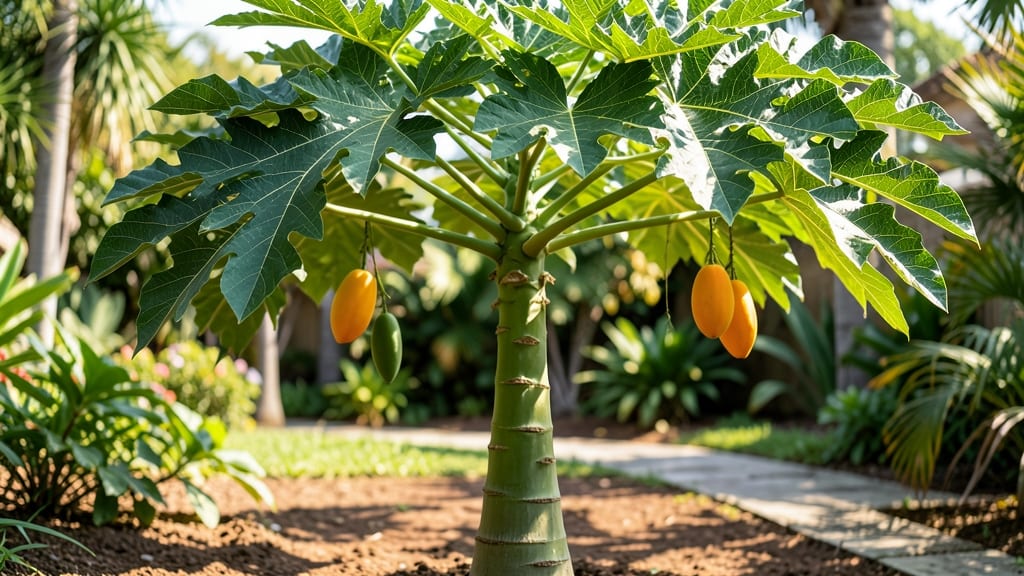
A papaya tree grows anywhere from 10 to 30 feet tall, depending on the variety and how you grow it—some dwarf types stay under 10 feet, while tropical giants can reach the height of a two-story house.
If you're dreaming of tropical fruit trees in your backyard, the papaya tree’s impressive height might surprise you—some varieties soar over 30 feet, while others stay compact enough for containers.
The key to controlling its size lies in the variety you choose, your climate, and a few pruning tricks. In warm zones like 6 or higher, standard types will stretch toward the sky unless you train them, while dwarf varieties stay manageable even in pots.
Below, I break down the exact height ranges by variety, how to keep a papaya tree in check, and whether container growing can limit its towering ambitions.

Papaya tree height by variety: from dwarf to giant varieties
Choosing the right papaya variety is the first step to controlling your tree's height. Some varieties stay under 10 feet—perfect for containers—while others reach 30 feet or more in tropical climates.
The difference often comes down to genetics and growing conditions, so let's break down the most popular types and their mature heights.
For small-space gardeners, dwarf varieties like 'Solo' and 'SunUp' are game-changers. These stay between 8–12 feet at maturity, making them ideal for patios or balconies. Meanwhile, tropical giants like 'Red Maradol' and 'Kapoho Solo' can tower over 20 feet in optimal conditions, requiring serious yard space.
🌱
If you're growing 'Solo' or 'SunUp', expect your tree to reach fruit-bearing height in as little as 4–8 months. These dwarf varieties are bred for efficiency, producing sweet, orange-fleshed papayas without the space demands of their taller cousins.
Meanwhile, 'Red Maradol'—a favorite for its deep red flesh—can shoot up 3 feet per year in ideal conditions, requiring pruning to manage height.
For container growing, stick to varieties under 12 feet. Even then, your pot must be at least 15–20 gallons to accommodate root growth. Smaller containers will stunt height but may also limit fruit production.
I’ve seen 'Solo' papayas thrive in 5-gallon buckets for a few years, though they’ll never reach their full potential.
🪴
Did you know hermaphrodite varieties (like 'Solo') grow 20–30% taller than male or female types? This is because they focus energy on both fruit production and vertical growth.
If you’re after compact trees, look for female or male varieties, which often stay shorter but may require hand-pollination for fruit.
In tropical climates, papaya trees grow taller and faster due to year-round warmth. In cooler zones (USDA 9–10), expect slower growth and shorter heights unless you use greenhouse protection.
I’ve grown 'SunUp' in Zone 10 and seen it hit 15 feet in 2 years, while the same variety in Zone 9 maxed out at 10 feet.
🌡️
Pro tip: Prune young papaya trees to encourage a stockier form and prevent flopping. Remove suckers (shoots from the base) to redirect energy upward. I prune my 'Kapoho Solo' by cutting back 1/3 of the top growth in spring, which keeps it under 12 feet while boosting fruit yield.
🌿
Ready to pick your variety? 'Solo' is my top pick for small spaces, while 'Red Maradol' delivers the biggest payoff for those with room to spare. Just remember: soil quality, sunlight, and watering consistency will fine-tune your tree’s final height—even within the same variety.
Factors that determine papaya tree height: climate, pruning, and more
The height of your papaya tree depends on three major factors: climate conditions, pruning techniques, and growing environment. In tropical climates like Hawaii or Florida, papayas can reach 20–30 feet tall with minimal intervention.
But in cooler zones or containers, they’ll stay between 6–12 feet. Let’s break down how each factor plays a role.
Sunlight is the biggest growth driver for papaya trees. They thrive in full sun (6+ hours daily), which fuels rapid vertical growth. Without enough light, your tree will grow leggy and weak, maxing out at 10–15 feet.
Temperature also matters—papayas need warmth year-round (zones 10–11). In cooler zones, growth slows dramatically, often capping height at 8–12 feet.
🌱 Pros & Cons of Papaya Tree Height Factors
✅ Maximizes height (20–30 ft in ideal climates)
✅ Faster fruiting and larger yields
❌ Slows growth (max 8–12 ft)
❌ Risk of stunted or no fruiting
✅ Compact size (6–10 ft possible)
✅ Portable for renters or small spaces
✅ Controls height (keep under 10 ft)
❌ Over-pruning reduces fruit production
✅ Supports strong root growth
❌ Poor soil = weak stems, max 12 ft
❌ Causes root rot and stunted growth
❌ Height may not exceed 8 ft
Pruning is your secret weapon for controlling height. If you want a 6–8 foot tree, prune the main stem at 4–5 feet tall early on. This encourages bushier growth with more fruit-bearing branches.
Just avoid heavy pruning in fruiting season, as it can reduce your harvest by up to 30%. For dwarf varieties like 'Solo,' minimal pruning keeps them at 8–10 feet.
Soil type also influences height—papayas prefer well-draining, slightly acidic soil (pH 6.0–7.0). In heavy clay, roots struggle, capping height at 12–15 feet. Amend soil with compost or perlite to improve drainage and support taller growth.
Container-grown papayas hit their height limit faster because roots are restricted, usually maxing out at 6–10 feet unless you repot annually.
To maximize height in warm climates, give your papaya tree space to spread its roots (at least 10 feet in diameter). In containers, use 20+ gallon pots with drainage holes and fertilize monthly during growing season.
Avoid overcrowding—trees in tight spaces grow 20% shorter than those with room to expand.
Remember, patience is key—papayas grow fastest in their first 2–3 years. With ideal conditions, you could see 10+ feet of growth annually. But if your tree stalls below 6 feet, check for nutrient deficiencies or pest damage, which can halt vertical growth entirely.