
How To
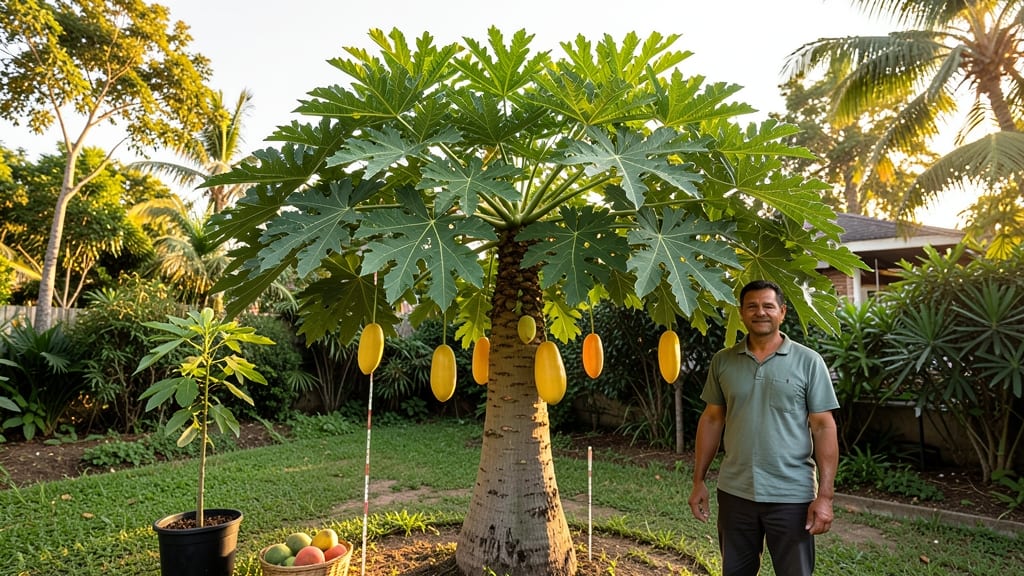
A papaya tree can grow 10 to 30 feet tall—taller than most backyard fences—depending on the variety and growing conditions.
Wondering if your backyard can accommodate a towering papaya tree? These tropical giants can reach heights that surprise even experienced gardeners—some varieties stretching over 30 feet when grown in ideal conditions.
For home gardeners in USDA zones 10-12, where frost is never a concern, the 🍈 papaya tree thrives year-round, shooting up quickly in the right soil and climate.
But even in cooler microclimates, dwarf varieties (though rare) can stay manageable, while standard types like Solo or SunUp will demand space.
Below, I’ll break down how fast they grow, which varieties stay compact, and the simple tricks to control their height—so you can enjoy those sweet, tropical fruits without sacrificing your lawn.

Papaya tree height stages by variety: from seedling to mature tree
If you're dreaming of growing your own papaya tree, understanding its growth stages will help you plan your garden space and care routine. Papaya trees (Carica papaya) are fast growers, but their final height varies dramatically by variety and growing conditions.
Some dwarf varieties stay under 10 feet, while tropical giants can soar to 30 feet or more with proper care. Let's explore how these tropical trees grow from tiny seedlings to towering fruit producers.
The first 12 months are critical for establishing your papaya tree's structure. During this period, you'll see rapid vertical growth, especially with varieties like Red Maradol or SunUp. Even dwarf varieties like Solo will reach impressive heights if given ideal conditions.
Understanding these growth stages helps you anticipate pruning needs, support requirements, and when to expect your first harvestable fruit.
🌱
| Variety | 3 Months | 6 Months | 12 Months | 24 Months | Mature Height |
|---|---|---|---|---|---|
| Solo | 1-2 ft | 3-5 ft | 6-8 ft | 10-12 ft | 12-15 ft |
| SunUp | 1.5-2.5 ft | 4-6 ft | 8-10 ft | 14-18 ft | 18-22 ft |
| Red Maradol | 2-3 ft | 5-7 ft | 10-12 ft | 18-22 ft | 25-30 ft |
| Tropical Giant | 2.5-3.5 ft | 6-8 ft | 12-15 ft | 22-26 ft | 30+ ft |
The Solo variety is often called a "dwarf" papaya, but don't let the name fool you—it still reaches 12-15 feet at maturity. This makes it perfect for small backyards or container growing if you use large pots and prune regularly.
The Solo's rapid early growth means you'll see 3-5 feet of height by 6 months, so plan your space accordingly. I've seen Solo trees in USDA Zone 10 gardens produce fruit within 9 months of planting.
For those with more space, SunUp and Red Maradol varieties offer dramatic height increases. The Red Maradol, known for its vibrant red fruit, can grow 2-3 feet in just 3 months and reach 10 feet by 12 months.
This variety's tropical origins mean it thrives in high humidity and warm temperatures, which accelerates its growth rate. If you're growing in Zone 11 or higher, expect even faster growth due to longer growing seasons.
🌿
At 24 months, most papaya varieties have established their mature growth patterns. The Red Maradol
Climate zones that maximize papaya tree height growth
Papaya trees thrive in warm climates, but their height potential varies dramatically between USDA zones 10-12 and true tropical environments.
In tropical climates like Hawaii or Southeast Asia, these trees can reach 25-30 feet with ideal conditions, while even the warmest USDA zones (10-12) may only see 15-20 feet without extra care.
The difference comes down to temperature consistency, humidity levels, and seasonal growth patterns—all of which directly impact vertical growth.
In USDA zones 10-12, papayas experience milder winters and cooler nights, which can slow growth during fall and winter months. However, with proper microclimate management—like windbreaks, mulching, and winter protection—you can push heights closer to tropical levels.
Meanwhile, in true tropical zones, the year-round warmth and high humidity create perfect conditions for rapid, uninterrupted growth.
| Climate Type | USDA Zone | Avg. Temp (°F) | Humidity (%) | Mature Height (ft) | Growth Season |
|---|---|---|---|---|---|
| Tropical (e.g., Hawaii, Southeast Asia) | N/A (Zone 12+) | 75-90°F | 70-90% | 25-30 ft | Year-round |
| USDA Zone 11 (e.g., Southern Florida, Puerto Rico) | 11 | 65-85°F | 60-80% | 18-22 ft | Spring-Fall |
| USDA Zone 10 (e.g., Southern California, Arizona) | 10 | 55-80°F | 50-70% | 12-18 ft | Spring-Summer |
| USDA Zone 9b (e.g., Coastal North CA, South Texas) | 9b | 45-75°F | 40-60% | 8-12 ft | Summer Only |
The temperature threshold for optimal papaya growth is 65°F+ consistently. Below 55°F, growth stalls completely, and temperatures under 40°F will kill the tree.
In USDA zone 10, where winters dip into the 50s°F, papayas often shed leaves and grow only 6-12 inches per month during cooler seasons. In contrast, tropical zones see 12-24 inches of growth per month year-round due to stable warmth and high humidity.
Humidity plays a critical role in height growth. Papayas thrive in 70%+ humidity, which is common in tropical climates. In USDA zone 11, where humidity drops to 60-70%, you’ll need to mist leaves daily or use a humidifier to maximize growth.
Without this, trees may develop leaf curl and stunted growth, limiting heights to 15-18 feet even with ideal sunlight.
Seasonal growth patterns also differ drastically. In tropical climates, papayas grow continuously, with flowering and fruiting happening year-round. In USDA zone 10-11, growth peaks in summer (June-August) when temperatures stay above 75°F, but slows in winter (December-February).
To maximize height, prune lightly in late winter to redirect energy into spring growth spurts, which can add 3-5 feet if conditions are ideal.
For gardeners in USDA zones 10-12, the key to maximizing height lies in microclimate control. Use black plastic mulch to warm soil, windbreaks to retain heat, and drip irrigation to maintain moisture.
With these adjustments, you can push heights to 20+ feet—closer to tropical levels—even in cooler subtropical zones. The payoff? A taller, more productive papaya tree with bigger fruit and faster growth.