
Pruning
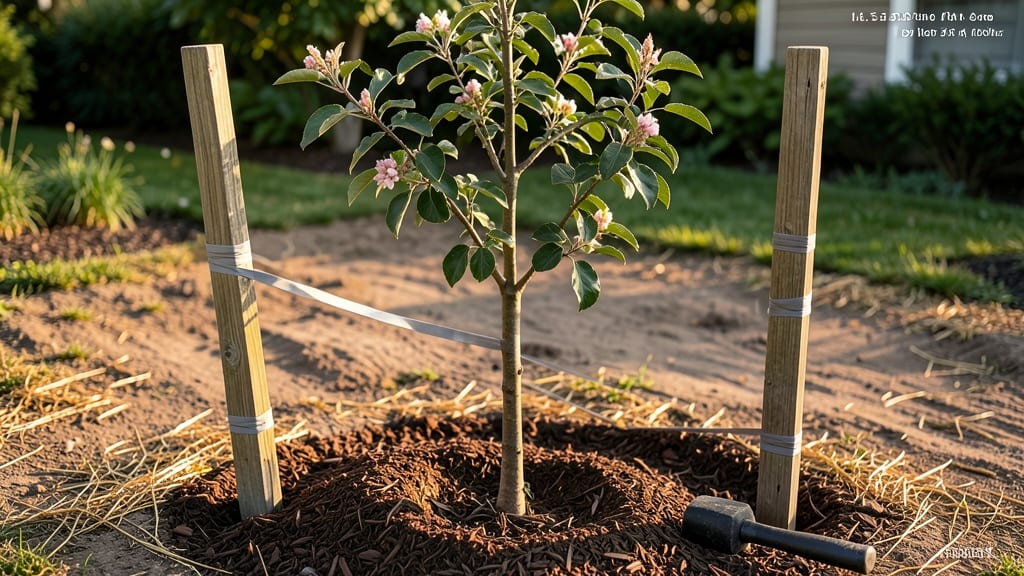
Staking a tree with just two stakes creates a surprisingly strong wind-resistant system. 🌳 I learned this after watching my first sapling lean dangerously in a spring storm—until I added diagonal supports that actually worked.
The key is positioning those stakes at 45-degree angles from opposite directions, forming an invisible triangle with the trunk. You’ll need two 4-foot wooden stakes, soft tree ties (not wire), a mallet, and a level.
Drive one stake into the ground 12-18 inches from the trunk on the windward side, then mirror it on the opposite side. The stakes should slope outward from the base, creating tension when tied to the trunk—this prevents the tree from rocking while still allowing natural movement.
After securing with ties (never too tight), check the tree’s stability by gently pushing it. You should feel slight resistance, not rigidity. The goal is to mimic how trees grow in nature: flexible enough to sway, but anchored enough to stay upright during storms.
This method works for young fruit trees, shade trees, and even newly transplanted large specimens. Remove the stakes after 1-2 growing seasons, when the tree’s root system has strengthened.
The diagonal setup lets you remove them gradually—just loosen one tie at a time over a few weeks so the tree adjusts. Pro tip: Paint stake tops with reflective tape to spot them in tall grass or mulch later.
📚 In This Guide
- What you need
- Instructions
- Tips and common mistakes
- Wrapping up and next steps
What you need
- ● 2 Tree Stakes: Made of galvanized steel or treated wood (to prevent rust or rot).
- ● Diameter: ½ to ¾ inch (thick enough for stability but not bulky).
- ● Length: 4 to 6 feet (adjust based on tree height and soil depth).
- ● Tree Tie or Soft Restraint: Wide, non-abrasive fabric strip (e.g., tree tape, burlap, or rubberized strap).
- ● Width: 1 to 2 inches (to avoid girdling the trunk).
- ● Shovel or Auger: For digging holes 12–18 inches deep (depending on stake length).
- ● Measuring Tape or Ruler: To ensure stakes are placed at the correct angle and distance.
- ○ Hammer or Mallet: For driving stakes into the ground (optional if stakes are lightweight).
- ● Gloves: To protect your hands while handling stakes or soil.
- ● Tree Stake Spreader: A tool to create a wider base for stakes (improves stability).
- ● Soil Conditioner: Like compost or sand, to improve drainage around stake holes.
- ● Reflective Tape: If staking near roads or trails, to increase visibility.
- ● Extra Stakes or Ties: In case of adjustments or future use.
Step-by-Step instructions for diagonal tree staking
Here's how I brace young trees with just two stakes for maximum stability—no over-engineering, just solid support.
🌱 Step 1: Choose the Right Stakes and Locate Anchors
Use 4-6 foot wooden or metal stakes—long enough to extend 12-18 inches below the soil line for solid anchoring. I always position them 6-12 inches from the trunk, angled outward at about 45 degrees from the base. This diagonal placement creates a natural triangle of support that resists wind better than straight stakes.
Drive the first stake into the ground on the tree's windward side (the direction the wind most commonly blows from). Tap it in firmly with a mallet until only 6-8 inches remain above ground. The second stake goes on the leeward side, completing your diagonal brace. If your yard has inconsistent wind patterns, position stakes at 90-degree angles instead—this works almost as well.
🪴 Step 2: Attach the First Stake with Flexible Strapping
Wrap a 3-4 inch wide tree tie around the trunk at 12-18 inches above ground level. I use soft, recycled rubber or fabric ties because they won't cut into the bark as the tree grows. Attach one end of the tie to the first stake using a metal buckle or screw—this keeps tension adjustable as the tree thickens.
Pull the tie snug but not tight—you should be able to fit two fingers between the tie and the trunk. The stake should lean slightly away from the tree when attached, creating a natural give that prevents stem damage. If the stake feels loose after attaching, drive it another inch deeper before moving to the second side.
✂️ Step 3: Mirror the Second Stake for Balanced Support
Repeat the process on the opposite side, attaching the second stake at the same height and angle. The two stakes should form a diamond shape when viewed from above, with the tree trunk at the center. This configuration distributes wind pressure evenly and prevents the tree from rocking in one direction.
Here's the thing—I always double-check the tension by gently pushing the tree trunk toward each stake. It should move no more than 1-2 inches before meeting resistance. If it sways too much, tighten the ties slightly. If it barely moves, loosen them. The goal is just enough support to prevent uprooting without restricting natural movement.
💧 Step 4: Secure the Top of the Stakes for Wind Resistance
Connect the tops of both stakes with a horizontal crosspiece—I use either a short piece of wood or a metal rod screwed into each stake. This creates a rigid triangle that won't collapse under wind pressure. Position the crosspiece 12-18 inches above the tree tie so it doesn't interfere with the tree's growth.
For extra security in storm-prone areas, I add a third diagonal brace between the stakes about halfway up. This isn't required but gives peace of mind during high winds. After securing everything, do a final check by gently tugging each stake—it should feel firmly planted with no wobble.
⏰ Step 5: Monitor and Adjust Over Time
Check the stakes every 4-6 weeks during the first growing season. As the tree grows, the ties will naturally loosen, and you'll need to retighten them. I mark the trunk height with a pencil when I first install the stakes so I can see how much the tree has grown.
Remove the stakes after 1-2 years unless the tree is particularly top-heavy or in a windy location. You'll know it's time when the trunk is half the diameter of the stake—at that point, the tree can support itself. If you leave stakes on too long, they can girdle the trunk as it thickens, causing permanent damage.
Tips & tricks for perfect diagonal tree staking
These simple adjustments will help you avoid common mistakes and create a sturdy support system that lasts.
Angle Matters: The 45-degree angle for your stakes isn't just arbitrary—it's the sweet spot for wind resistance. If you're working with a particularly flexible tree, you can increase the angle slightly to 50-55 degrees to give it more room to sway naturally. This prevents the stakes from becoming a rigid barrier that could damage the trunk during storms.
Tie Tension Test: When you're checking the tension in Step 3, here's a trick: after you push the trunk toward each stake and it moves 1-2 inches, give it a gentle sideways wiggle. The tree should resist but still have some give—like a gentle push on a swing. Too much movement means the stakes need to be tighter; no movement at all means you're restricting growth. Between us, this is where most people go wrong!
Material Matters: While wooden stakes are classic, metal ones actually provide better long-term stability because they don't rot. If you're using wood, treat it with a non-toxic preservative to extend its life. For the crosspiece in Step 4, I've found that galvanized metal rods last longer than untreated wood, especially in wet climates. The 12-18 inches above the tree tie is perfect—any lower and it might interfere with the tree's natural movement.
Pro Tips for Stake A Tree With 2 Stakes
- These simple adjustments will help you avoid common mistakes and create a sturdy support system that lasts.
- Angle Matters: The 45-degree angle for your stakes isn't just arbitrary—it's the sweet spot for wind resistance.
- Tie Tension Test: When you're checking the tension in Step 3, here's a trick: after you push the trunk toward each stake and it moves 1-2 inches, give it a gentle sideways wiggle.
Frequently asked questions
Got questions about staking trees with just two stakes?
You’re in the right place! Here are answers to the most common concerns—from timing to troubleshooting—so you can tackle this project with confidence.
How deep should the stakes go when staking a tree with two stakes?
Stakes should be driven at least 12–18 inches deep into the soil to provide stability without damaging roots. For young trees, 1/3 of the stake’s length should be buried; for larger trees, aim for half the stake’s length. Angle them diagonally (like an "X") for better wind resistance.
When is the best time to stake a tree with two stakes?
Stake a tree immediately after planting or when you first notice leaning (e.g., after a storm). Avoid staking in winter—roots need time to establish. If staking an established tree, do it in early spring or fall to minimize stress.
What if my tree is already leaning heavily? Can two stakes fix it?
Two stakes can correct moderate lean (up to 30°), but severe leans may need three stakes or guy wires for support. If the tree is top-heavy or uprooted, consult an arborist—staking alone might not be enough. Start with loose ties to avoid girdling.
How often should I check the stakes and ties?
Inspect stakes and ties every 4–6 weeks for loosening, rubbing, or signs of stress (e.g., bark damage). Adjust ties as the tree grows—use soft materials (e.g., rubber straps, burlap) and avoid metal that can cut into the trunk. Remove stakes after 1–2 years to prevent dependency.
What if I don’t have two stakes? Can I use alternatives?
Yes! Use tree ties + a single stake on the windward side or guy wires anchored to a post. For small trees, burlap strips or old pantyhose can replace ties. Avoid wire or rope—they can gouge bark. Get creative with PVC pipes or even sturdy branches if stakes aren’t available!
Wrapping up and next steps
Staking a tree with just two stakes using diagonal bracing is a simple yet effective way to ensure stability without restricting growth. This method provides wind-resistant support while allowing natural movement, promoting stronger roots over time.
Whether you're a seasoned gardener or a beginner, this technique is easy to master—just follow the steps, and your tree will thrive!
Now that you’re ready to stake like a pro, pick your next tree and give it the support it deserves! 🌳💪 For extra tips, check out our guide on when to remove stakes—because a well-supported tree is a happy tree!