
Pruning
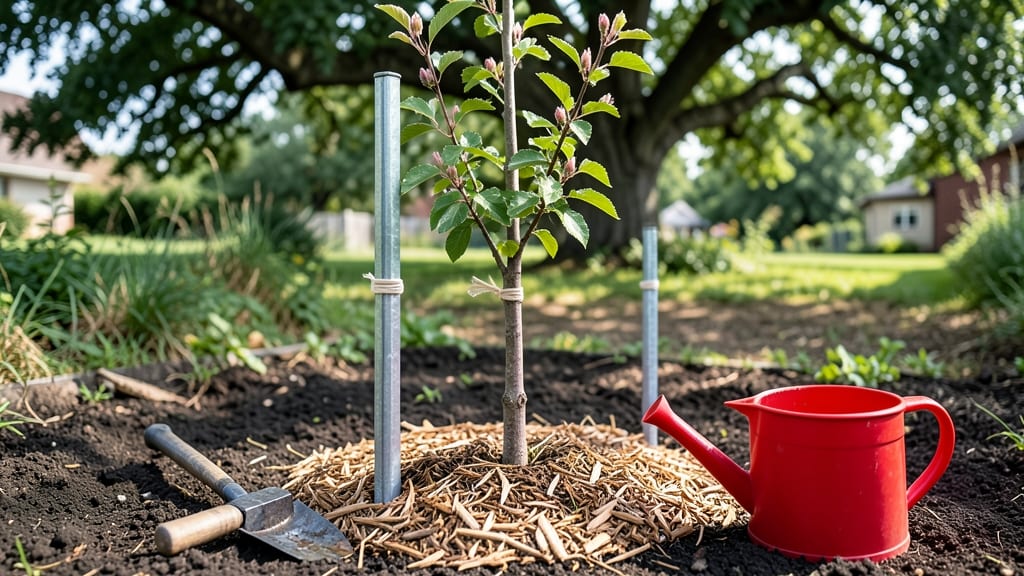
Three stakes make all the difference when a young tree teeters in the wind. 🌳 I’ve seen saplings snap at their base because they weren’t properly supported—and this method prevents that. The key lies in strategic placement and gentle restraint that lets the tree grow strong, not stunted.
You’ll need three 4-foot wooden or metal stakes, tree ties (not wire), and a mallet. Drive two stakes on opposite sides of the tree, about 18 inches from the trunk and angled outward.
The third stake goes on the windward side, creating a triangle of support that resists sway. Avoid burying stakes too deep—they should hold firm but not strangle roots.
Once staked, tie the tree loosely to the stakes at three points: near the top, middle, and base. Check ties monthly—they should allow slight movement so the tree develops resilience. When the trunk is thicker than your thumb (usually 1-2 years), it’s time to remove stakes gradually to avoid shock.
This method works for almost any young tree, from fruit-bearing varieties to ornamental shade trees. The goal isn’t permanent crutches—it’s giving your tree the confidence to stand tall on its own. Here’s how to do it right the first time.
📚 In This Guide
- What you need
- Instructions
- Tips and common mistakes
- Wrapping up and next steps
What you need
- ● 3 Wooden stakes: 2–3 feet long, ½-inch to ¾-inch diameter (cedar or treated wood recommended for longevity).
- ● Tree tie material: 1 roll of soft tree tie straps (1-inch wide, 10–15 feet long) OR 3–4 feet of wide, stretchy fabric strips (no metal—it can damage bark!).
- ● Mallet or hammer: Rubber-headed for gentle tapping (avoid metal to prevent stake splitting).
- ● Measuring tape or ruler: For precise stake placement (6–12 inches from the tree base).
- ● Shovel or auger: To dig holes for stakes (depth: 1/3 of stake length).
- ● Gloves: Work gloves to protect hands from splinters and dirt.
- ● Stake caps or caps: Plastic or rubber tips to protect stake tops from moisture.
- ● Tree guard or collar: A wrap around the trunk base to prevent tie damage.
- ● Waterproof tape: To secure loose ends of fabric ties.
- ● Level or string line: For ultra-straight stake alignment (especially for multiple trees).
Step-by-Step instructions for staking a tree with 3 stakes
Here's how I secure young trees for strong, wind-resistant growth without damaging roots.
🪴 Step 1: Choose the Right Stakes and Locate Planting Spots
Use three 6-foot wooden or metal tree stakes—one in front, one behind, and one on the side opposite the prevailing wind. Drive the front and back stakes about 12 inches from the trunk, angled slightly outward to form a triangle. The side stake should go 18-24 inches away to create a stable base.
I like to mark stake positions with a spray of soil before planting. This ensures the stakes won't interfere with roots once the tree is in the ground. For windy areas, add a fourth temporary stake on the windward side during storms until the tree establishes.
✂️ Step 2: Plant the Tree and Position the Stakes
Dig the hole twice as wide as the root ball but no deeper. Place the tree so the top of the root ball sits 1-2 inches above ground level—this prevents rot. Backfill with native soil, tamping gently to remove air pockets. While the roots settle, position the three stakes around the tree.
Here's the thing—don't drive stakes in until after backfilling. You'll disturb the soil and risk damaging roots. Instead, hold them loosely in place while you water the tree deeply to eliminate air gaps. Watch for soil settling around the base; this tells you when to secure the stakes permanently.
🌱 Step 3: Attach Stakes With Flexible Ties
Use wide, stretchy tree ties (never wire or twine—they cut into bark as the tree grows). Loop one tie around the trunk and the front stake, then crisscross to the back stake, creating an "X" pattern. Repeat with the side stake, positioning it slightly higher than the front/back ties to guide upright growth.
Leave 1-2 inches of slack in each tie—the tree will sway naturally as it grows, and the ties should only tighten enough to prevent toppling. I adjust ties every 6-8 weeks during the first year, loosening them as the trunk thickens. Never wrap ties directly around the trunk; they should only contact the stake and trunk at the crossing points.
💧 Step 4: Water and Monitor for Stability
Water the tree deeply after staking to help roots settle into place. The soil should be moist 6 inches down—stick your finger in to check. Mulch around the base with 2-3 inches of organic mulch, keeping it 6 inches away from the trunk to prevent rot.
Watch for the tree leaning into the wind—this is normal. If it starts to pull against the stakes, the ties are too tight. In high-wind areas, I add a fourth temporary stake during storms and remove it afterward. Most trees can be removed from stakes after 1-2 years once roots establish, but some need support for 3-4 years depending on species.
⏰ Step 5: Remove Stakes When the Tree Stands Alone
Test stability by gently pushing the tree at the base. If it doesn't wobble noticeably, it's ready. I remove stakes gradually—first the side stake, then the front and back—over 2-4 weeks to avoid shocking the roots. Cut ties with pruning shears and pull stakes straight up to prevent root damage.
Real talk: Some trees (like willows or poplars) hate staking and grow weaker from it. If you notice yellowing leaves or stunted growth, remove stakes immediately and provide extra support with a windbreak instead. Most fruit trees and young shade trees benefit from this method, though—just give them time to find their footing.
Tips & tricks for perfect tree staking
These simple tricks will help you avoid common mistakes and get the best possible support for your young trees.
Stake Placement Precision: In Step 1, when positioning your 6-foot stakes, imagine forming an equilateral triangle with the tree at the center. The front and back stakes should be exactly 12 inches from the trunk, while the side stake at 18-24 inches creates that crucial stability base. I mark these positions with a spray of soil before planting—this visual guide prevents misplacement that could stress the roots later. The slight outward angle of front/back stakes also helps prevent wind from pushing the tree into the stakes.
Timing Secret: The instructions mention waiting until after backfilling to drive in stakes, but here's what nobody tells you—wait until the soil has settled slightly after watering. That first deep watering (Step 2) causes the soil to compact, and driving stakes into freshly compacted soil gives you a much more stable anchor. I wait about 10-15 minutes after watering before securing the stakes permanently, which makes all the difference in high-wind areas.
Tie Technique: When creating that "X" pattern with your wide, stretchy tree ties in Step 3, think of the tree's natural sway. The ties should only contact the stake and trunk at crossing points, never wrap directly around the trunk. I use a simple trick to check proper tension: gently push the tree—if it moves more than an inch, the ties need tightening. But here's the catch: if the tree doesn't move at all, you've gone too tight. That 1-2 inch slack is crucial for healthy growth.
Pro Tips for Stake A Tree With 3 Stakes
- These simple tricks will help you avoid common mistakes and get the best possible support for your young trees.
- Stake Placement Precision: In Step 1, when positioning your 6-foot stakes, imagine forming an equilateral triangle wi...
- Timing Secret: The instructions mention waiting until after backfilling to drive in stakes, but here's what nobody te...
Frequently asked questions
Got questions about staking trees with 3 stakes?
You’re not alone! Here are answers to the most common concerns—from timing to troubleshooting—to help you stake like a pro.
How tight should the stakes be when securing a tree?
The stakes should be snug enough to prevent swaying but not so tight they restrict growth or damage the trunk. Think of it like a gentle hug—firm but flexible. Use a rubber mallet to adjust tension without crushing the bark.
When is the best time to stake a newly planted tree?
Stake your tree immediately after planting to provide support while roots establish (usually 6–12 months). Avoid staking in winter unless heavy snow or wind is expected. Young trees need stability early, but don’t overdo it—remove stakes too soon to encourage natural strength!
Can I use fewer than 3 stakes for a small tree?
For very small trees (under 6 feet), 2 stakes (placed diagonally) may suffice, but 3 stakes offer superior wind resistance and balance. If using 2, ensure they’re positioned at a 45° angle for maximum support. For larger or top-heavy trees, stick with 3!
What do I do if my tree starts leaning even with stakes?
First, check for loose stakes or ties—tighten them immediately. If the tree is still unstable, add a 4th temporary stake on the lean side for extra support. Over time, adjust the ties as the tree grows to prevent girdling. If the trunk is cracked, consult an arborist—it may need professional care.
How long should I leave the stakes on a tree?
Most trees can be unstaked after 1–2 growing seasons (or when roots are firmly established). Test stability by gently pulling the trunk—if it doesn’t budge, it’s time to remove stakes gradually (over 2–4 weeks) to avoid shocking the tree. Never leave stakes on longer than necessary!
Wrapping up and next steps
Staking a tree with just three stakes is a simple yet powerful way to ensure stability and promote healthy growth—especially in windy conditions. By following these steps, you’ll give your young tree the support it needs to stand strong while avoiding common mistakes like over-tightening or improper placement. 🌳✨
Now that you’re equipped with the know-how, take action! Grab your tools, head outdoors, and give your tree the best start. Whether it’s a sapling or a newly transplanted specimen, proper staking today means a thriving tree tomorrow. Happy gardening! 🌱💪