
Pruning
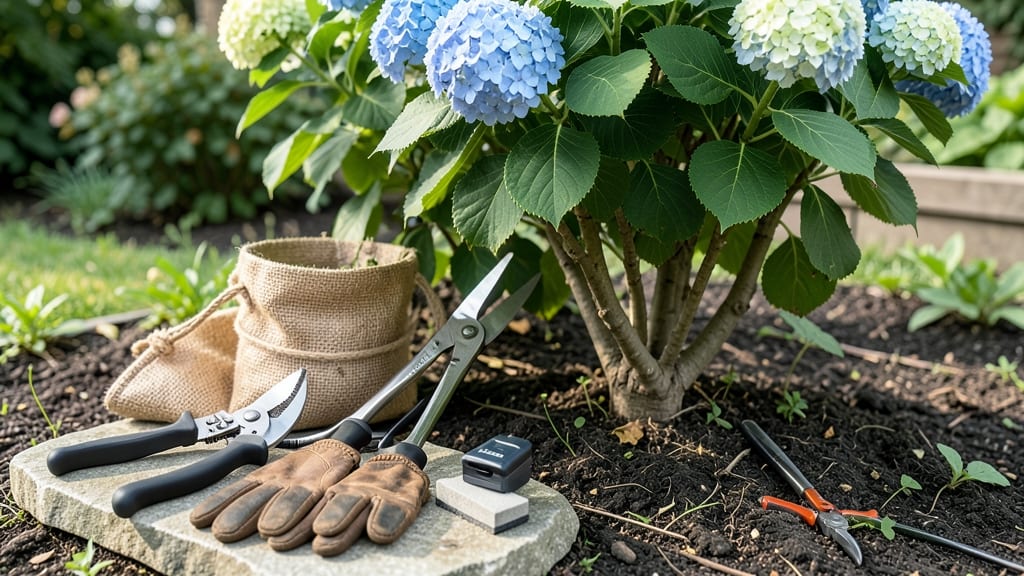
Fall pruning hydrangea trees sets the stage for next year’s showstopping blooms—the difference between sparse stems and lush canopies. I’ve learned that cutting too late risks winter dieback, while pruning too early stunts growth.
The sweet spot? Late fall, after the first frost but before hard freezes, when the plant’s dormant but still resilient. This timing lets you shape the tree without sacrificing next season’s buds.
You’ll need sharp bypass pruners, a ladder for taller trees, and a clear day to avoid spreading disease. Start by removing dead or crossing branches first—these rob energy from healthy growth. Then, thin out crowded stems to improve airflow, which prevents mildew and encourages stronger new shoots.
Think of it like giving your hydrangea a spa day: less clutter means more energy for vibrant blooms.
After pruning, apply a 2-3 inch layer of mulch around the base to insulate roots during winter. Avoid heavy pruning—never cut more than one-third of the tree’s foliage—or you’ll shock the plant.
The goal is refinement, not drastic transformation. By spring, you’ll see fresh green growth where old stems once stood, and by summer, blooms that outshine last year’s.
Regional adjustments matter: In colder zones (4-6), wait until mid-to-late November to avoid early freezes; in milder zones (7-9), prune by early December. Always prune after leaves drop but before the ground freezes solid. This timing ensures your hydrangea enters dormancy with the perfect framework for next year’s glory.
📚 In This Guide
- What you need
- Instructions
- Tips and common mistakes
- Wrapping up and next steps
What you need
- ● Pruning shears – Bypass pruners with sharp, clean blades (4–6-inch size for small branches). ✨ Pro tip: Disinfect blades with rubbing alcohol before and after use to prevent disease spread!
- ● Loppers – Bypass or anvil type (8–12-inch handles) for thicker branches (½–1½ inches).
- ● Pruning saw – Curved-tooth or folding saw for branches over 1½ inches in diameter.
- ○ Extension pole pruners (optional but handy) – For high branches (10–12 feet).
- ● Gloves – Heavy-duty, cut-resistant to protect hands from thorns and sharp edges.
- ● Safety glasses – To shield eyes from debris.
- ● Heavy-duty trash bags – For collecting pruned branches (2–3 large bags).
- ● Rake or broom – To clear fallen leaves and debris from the work area.
- ● Ladder (if needed) – Sturdy, non-slip (4–6 feet tall, depending on tree height).
- ● First-aid kit – Just in case of minor cuts or scrapes.
- ● Pruning sealant – Latex-based (for sealing large cuts, though hydrangeas typically don’t need it).
- ● Marking spray – To tag branches for removal (if planning a major reshaping).
- ● Knee pads – For comfort if pruning near the base.
Step-by-step guide to pruning hydrangea trees in fall
Fall is the perfect time to shape your hydrangea tree for next year’s showstopping blooms.
⏰ Step 1: Time Your Pruning Precisely
Prune your hydrangea tree after the first frost but before the ground freezes—typically between late October and early December. This timing allows the plant to heal minor cuts before winter dormancy. If you prune too early, new growth may sprout and get damaged by frost. If you wait too long, the tree won’t have time to recover before cold weather sets in.
Check your local frost dates and mark your calendar. The goal is to finish pruning at least 4-6 weeks before the first hard freeze. You’ll know you’ve timed it right when the leaves have dropped but the branches are still firm, not brittle.
✂️ Step 2: Gather the Right Tools and Sanitize
Use sharp, clean pruning shears or loppers for branches over ½ inch thick. Dull tools crush stems, inviting disease. Before you start, sanitize your tools with 70% rubbing alcohol or a 10% bleach solution to prevent spreading fungal spores from last year’s cuts.
Wear gloves—hydrangea leaves can irritate skin, and thorns on some varieties make pruning messy. Keep a small bucket nearby to collect debris, which you’ll either compost or dispose of properly. Avoid pruning on rainy days; wet wood is more prone to splitting and infection.
🌿 Step 3: Remove Dead, Diseased, or Weak Wood
Start by inspecting the tree for dead branches (no green bark, hollow when tapped) or diseased wood (black spots, oozing sap, or unusual growths). Cut these out first, making your cuts at a 45-degree angle, ¼ inch above a bud or outward-facing branch. This prevents water from pooling and rotting the wound.
Next, look for crossing branches or ones growing inward toward the center. These compete for sunlight and air circulation, leading to weak blooms. Remove one of the two—always keep the stronger, more outward-facing branch. You’ll see strong branches have a smoother bark and more buds along their length.
✂️ Step 4: Shape for Airflow and Light Penetration
Step back and visualize the tree’s natural shape. Hydrangeas bloom best when they receive even sunlight and airflow throughout. Thin out overcrowded areas, cutting back branches to ⅓ of their length if needed. Focus on the outer third of the tree to encourage a full, rounded form.
For large hydrangea trees, prioritize removing branches that rub against each other—these create wounds that attract pests. If a branch is too thick to cut with hand shears, use loppers and make the cut just outside the branch collar (the swollen area where the branch meets the trunk). Never leave stubs; they invite decay.
🌱 Step 5: Clean Up and Protect for Winter
After pruning, rake up all debris and dispose of it in the trash—do not compost diseased branches. Apply a 2-3 inch layer of mulch around the base of the tree (but not touching the trunk) to insulate roots. Use shredded bark or straw, which breaks down slowly and retains moisture.
For extra protection in harsh winters, wrap the tree’s trunk with burlap or a tree guard to shield it from rodents and frost cracks. Water the tree deeply before the ground freezes—this ensures roots stay hydrated through dormancy. Avoid fertilizing now; new growth won’t harden off before winter.
Tips & tricks for perfect fall hydrangea pruning
Timing and technique make all the difference when pruning hydrangeas—here's how to avoid common pitfalls and get it right the first time.
Timing is Everything: The window between late October and early December is critical because it gives your hydrangea time to heal before winter dormancy. I check my local frost dates and mark my calendar with a reminder to finish pruning at least 4-6 weeks before the first hard freeze. This ensures the tree has enough time to seal cuts before cold weather sets in. Look for leaves that have dropped but branches that still feel firm—this is your perfect cue.
Tool Prep Saves Headaches: Sharp, sanitized tools are non-negotiable. I always sanitize my pruning shears with 70% rubbing alcohol before starting—this prevents spreading fungal spores from last year's cuts. For branches thicker than ½ inch, I use loppers to avoid crushing the stems. And here's a pro move: keep a small bucket nearby to collect debris as you work. This makes cleanup easier and prevents accidental composting of diseased branches.
Cutting Technique Matters: When removing branches, always make cuts at a 45-degree angle, about ¼ inch above a bud or outward-facing branch. This angle helps prevent water from pooling in the wound, which can lead to rot. For crossing branches, I remove the weaker one by looking for smoother bark and more buds—these are signs of a healthier branch. And never leave stubs; always cut just outside the branch collar where it meets the trunk.
Post-Pruning Protection: After finishing, I apply a 2-3 inch layer of shredded bark or straw mulch around the base, keeping it away from the trunk. This insulation helps protect roots during winter. For extra defense in harsh climates, I wrap the trunk with burlap or a tree guard to shield against rodents and frost cracks. The key is to give your hydrangea every advantage to recover and bloom beautifully next year.
Pro Tips for Hydrangea Tree Pruning In Fall
- Timing and technique make all the difference when pruning hydrangeas—here's how to avoid common pitfalls and get it right the first time.
- Timing is Everything: The window between late October and early December is critical because it gives your hydrangea time to heal before winter dormancy.
- Tool Prep Saves Headaches: Sharp, sanitized tools are non-negotiable.
Frequently asked questions
Got questions about pruning your hydrangea tree in the fall? You’re not alone! Here are some of the most common concerns—plus clear, actionable answers to keep your tree thriving.
When is the exact best time to prune hydrangea trees in fall?
Prune after the first hard frost (typically late October to mid-November) but before winter dormancy sets in. This timing balances frost protection with the tree’s ability to heal. Avoid pruning too early—you risk encouraging new growth that won’t survive cold snaps.
Will pruning in fall kill my hydrangea tree?
No—if done correctly! Hydrangea trees are hardy, but never prune more than 1/3 of the canopy in a single session. Focus on removing dead, diseased, or crossing branches. Pro tip: Use sharp, sterilized tools to prevent stress or infection.
Can I prune hydrangea trees in winter instead?
Winter pruning is riskier because dormant trees are vulnerable to frost damage. However, if you must wait, prune early in the dormant season (December–January) and avoid extreme cold snaps. Spring pruning is often safer for late bloomers like Hydrangea paniculata.
How do I know if I pruned too much?
Signs of over-pruning include sparse foliage, weak stems, or no blooms the next year. If you’ve cut back more than 1/3 of the tree, it may struggle to recover. Fix it: Reduce future cuts, fertilize lightly in spring, and water deeply to support regrowth.
Do I need to seal pruning cuts on hydrangea trees?
No! Sealing cuts with paint or sealant isn’t necessary—it can even trap moisture and cause rot. Let cuts heal naturally. Just ensure your pruners are clean and sharp to make smooth, clean cuts that heal faster.
Wrapping up and next steps
Pruning your hydrangea tree in the fall is the secret weapon for vibrant blooms next season! 🌸 By following the right timing—just after the first frost—and using sharp tools, you’ll encourage healthy growth and stunning flowers.
Remember, less is more: focus on removing dead wood and thinning crowded branches to keep your tree thriving.
Now that you’re armed with the know-how, grab those pruners and get to work! 🌿 Your future hydrangea tree will thank you—and so will your garden. Ready to dive deeper? Explore our guide on seasonal care tips to keep your tree blooming beautifully year after year.