
Trees
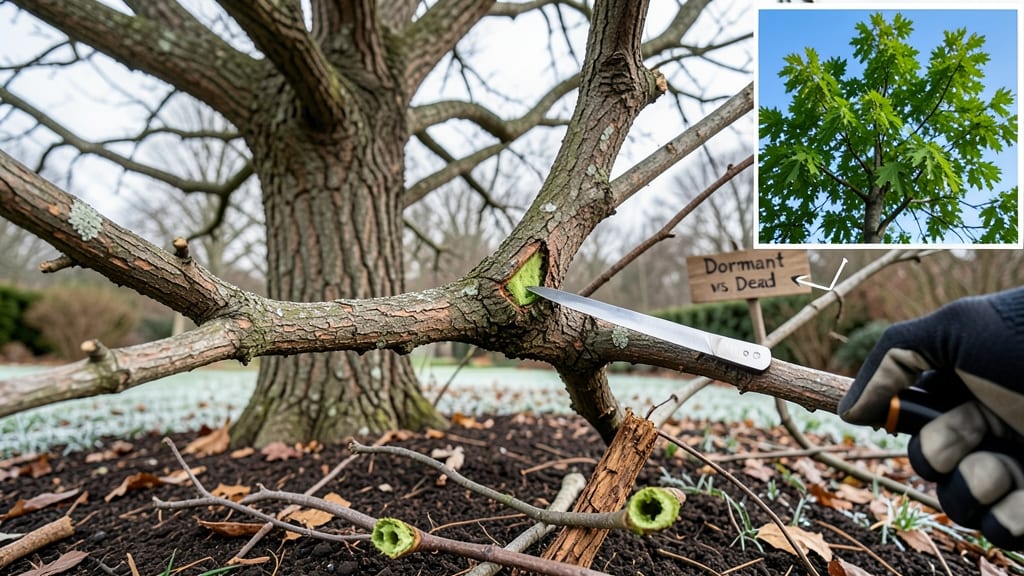
A bare-branched tree doesn't always mean a dead tree—especially when winter's chill has stripped the leaves. 🌳 I've seen gardeners panic and dig up perfectly healthy trees because they didn't know the difference between seasonal dormancy and true decline.
The key is timing, signs of life, and what's happening below ground.
Deciduous trees naturally shed leaves in fall, while evergreens keep theirs year-round (though some may drop needles in extreme cold). Look for buds in spring, green bark under the outer layer, and roots that still feel firm when you gently scratch the soil.
A tree with these signs is just resting, not dying.
If the tree has no buds, peeling bark, or oozing sap, it might be struggling from pests, disease, or drought. Check for cracks in bark, unusual growths, or thinning canopy—these are red flags.
Before you give up, try watering deeply in dry spells and mulching to protect roots.
When in doubt, wait until spring. A tree that pushes new leaves by late April or May is likely salvageable. If it stays bare with no signs of recovery, it's time to consider removal—but that's a last resort, not the first assumption.
Natural Triggers Behind Leaf Loss
When a tree sheds its leaves, it’s often a survival strategy rather than a sign of distress. Understanding the why behind this phenomenon helps distinguish between a tree’s seasonal rhythm and a serious health crisis.
Here’s a breakdown of the most common causes—backed by science—and what they mean for your tree’s well-being.
In temperate climates, trees like oaks, maples, and birches enter dormancy as temperatures drop. This isn’t laziness—it’s a metabolic slowdown triggered by:
- Shortened daylight (photoperiodism): Trees detect shrinking daylight hours via phytochrome pigments in their leaves. When days grow shorter, the tree’s abscission layer (a specialized cell layer at the leaf stem) forms, sealing off nutrients and causing leaves to detach. This process is genetically programmed—like a biological countdown to winter.
- Temperature cues: Cold snaps accelerate dormancy. Some trees (e.g., Ginkgo biloba) drop leaves even in mild weather if nights are consistently chilly.
- Hormonal shifts: Ethylene gas—released as temperatures fall—signals the tree to shed leaves. Meanwhile, auxin (a growth hormone) production drops, further encouraging leaf fall.
Actionable tip: If your tree loses leaves in autumn but retains a full canopy in spring, it’s likely just resting. 🌱 Pro tip: Mulch around the base to protect roots from freezing, which can stress the tree and disrupt dormancy.
Not all leaf loss is seasonal. Environmental stressors can force trees to drop foliage early, often as a last-resort defense. Here’s what’s likely happening:
| Stressor | Mechanism | Signs to Watch For |
|---|---|---|
| Drought | Roots struggle to absorb water, triggering abscisic acid (a stress hormone) that severs leaf connections. The tree prioritizes survival over photosynthesis. | Wilting, crispy leaf edges, soil pulling away from roots. |
| Root Damage | Compacted soil or construction trauma restricts water/nutrient flow. The tree “prunes” leaves to reduce water loss. | Yellowing leaves, stunted growth, mushrooms near roots (fungus = dead roots). |
| Pests/Disease | Insects (e.g., emerald ash borer) or pathogens (e.g., Phytophthora) block nutrient transport. The tree sheds leaves to conserve energy. | Holes in leaves, sawdust-like frass, oozing sap, or fungal growth. |
| Chemical Burn | Over-fertilization (especially salt-based) or herbicide drift damages cells, causing premature abscission. | Brown leaf tips, curled leaves, or stunted new growth. |
What to do: If leaf loss coincides with extreme weather, poor soil, or visible pests, act fast. Water deeply (1–2 inches per week) for drought stress, or consult an arborist for root/pest issues. Prevention is key: Test soil pH annually and avoid heavy foot traffic near roots. 💧
Leaves are a tree’s solar panels—and like us, they need the right fuel to function. Deficiencies in key nutrients can trigger early shedding. Here’s the science:
- Nitrogen (N) deficiency: Leaves turn pale yellow (chlorosis) and drop because the tree can’t produce enough chlorophyll. Nitrogen is critical for protein synthesis in leaves.
- Potassium (K) deficiency: Leaves develop brown “scorch” edges and fall off. Potassium regulates water balance and disease resistance—without it, cells leak nutrients.
- Magnesium (Mg) deficiency: Older leaves yellow between veins first (since magnesium is mobile in the tree). Severe cases lead to premature drop.
- Iron (Fe) deficiency: Young leaves stay white or pale green. Iron is needed for chlorophyll production, and trees can’t redistribute it like magnesium.
Diagnostic tip: Conduct a soil test (kits cost ~$20) to identify deficiencies. If nutrients are lacking, amend soil with organic matter (compost) or targeted fertilizers (e.g., Epsom salt for magnesium). ✨ Pro move: Apply nutrients in early spring when roots are active, not mid-summer when heat can burn them.
Remember: A tree without leaves isn’t always a dying tree—it’s often a strategic one. The key is observing patterns (seasonal vs. sporadic) and acting on clues like leaf color, new growth, and bark health.
Stay tuned for our next section on how to tell if your leafless tree is truly in trouble.
Reviving Trees Without Leaves
A tree with no leaves isn’t always a lost cause—whether it’s dormant, stressed, or struggling, there are practical steps you can take to restore its health.
Below, we break down solutions based on the most common causes of leaf loss, from seasonal changes to disease or damage, plus tips to keep your trees thriving long-term.
If your tree is simply in winter dormancy, it’s not dead—just conserving energy. Here’s how to support it until spring:
❄️ Provide Winter Care
- Mulch properly: Apply 2–4 inches of organic mulch (like wood chips or straw) around the base, but avoid piling it against the trunk.
This insulates roots from freezing temperatures. ❄️ - Water sparingly: Dormant trees need less water, but a deep soak once a month (if rain is scarce) prevents root desiccation. - Protect from wind: Young or thin-barked trees (like birch or maple) can suffer frost cracks.
Wrap the trunk with burlap or use tree guards for extra protection.
🌿 Encourage Spring Awakening
- Prune dead branches: Use clean, sharp pruners to remove any branches that are truly dead (they won’t bend when touched). This prevents pests and disease from moving into the tree.
- Avoid fertilizing: Dormant trees don’t need nutrients until spring.
Over-fertilizing now can stress them further. - Monitor for pests: Check for bark beetles or spider mites, which are more active in winter. Apply horticultural oil if you spot infestations.
💡 Pro Tip: If your tree is evergreen (like pine or spruce) and dropping needles, it might be drought-stressed. Water deeply in late fall to prep for winter.
If the tree lost leaves due to trauma, act quickly to minimize long-term harm.
🔧 Assess the Damage
- Check for splits or cracks: If the trunk or major branches are broken, call an arborist. Large wounds can invite rot or pests.
- Look for sap oozing: A slow leak is normal, but excessive sap or foul-smelling fluid signals infection.
🌳 Stabilize the Tree
- Support weak branches: Use tree straps or cables to secure heavy limbs that might snap in future storms.
- Remove hazardous debris: Clear fallen branches to prevent soil compaction or root smothering.
- Avoid over-pruning: Only remove damaged or diseased branches.
Never cut more than 25% of the canopy at once—this stresses the tree.
⚠️ Warning: If the tree is leaning precariously or the roots are exposed, it may need professional bracing or staking.
Fungal diseases, borers, or sucking insects can drain a tree’s vitality, leading to defoliation. Act fast with targeted treatments.
🐛 Identify the Culprit
- Common pests:
- Aphids/spider mites: Tiny webs or sticky residue on leaves.
- Bark beetles: Sawdust-like frass at the base of the trunk.
- Canker diseases: Sunken, oozing wounds on branches.
- Test for disease: Scrape a small section of bark or send a leaf sample to a local extension office for diagnosis.
🛡️ Apply Remedies
- For pests:
- Hose off soft-bodied bugs (aphids, mites) with a strong water spray.
- Use neem oil (diluted) as a natural insecticide—spray in early morning or evening to avoid harming bees.
- Introduce predator insects: Ladybugs or lacewings eat aphids naturally.
- For fungal diseases:
- Prune infected branches 6 inches below the damage and sterilize tools with rubbing alcohol.
- Apply copper fungicide (like Bordeaux mixture) if canker or blight is suspected.
- Improve airflow: Thin out dense foliage to reduce humidity around the tree.
🌡️ Pro Tip: Healthy trees resist pests better. Boost immunity with mycorrhizal fungi (available as granules) or compost tea applied to the soil.
Trees under stress often shed leaves as a survival tactic. Revive them with targeted care.
🌧️ Hydrate Deeply
- Water slowly and deeply: Use a soaker hose or drip irrigation to deliver water 12–18 inches into the soil.
Aim for 1–1.5 inches per week (more in extreme heat). - Mulch heavily: Extend mulch rings to 3 feet in diameter to retain moisture and cool roots.
🌱 Improve Soil Health
- Test your soil: A simple pH test (available at garden centers) tells you if the soil is too acidic or alkaline.
Most trees prefer 6.0–7.0 pH. - Amend the soil: - For clay soil: Mix in compost or peat moss to improve drainage. - For sandy soil: Add organic matter (like leaf mold) to retain moisture. - Fertilize smartly: Use a slow-release, balanced fertilizer (10-10-10) in early spring.
Avoid high-nitrogen fertilizers—they encourage leafy growth at the expense of roots.
🎯 Pro Tip: Mulch volcanoes (piling mulch against the trunk) suffocate roots. Keep mulch 3–4 inches deep and 6 inches away from the trunk.
If the tree is beyond saving, remove it safely to prevent hazards.
🪓 Removal Steps
- Call a certified arborist: Never attempt to remove a large tree yourself—it’s dangerous and can damage property.
- Stump grinding: After removal, grind the stump to prevent regrowth and fungal spread.
You can then plant a new tree in the same spot. - Dispose of debris properly: Burn or chip healthy wood for mulch; diseased wood should be hauled away.
✨ Prevention Tip: Plant native, drought-resistant trees (like oak, hickory, or serviceberry) that are better adapted to your climate and soil.
Remember: Patience is key. Some trees take 1–2 years to recover from stress. Monitor progress, adjust care as needed, and soon your leafless tree might just surprise you with a vibrant comeback! 🌿🌳
Frequently asked questions
Why do some trees keep their leaves year-round while others lose them?
Evergreen trees like pines and spruces retain their needles because they've evolved to photosynthesize even in cold months, though they may drop some needles in extreme drought or winter. Deciduous trees like oaks and maples shed leaves annually to conserve water and energy during winter dormancy. The key difference is their adaptation to climate—evergreens thrive in colder regions where growing seasons are shorter.
Can a tree survive without leaves for more than one year?
Some trees can survive one full season without leaves if they're healthy, especially if they're deciduous and the loss was seasonal. However, if a tree remains completely bare for two consecutive years without new growth, it's likely dead or severely compromised. Always check for buds in spring—they're your best sign of life.
How can I tell if my tree's roots are still alive if it has no leaves?
Scratch the bark near the base with a tool—if you see green underneath, the tree is alive. For roots, gently dig down 6-12 inches: healthy roots should be white or light brown and firm to the touch. Dark, mushy roots indicate rot, while completely dry roots suggest death. A simple thumb test works too: press your thumb into the soil—if it springs back, moisture is present.
Will watering a bare tree help it recover?
Watering can help if the tree is drought-stressed, but timing matters. Deep watering once a week during dry spells supports root health, while overwatering in winter can suffocate roots. Focus on the root zone (12-18 inches deep) rather than surface watering. Mulch helps retain moisture—just keep it 3-4 inches deep and 6 inches away from the trunk to prevent rot.
What's the difference between winter dormancy and a tree dying?
The main difference is new growth. A dormant tree will show buds in spring, while a dying tree won't. Also check the bark: healthy trees have smooth or slightly textured bark, while dying trees often develop cracks, peeling, or oozing sap. One more clue—tap the trunk: a hollow sound suggests decay, while a solid thud indicates health. Patience is key: wait until late spring before deciding.