
Trees
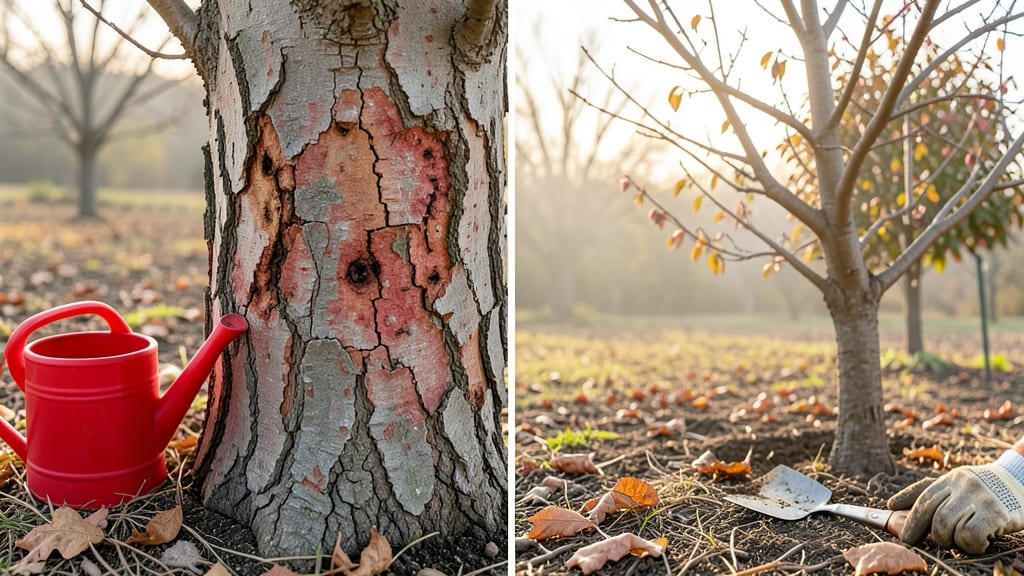
Your peach tree lost all leaves—don’t panic, this can be revived. 🌱 The first step is checking the bark for cracks or oozing sap, which signals stress or disease. Healthy roots are the foundation, so we’ll focus on pruning dead branches and restoring soil balance first.
Most leaf loss comes from environmental stress, fungal diseases like peach leaf curl, or pests sucking nutrients from roots. I’ve seen trees bounce back completely after a few weeks of targeted care—even when they looked hopeless at first. The key is acting fast before secondary issues set in.
You’ll start by pruning any blackened or brittle branches back to healthy wood, then test soil moisture and pH. A balanced fertilizer and mulch layer will help roots recover while protecting against future stress. By late spring, you’ll see fresh buds forming—proof the tree is fighting back.
If the trunk shows deep cracks or oozing sap after pruning, that’s your cue to call an arborist. Otherwise, consistent watering and monitoring will keep your peach tree on track for next year’s harvest. Prevention is easier than rescue—so keep an eye on soil health year-round.
Root Causes Behind Leaf Loss
When your peach tree suddenly sheds its leaves, it’s often a distress signal from the roots upward. Understanding the why behind this symptom is the first step toward revival. Below, we break down the most common culprits—from environmental stressors to hidden pests—with clear explanations and actionable insights.
Peach trees are sensitive to sudden temperature swings, especially when they’re not yet fully hardened off in spring or struggling to recover from dormancy. Here’s how it happens:
- Late frost damage: If a hard frost (<32°F) hits after buds swell but before leaves fully unfurl, the tree’s metabolic processes stall. Cells freeze and rupture, causing leaves to blacken and drop within days. Pro tip: 🌡️ Monitor local frost forecasts and protect young trees with frost cloth or row covers.
- Heat stress: Temperatures above 95°F (35°C) for prolonged periods can scorch leaves, leading to premature drop-off. Peach trees native to temperate zones lack the heat tolerance of tropical species.
- Transplant shock: If moved recently, the tree’s root system may not have established enough to regulate water and nutrient uptake during temperature fluctuations.
How to confirm: Check for crispy, brown edges on leaves (frost) or wilting despite moist soil (heat).
Peach trees thrive in consistently moist but well-draining soil. Too much or too little water throws their systems into chaos, triggering leaf loss.
| Issue | How It Happens | Signs to Watch For |
|---|---|---|
| Overwatering | Soggy soil cuts off oxygen to roots, leading to anaerobic conditions and root rot (often caused by Phytophthora fungi). The tree can’t absorb nutrients, so leaves yellow (chlorosis) and fall. | Mushy, dark roots; leaves that drop even when soil is wet. |
| Underwatering | Drought stress forces the tree to abscise (shed) leaves to conserve water. Chronic dryness weakens the tree, making it susceptible to pests and disease. | Crispy, curled leaves; soil pulling away from the pot (if container-grown). |
| Poor drainage | Compacted or clay-heavy soil traps water at the roots, suffocating them. Peach trees hate “wet feet” and will drop leaves to signal distress. | Puddles after rain; roots exposed at the surface. |
Action step: 💡 Stick your finger 2–3 inches into the soil—if it’s dry, water deeply; if it’s muddy, improve drainage with organic matter (compost or pine bark).
Hidden invaders can devour leaves from the inside out or disrupt the tree’s vascular system. Here’s what to suspect:
- Peach tree borers (Synanthedon spp.):
- These moth larvae burrow into the cambium layer (the tree’s growth ring), cutting off nutrient flow. Look for D-shaped exit holes and sawdust-like frass near the trunk.
- Leaves yellow and drop as the tree starves.
- Aphids and spider mites:
- These sap-sucking pests don’t kill the tree directly, but their feeding weakens leaves, causing them to curl, yellow, and fall prematurely.
- Check the undersides of leaves for sticky honeydew or tiny webs.
- Bacterial leaf spot (Xanthomonas):
- This disease creates water-soaked spots that turn brown and drop leaves rapidly. It thrives in humid, rainy conditions.
- Prune infected branches 6 inches below the spot and sterilize tools with rubbing alcohol.
Quick fix: 🔥 Spray infested areas with neem oil or insecticidal soap for pests; remove and burn (don’t compost) heavily diseased leaves.
Peach trees are heavy feeders and demand a balance of nutrients. Imbalances—whether from poor soil or over-fertilization—can trigger leaf loss.
- Nitrogen deficiency:
- Leaves turn pale yellow (chlorosis) and drop as the tree can’t produce chlorophyll. Common in sandy or overly acidic soils.
- Test soil pH—ideal range for peaches is 6.0–7.0. Amend with lime if too acidic.
- Potassium or magnesium deficiency:
- Leaves develop yellow margins (potassium) or interveinal yellowing (magnesium) before dropping.
- Apply Epsom salt (magnesium sulfate) or a balanced fertilizer like 10-10-10.
- Fertilizer burn:
- Overapplying synthetic fertilizers (especially high-nitrogen) can scorch roots, causing leaves to crisp and fall.
- Use slow-release organic fertilizers and water deeply after applying.
Diagnostic tip: 📊 Send a soil sample to a local extension office for a nutrient analysis—it’s the fastest way to pinpoint deficiencies.
Next, we’ll dive into how to diagnose which cause applies to your tree—and the step-by-step rescue plan to bring it back to health. Stay tuned!
Reviving Your Peach Tree Step by Step
If your peach tree has lost all its leaves, don’t panic—there’s hope! The key is identifying the root cause (literally and figuratively) and taking targeted action. Below, we break down practical solutions for common issues, from environmental stressors to pest attacks, along with prevention tips to keep your tree thriving. Let’s get your peach tree back to full, lush glory! 🌱🍑
Peach trees are sensitive to temperature swings. If leaves dropped due to scorching heat or a sudden freeze, the tree is likely in shock but not necessarily dead.
How to Fix It: 🔥 Water Deeply and Slowly
Water the tree’s root zone (about 12–18 inches deep) twice a week during heatwaves.
Use a soaker hose or drip irrigation to avoid runoff. - Test soil moisture: Stick your finger 2 inches into the soil—if it’s dry, water again.
🍳 Mulch Like a Pro
- Apply 3–4 inches of organic mulch (wood chips, straw, or pine bark) around the base, keeping it 6 inches away from the trunk to prevent rot.
- Mulch retains moisture and regulates soil temperature.
👨🍳 Shade Cloth for Extreme Heat
- If temperatures exceed 90°F (32°C), drape lightweight shade cloth (30–50%) over the tree for a few hours a day to reduce stress.
🌡️ Protect from Frost
- Cover young or newly planted trees with frost blankets or burlap sacks during unexpected cold snaps.
- Avoid plastic sheets—they can trap moisture and damage leaves.
💡 Prevention Tips:
- Plant peach trees in microclimates (e.g., near a south-facing wall) for natural warmth.
- Choose cold-hardy varieties (e.g., ‘Reliance’ or ‘Elberta’) if you live in colder zones.
- Water deeply before winter to help roots withstand freeze-thaw cycles.
Caterpillars, aphids, or spider mites can defoliate a peach tree in days. Act fast to stop the spread!
How to Fix It:
🔪 Handpick and Destroy
- Morning is best: Check leaves for tent caterpillars or loopers (they’re sluggish when cool). Drop them into soapy water.
- Shake branches over a tarpaulin to dislodge pests, then dispose of them.
🍳 Neem Oil Spray (Safe & Effective)
- Mix 1 tbsp neem oil + 1 tsp mild soap + 1 quart water in a spray bottle.
- Apply early morning or late evening to avoid harming bees. Reapply every 5–7 days until pests vanish.
👨🍳 Introduce Beneficial Insects
- Release ladybugs or lacewings (available at garden centers) to eat aphids naturally.
🌿 Prune Infested Branches
- Cut off heavily damaged branches (sterilize pruners with rubbing alcohol between cuts).
- Burn or bag the clippings do not compost them!
💡 Prevention Tips:
- Monitor regularly: Inspect leaves weekly during growing season.
- Encourage biodiversity: Plant marigolds or basil nearby to repel pests.
- Avoid over-fertilizing with nitrogen—it attracts soft-bodied insects like aphids.
Soggy roots suffocate peach trees, leading to leaf drop. If the soil is waterlogged, act quickly!
How to Fix It:
⏰ Stop Watering Immediately
- Let the soil dry out completely before watering again. Yellowing leaves + mushy stems = overwatering.
🔥 Improve Drainage
- Dig a 12-inch-deep trench around the tree’s drip line (edge of the canopy) to redirect water.
- Mix sand or perlite into the top 6 inches of soil to loosen compacted earth.
🍳 Raise the Tree’s Base (If Needed)
- If the tree is in a low-lying area, mound gravel or amended soil around the base to elevate roots.
👨🍳 Aerate the Soil
- Use a manual aerator or a garden fork to poke holes 8–12 inches deep around the root zone.
💡 Prevention Tips:
- Plant peach trees on slopes or raised beds to prevent water pooling.
- Test your soil: Aim for well-draining loam (sandy loam is ideal).
- Water deeply but infrequently—peach trees hate “wet feet.”
Blight, powdery mildew, or root rot can strip leaves overnight. Fungal issues thrive in wet, humid conditions.
How to Fix It:
🔪 Prune for Airflow
- Remove crossing branches, suckers, and dense foliage to improve circulation.
- Sterilize pruners with rubbing alcohol between cuts.
🍳 Fungicide Treatment
- Spray with copper fungicide or baking soda mix (1 tbsp baking soda + 1 tsp oil + 1 gallon water) every 10–14 days until new growth appears.
👨🍳 Adjust Irrigation
- Water early in the day so leaves dry quickly.
- Avoid overhead sprinklers—water at the base only.
🌿 Remove Debris
- Clear fallen leaves and fruit from the base to prevent fungal spores from overwintering.
💡 Prevention Tips:
- Space trees 15–20 feet apart for airflow.
- Choose resistant varieties (e.g., ‘Contender’ peaches tolerate disease better).
- Mulch with straw (not wood chips) to reduce humidity near the trunk.
With these targeted fixes, your peach tree should bounce back within 4–8 weeks, depending on the cause. Stay vigilant, and soon you’ll be picking juicy peaches instead of staring at bare branches! 🍑✨
Frequently asked questions
Why does my peach tree lose all leaves in spring?
This is often late frost damage—buds swell before leaves harden, making them vulnerable to temperatures below 32°F (0°C). The tree sheds leaves to protect itself. Monitor frost forecasts and cover young trees with frost blankets during critical periods. Most trees recover fully once temperatures stabilize.
Can a peach tree survive if it loses all leaves?
Yes! Peach trees naturally drop leaves in winter dormancy and can recover from sudden defoliation if the roots stay healthy. Focus on watering deeply (but not soggy), checking for pests, and avoiding stress. If buds swell in spring, the tree is alive—just give it time to regrow foliage.
How do I know if my peach tree is dead or just dormant?
Check for green buds under bark or sprouting suckers at the base—these mean the tree is alive. Scratch a small area of bark: if it’s green underneath, it’s still viable. If branches are brittle and snap easily with no green, the tree may be dead. Test a few branches to confirm.
Should I prune my peach tree if it’s lost all leaves?
Yes, but wait until late winter or early spring when buds begin to swell. Remove dead, broken, or crossing branches back to healthy wood. Sterilize pruners with rubbing alcohol to prevent disease spread. Pruning now helps redirect energy to new growth once the tree recovers.
What’s the fastest way to revive a peach tree with no leaves?
Start with deep watering (12–18 inches down) and organic fertilizer (like 10-10-10). Add 3–4 inches of mulch to retain moisture and regulate soil temp. Monitor for pests and prune damaged areas. Most trees show new buds within 4–6 weeks if roots are healthy.