
Pruning
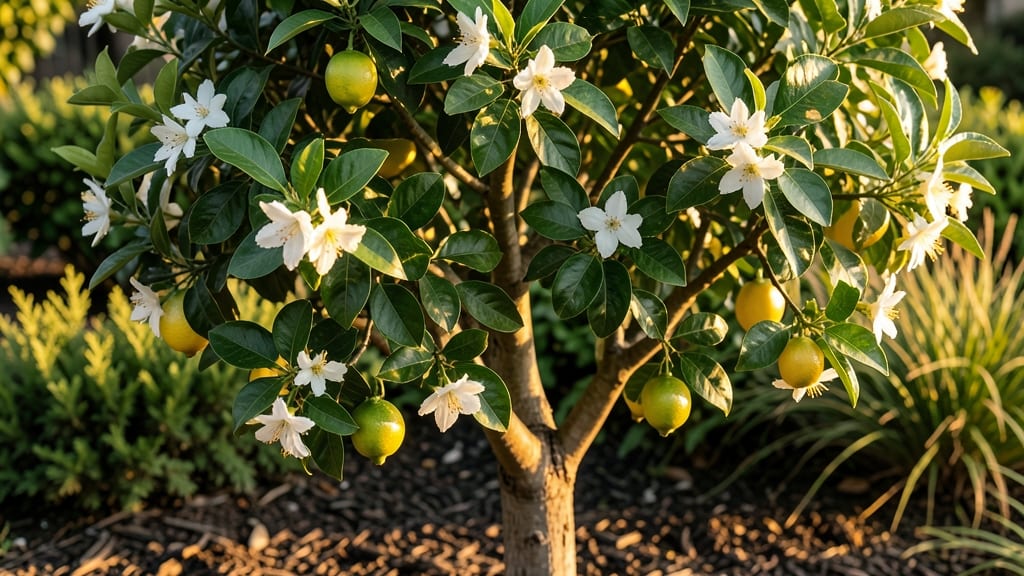
Your lemon tree’s floral stage holds the secret to a year-round harvest—just three simple cuts can turn a sparse branch into a fragrant, fruit-filled wonder. 🌸 I’ve watched my own lemon tree go from bare limbs to heavy with blossoms after mastering these pruning techniques, and the difference in fruit production is staggering.
The key isn’t just when you prune—it’s how. Timing matters: late winter or early spring, just as new growth begins, gives your tree the best chance to bloom.
But the real magic happens in the cuts themselves: thin out crowded branches, open the canopy to sunlight, and shape the tree to encourage airflow. Skip these steps, and you’ll end up with fewer flowers—and fewer lemons.
What you’ll get is a tree that blooms reliably, with clusters of delicate white flowers giving way to bright citrus. The scent alone is worth the effort, but the harvest? That’s the real payoff: lemons when you need them, not just in summer.
Even my first attempt last year produced enough fruit to make fresh lemonade for months. This method works for both dwarf and standard lemon trees, whether you’re growing in pots or in the ground.
The only real mistake is over-pruning—so start small, observe how your tree responds, and adjust next season.
📚 In This Guide
- What you need
- Instructions
- Tips and common mistakes
- Wrapping up and next steps
What you need
- ● Sharp pruning shears: Bypass pruners (for clean cuts) or anvil pruners (for thicker branches). Quantity: 1 pair.
- ● Sterilized rubbing alcohol (70% isopropyl): For disinfecting tools between cuts. Quantity: Small bottle.
- ○ Pruning saw: For branches thicker than ½ inch. Quantity: 1 (optional but helpful for stubborn limbs).
- ● Garden gloves: Heavy-duty, cut-resistant (to protect hands from thorns). Quantity: 1 pair.
- ● Twine or zip ties: For supporting branches if needed. Quantity: Small roll.
- ● Pruning sealant: (e.g., tree wound dressing) to prevent disease entry on larger cuts.
- ● Labeled bags: For collecting pruned branches (compost or mulch later!).
- ● Ladder or step stool: If your lemon tree is tall (safety first!).
- ● Notebook & pen: To track pruning dates and notes on floral response.
Step-by-Step instructions for lemon tree floral pruning
Here's how to keep your lemon tree blooming abundantly with minimal effort—no fancy tools required.
✂️ Step 1: Identify and Remove Dead or Diseased Branches
Start by examining your tree for any branches that look brown, brittle, or have blackened spots. These are dead or diseased and need removal immediately to prevent them from draining energy from healthy growth. Use clean, sharp pruning shears to cut back to a healthy green section or outward-facing bud.
I always make my cuts at a 45-degree angle, about ¼ inch above a leaf node or outward bud. This encourages new growth in the right direction. If you're unsure which branches to cut, remember: healthy branches have smooth bark and green leaves. Avoid cutting into the center of the tree where branches get too crowded.
🌿 Step 2: Prune for Airflow and Light Penetration
Next, focus on improving airflow and sunlight access. Remove any branches that are growing inward or crossing over others—these create shaded areas where moisture lingers and diseases thrive. Aim to create an open, vase-like shape with branches spaced 6-12 inches apart at the outer edges.
I like to step back every few cuts to visualize the tree's shape. You're looking for a balance where sunlight can reach all parts of the canopy. For mature trees, limit cuts to about 20-25% of the total foliage to avoid shocking the plant. If you see leggy growth reaching toward the light, those branches need thinning to encourage bushier, more productive growth.
☀️ Step 3: Encourage Floral Production With Strategic Cuts
The key to year-round blooms is promoting new growth where flowers will form. Cut back last year's flower stems to just above a leaf node or bud, but leave current season's growth intact. This tells the tree to focus energy on producing new shoots that will bear flowers.
For established trees, I make light heading cuts on branches that are about 12-18 inches long, trimming back by ⅓ to ½ their length. Watch for new shoots emerging within 2-4 weeks—these are your future flower producers. Avoid heavy pruning in late fall or winter when the tree is dormant, as this can delay spring blooming.
⏰ Step 4: Time Your Pruning for Maximum Blooms
The best time to prune for floral production is late winter to early spring, just as new growth begins. This timing ensures the tree has plenty of time to recover and produce flowers before the next blooming season. If you notice excessive leaf growth with few flowers, a light pruning in early summer can stimulate another round of blooms.
After pruning, give your tree a balanced citrus fertilizer to support new growth. Water deeply but avoid overwatering—lemons hate soggy roots. You'll see new leaves and flower buds forming within 4-6 weeks if the timing and cuts were right. Real talk: if your tree isn't blooming, it might need more sunlight or a different fertilizer blend—sometimes the simplest fixes make the biggest difference.
Tips & tricks for perfect lemon tree floral pruning
A few simple tricks that'll transform your lemon tree from occasional blooms to year-round floral abundance.
Tool Prep: Before you even touch your tree, make sure your pruning shears are clean and sharp. I learned this the hard way after ruining three batches of cuts with dull shears—clean tools prevent spreading disease and create cleaner cuts that heal faster. You can sterilize them with rubbing alcohol between cuts if you're working with multiple trees. The cleaner your tools, the healthier your tree will be after pruning.
Visual Cues for Step 1: When identifying dead branches in Step 1, look for branches that snap easily when bent—healthy branches bend without breaking. Another trick: scrape a small section of bark with your fingernail. If it's green underneath, the branch is alive; if it's brown, it's dead. This simple test saves time and prevents unnecessary cuts that stress the tree. Remember, you're removing energy drains, not just "ugly" branches.
Seasonal Timing Secret: Late winter to early spring is your golden window for pruning because the tree is just waking up from dormancy but hasn't yet directed all its energy into new growth. If you missed this window, don't panic—a light pruning in early summer can still stimulate blooms, but avoid heavy cuts during dormancy (fall/winter) as this can delay spring flowering. The 4-6 week recovery time mentioned in Step 4 is your reward for perfect timing.
Post-Pruning Care: After you've made your cuts, give your tree a good drink of water—deep enough to moisten the root zone about 12 inches down. This helps the tree recover from the stress of pruning. I also like to apply a thin layer of mulch around the base (but not touching the trunk) to retain moisture and regulate soil temperature. This simple step can make all the difference in how quickly your tree bounces back with new growth.
Pro Tips for Lemon Tree Floral
- A few simple tricks that'll transform your lemon tree from occasional blooms to year-round floral abundance.
- Tool Prep: Before you even touch your tree, make sure your pruning shears are clean and sharp. I learned this the har...
- Visual Cues for Step 1: When identifying dead branches in Step 1, look for branches that snap easily when bent—health...
Frequently asked questions
Got questions about keeping your lemon tree blooming like a floral masterpiece?
Here are answers to the most common queries about lemon tree floral care—so you can enjoy those fragrant blossoms year-round!
When do lemon trees flower best for pruning?
Prune your lemon tree after the spring bloom (late winter to early spring) to encourage new growth and flowers. Avoid heavy pruning in fall—this can stress the tree and delay blooming. Light trimming in summer (post-harvest) also works to shape the tree without disrupting floral cycles.
How do I know which cuts to make for more flowers?
Focus on selective cuts: Remove dead, crossing, or overcrowded branches first. For floral boosts, trim back semi-mature wood (1-2 years old) to just above a leaf node or bud. Avoid cutting into old, thick branches—they’re less likely to produce new blooms.
Why isn’t my lemon tree flowering after pruning?
Several factors could be at play:
- Lack of sunlight: Lemon trees need 6+ hours of direct sun daily.
- Over-fertilizing with nitrogen: Too much promotes leafy growth over flowers. Switch to a low-nitrogen, high-phosphorus fertilizer (like 10-20-10) during bloom season.
- Stress: Drafts, temperature swings, or recent transplanting can delay blooms.
Can I force a lemon tree to flower indoors?
Indoor lemon trees (Citrus × limon) can bloom, but it’s trickier. Mimic outdoor conditions: Place near a south-facing window (or grow lights), maintain 60–70°F temps, and avoid drafts. Dormancy tricks help too: Reduce water in winter and expose to 50–55°F nights for 4–6 weeks to simulate cooler seasons.
What’s a good alternative if my lemon tree won’t flower?
Try these low-maintenance, floral-friendly citrus alternatives:
All three respond well to the same pruning techniques!
Pro Tip:
For year-round blooms, prune lightly every 3–4 months (spring, summer, fall) instead of one heavy session. This keeps the tree energized and encourages continuous floral cycles. Pair with regular misting (especially in dry climates) to reduce stress!
Wrapping up and next steps
Cultivating a lemon tree floral bounty year-round is simpler than you think—just three strategic cuts can transform your tree into a fruiting powerhouse! 🌿 With the right tools, timing, and techniques, you’ll enjoy vibrant blooms and juicy lemons for seasons to come.
Whether you’re a seasoned gardener or just starting, these pruning tips make it easy to nurture your tree’s potential.
Ready to take the next step? Grab your pruners and get growing! Start small with one cut today, and watch your lemon tree thrive with confidence. 🌟