
Pruning
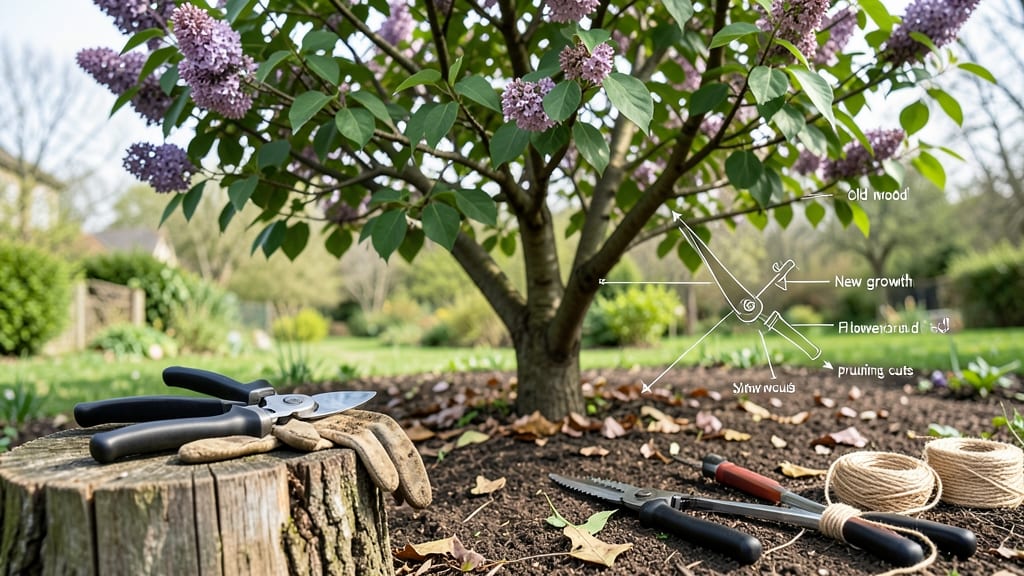
A lilac tree pruning diagram unlocks their full potential—thicker blooms, better shape, and fewer leggy branches. 🌸 I’ve pruned mine the same way for five years, and the difference in spring color is shocking.
The key is cutting back to the right spots on the branches, which I’ll show you in a simple diagram that breaks down the exact structure.
You’ll need just three tools: sharp bypass pruners, loppers for thicker branches, and a small saw for stubborn wood. Timing matters too—wait until 2-4 weeks after blooming when new growth starts but before summer heat sets in.
This ensures you don’t accidentally remove next year’s flower buds hidden in last year’s wood.
The diagram highlights three pruning zones: dead wood removal, thinning out crowded branches, and cutting back to the strongest buds. Each cut encourages bushier growth and more flowers.
By summer, you’ll see fresh green shoots where you pruned, and next spring, your lilac will burst with color like never before.
Even experienced gardeners mess up here—like pruning too late or cutting into old wood. I’ll show you how to spot those mistakes and fix them before they stunt your tree. Grab your tools, and let’s get started with the foolproof method that works for any lilac size.
📚 In This Guide
- What you need
- Instructions
- Tips and common mistakes
- Wrapping up and next steps
What you need
- ● Pruning shears: Bypass pruners (sharp, 6–8" blades) for small branches (Pro tip: 💡 Clean blades prevent tearing and disease.
- ○ Loppers: 8–12" bypass loppers for branches ½"–2" thick. Optional: Ratchet-style for extra leverage.
- ● Pruning saw: Curved-tooth saw for thick branches (>2" diameter). Spec: 10–12" blade for lilac’s dense wood.
- ● Gloves: Heavy-duty, cut-resistant gloves (gardening or pruning-specific) to protect hands from thorns.
- ● Disinfectant: 70% isopropyl alcohol or 10% bleach solution (1 part bleach to 9 parts water) to sterilize tools between cuts.
- ● Ladder: Sturdy, extendable ladder (10–12 ft) for high branches. Safety: 🌡️ Use stabilizers and never overreach!
- ● Heavy-duty trash bags: 30–50 gallon bags for collecting pruned branches (lilac debris can be heavy!).
- ● Pruning sealant: Tree wound paint (e.g., Tanglefoot) for cuts >½" thick. Debate: ✨ Many experts say lilacs heal fine without it!
- ● Work gloves with grip: For extra comfort if handling wet wood.
- ● Labeling tags: Small plant markers to tag pruned sections if training a young lilac.
- ● Knee pads: For comfort if pruning low branches or working on the ground.
- ● Timing: Prune lilacs right after flowering (late spring/early summer) or in late winter (before buds swell). Avoid pruning in fall.
- ● Weather: Choose a calm, dry day (no rain forecast for 24 hours).
- ● Safety gear: Safety goggles (if sawing thick branches) and closed-toe shoes.
- ● Diagram reference: Print or bookmark your lilac tree pruning diagram for branch structure guidance!
How to prune a lilac tree for optimal branch structure
Here's my foolproof method for shaping lilacs—clean cuts, better blooms, and a tree that looks like it belongs in a botanical garden.
✂️ Step 1: Identify and Remove Dead or Diseased Branches
Start by scanning your lilac for branches that are completely bare, brittle, or showing signs of disease like blackened spots or fungal growth. These branches won’t produce flowers and can spread problems to healthy wood. Use sharp pruning shears to cut back to the main trunk or a healthy lateral branch—never leave stubs, as they invite rot.
I always prune these first because they’re the easiest to spot and the most urgent to remove. If a branch snaps when you bend it, that’s your cue to cut it out entirely. Healthy branches bend slightly but don’t break—this is your first visual checkpoint for what to keep.
✂️ Step 2: Thin Out Crowded Branches for Better Airflow
Lilacs naturally grow dense, so your goal is to thin out about one-third of the oldest wood to improve airflow and light penetration. Focus on branches that cross or rub against each other—they’ll eventually damage the bark. Cut these back to the main trunk or a strong lateral branch, making your cuts just outside the branch collar (the swollen area where the branch meets the trunk).
This step is where the magic happens for future blooms. Thinning encourages stronger growth and prevents overcrowding, which can lead to fewer flowers. Watch for branches growing straight up—these are often the weakest and should be removed to redirect energy to horizontal branches that produce more flowers.
✂️ Step 3: Shape the Tree by Pruning Back Last Year’s Blooms
After the lilac finishes flowering, prune back one-third of the oldest stems to just above a set of five leaf buds. This encourages new growth and ensures next year’s blooms will be even more abundant. Avoid cutting into old wood—you’ll know you’ve gone too far if you see no buds or only bare stems.
Here’s the thing—lilacs bloom on old wood, so don’t over-prune. If you cut back too aggressively, you might sacrifice next year’s flowers entirely. I like to make small cuts first and step back to check the overall shape. The goal is a balanced, open structure that lets sunlight reach the center of the tree.
✂️ Step 4: Clean Up and Sterilize Your Tools
Once you’ve finished pruning, wipe down your shears with rubbing alcohol to prevent the spread of disease. Remove all pruned branches from the area—leaving them on the ground can harbor pests or fungi. If you’re dealing with diseased wood, bag it and dispose of it in the trash, not the compost.
This final step is often overlooked, but it’s critical for keeping your lilac healthy. I always take a few minutes to sharpen my shears afterward—they’ll last longer and make next year’s pruning even easier. A clean workspace and sharp tools mean fewer complications down the road.
⏰ Step 5: Schedule Pruning for Optimal Timing
Prune lilacs right after they finish flowering (usually late spring) and again in early summer if needed. Never prune in fall or winter—you’ll remove next year’s flower buds before they’ve formed. If you’re shaping a young lilac, you can do light pruning in late summer to encourage bushier growth, but avoid heavy cuts.
Timing is everything with lilacs. I mark my calendar right after the last blooms fade—this is your window to shape the tree without risking next year’s flowers. If you’re unsure when your lilac bloomed, look for spent flowers and new growth as your cue to start pruning.
Tips & tricks for perfect lilac tree pruning
These simple tricks will help you transform your lilac into a thriving, flower-filled beauty—without the guesswork.
Visual Checkpoint: In Step 1, when identifying dead branches, look for a "thump" sound when you tap them with your pruners. Healthy branches make a hollow "thwack," while dead ones sound dull. This quick test saves time by eliminating guesswork—no need to cut and check each branch individually.
Branch Collar Precision: During Step 2 and Step 3, focus on cutting just outside the branch collar—the swollen area where the branch meets the trunk. This prevents damage to the tree's healing tissue and ensures proper sealing of the wound. I always make my cuts at a 45-degree angle to shed water away from the trunk, which helps prevent rot.
Bud Counting: When pruning back last year's blooms in Step 3, count those five leaf buds carefully. They should be plump and green, not shriveled or brown. If you accidentally cut into old wood without buds, you'll sacrifice next year's flowers—this is where most pruning mistakes happen. A magnifying glass helps if your eyes aren't what they used to be.
Seasonal Timing: The instructions mention late spring and early summer, but here's the real secret: Watch for the first signs of new growth after flowering. That's your perfect window—usually 2-4 weeks after the last blooms fade. I set reminders on my phone for this exact moment each year, and it's made all the difference in my lilac's health and flowering.
Pro Tips for Lilac Tree Pruning Diagram
- These simple tricks will help you transform your lilac into a thriving, flower-filled beauty—without the guesswork.
- Visual Checkpoint: In Step 1, when identifying dead branches, look for a "thump" sound when you tap them with your pruners.
- Branch Collar Precision: During Step 2 and Step 3, focus on cutting just outside the branch collar—the swollen area where the branch meets the trunk.
Frequently asked questions
Got questions about pruning your lilac tree? You’re not alone—many gardeners want to know the best timing, techniques, and how to avoid common mistakes. Below, we’ve answered the most frequently asked questions to help you prune like a pro!
When is the best time to prune a lilac tree?
Prune your lilac tree right after it blooms (late spring to early summer). This ensures you don’t cut off next year’s flower buds, which form on old wood. Avoid pruning in fall or winter, as lilacs are dormant and more susceptible to disease. For overgrown or neglected trees, light pruning in early spring (before buds swell) can help, but focus on shaping rather than heavy cuts.
How much can I prune a lilac tree in one year?
Never remove more than one-third of the tree’s branches in a single year. Lilacs are resilient but can struggle with aggressive pruning. If your tree is severely overgrown, spread the work over 2–3 years to avoid stress. Thin out crowded branches first to improve airflow, then shape the tree gradually. Check the pruning diagram for visual guidance on branch selection.
What if I prune my lilac tree at the wrong time?
Pruning at the wrong time (like late summer or winter) can reduce or eliminate next year’s flowers since lilacs bloom on old wood. If you accidentally prune too late, don’t panic—your tree will still produce blooms, but they may be fewer. Focus on light maintenance pruning in future years to encourage regrowth. For severe mistakes, fertilize in early spring to support recovery.
Do I need to sterilize my pruning tools after cutting lilac branches?
Yes! Lilacs can carry bacterial leaf spot and other diseases. After each cut, wipe blades with rubbing alcohol or a 10% bleach solution (1 part bleach to 9 parts water). Sterilizing tools between cuts prevents spreading pathogens to healthy branches. Store tools in a dry place when not in use, and sharpen them annually for cleaner cuts.
Can I shape my lilac tree into a hedge or topiary?
While lilacs can be lightly shaped into hedges or informal topiary, they’re not ideal for strict geometric forms. Their natural growth habit is bushy and rounded. For hedging, prune after flowering and use hand pruners for precise cuts. Avoid heavy shearing, as lilacs respond better to selective thinning. If you want a formal look, consider planting a more adaptable shrub like boxwood alongside your lilac.
Still unsure? Bookmark this guide and refer to the lilac pruning diagram for step-by-step visuals. Happy pruning!
Wrapping up and next steps
Pruning your lilac tree doesn’t have to be intimidating—with the right lilac tree pruning diagram and a clear plan, you’ll keep your tree healthy and blooming beautifully for years!
Remember, timing (late winter or early spring), sharp tools, and patience are your best friends. Now that you’re armed with the knowledge, grab those shears and get pruning! 🌸✂️
Ready to tackle your lilac tree like a pro? Bookmark this guide and revisit it before your next pruning session—or share it with fellow gardening enthusiasts to spread the love! 🌿