
Pruning
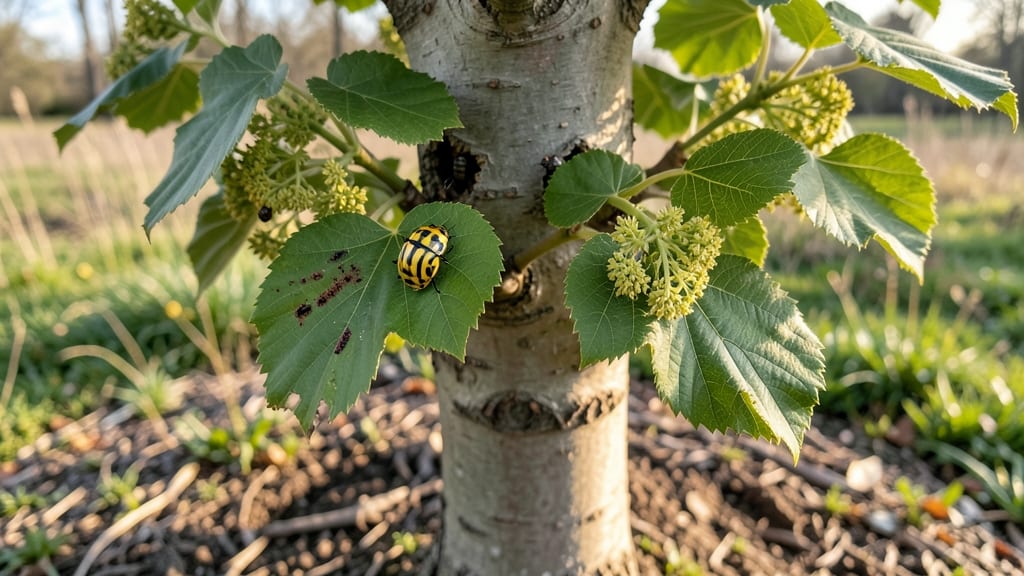
Linden tree pests like leaf miners and borers can turn your fragrant shade tree into a skeleton of its former self. 🌳 I’ve watched these silent invaders chew through leaves and bark, and the key to saving your tree isn’t just reacting—it’s recognizing the damage early and acting with the right mix of organic and targeted solutions.
The worst offenders—leaf miners and borers—leave behind telltale signs: serpentine trails in leaves or sawdust-like frass at the base of the trunk. These pests thrive when trees are stressed, so proper watering, mulching, and seasonal pruning cut their chances of moving in.
The good news? You don’t need harsh chemicals to win this battle—just the right timing and a few strategic tools.
By mid-summer, you’ll see your tree bouncing back with fresh leaves and stronger branches. The secret is a layered defense: prune out infested limbs, introduce beneficial insects, and apply organic sprays at the right moments. Even if you’ve lost a tree before, these methods work—no guesswork, just proven results.
Works for both organic gardeners and those open to conventional treatments. Here’s how to keep your linden tree thriving all season long.
Root Causes of Linden Tree Stress
Understanding why pests like leaf miners and borers target linden trees starts with recognizing the conditions that make these trees vulnerable.
Linden trees (Tilia spp.) are prized for their shade and fragrant blooms, but their health—and thus their pest susceptibility—depends on a delicate balance of environmental and biological factors. Below, we break down the key reasons these trees become prime targets for destructive insects.
Linden trees thrive in well-drained, slightly acidic soil with consistent moisture, but when their growing conditions deteriorate, their natural pest resistance falters. Here’s how environmental stress opens the door to infestations:
- Drought or Overwatering:
Linden trees are sensitive to moisture extremes. Prolonged drought weakens the tree’s vascular system, making it harder to transport nutrients and water—this stress signals to pests like Phyllonorycter leaf miners that the tree is an easy target. Conversely, waterlogged soil suffocates roots, starving the tree of oxygen and reducing its ability to produce defensive compounds like tannins, which deter herbivores.
- Poor Soil Nutrition:
A lack of essential nutrients—particularly nitrogen, phosphorus, and potassium—compromises a linden tree’s ability to grow robust leaves and bark. Leaf miners prefer young, tender foliage, and malnourished trees produce softer, more palatable leaves. Conduct a soil test to check pH (ideal: 6.0–7.5) and amend with compost or slow-release fertilizer if levels are low.
- Competition for Resources:
Grasses, weeds, or neighboring trees competing for sunlight, water, and nutrients can stunt a linden tree’s growth. Stunted growth = slower healing of wounds, which borers like the Linden Borer (Saperda calcarata) exploit to lay eggs. Prune competing vegetation within a 6-foot radius of the tree’s trunk to reduce stress.
Bark and wood-boring pests like the linden borer don’t randomly attack healthy trees—they seek out trees with open wounds or damaged bark. Common sources of physical trauma include:
- Improper Pruning:
Cutting branches too close to the trunk (within 1–2 inches) creates large wounds that take years to seal. These gaps expose the cambium layer (the tree’s growth engine), which borers target for egg-laying. Always use the three-cut method and seal pruning wounds with pruning sealant to minimize entry points.
- Storm or Hail Damage:
Broken branches or torn bark leave raw, vulnerable areas where borer larvae can burrow. Inspect your tree after severe weather for peeling bark, sap oozing, or sawdust-like frass (borer excrement)—signs of an active infestation.
- Mechanical Injuries:
Lawnmowers, string trimmers, or even leaning ladders can gouge the trunk or roots. These injuries disrupt the tree’s protective barrier, making it easier for pests to penetrate. Pro tip: Apply a thin layer of tree wound paint to minor scratches to deter borers.
Some pest outbreaks aren’t the tree’s fault—they’re a result of natural population booms triggered by specific conditions. Here’s how it happens:
- Warm Winters:
Mild winters reduce mortality rates for overwintering pests like leaf miners. Adult miners survive to lay eggs earlier in the season, leading to larger first-generation larvae that cause more damage. Monitor for early hatchings in spring and apply horticultural oil as a preventative treatment.
- Monoculture Plantings:
Linden trees planted in clusters (e.g., urban streetscapes or parks) create ideal pest hotspots. Leaf miners and borers thrive in dense stands because they have abundant hosts and less natural predation (fewer birds or parasitic wasps to control them). If possible, interplant lindens with pest-repellent species like rosemary, lavender, or marigolds.
- Lack of Natural Predators:
Urban and suburban environments often lack the beneficial insects (e.g., lacewings, ladybugs) that prey on leaf miners. Chemical pesticides can further disrupt this balance. Instead, use targeted biological controls, such as releasing Trichogramma wasps, to manage populations naturally.
Fungal or bacterial infections weaken linden trees, making them more attractive to pests. Common diseases that pave the way for infestations include:
- Anthracnose:
This fungal disease causes leaf spots and blight, which force the tree to divert energy from pest defense to recovery. Infected leaves are easier for miners to penetrate because the tissue is already compromised. Remove and destroy fallen leaves in autumn to break the disease cycle.
- Powdery Mildew:
While primarily a cosmetic issue, powdery mildew reduces photosynthesis, starving the tree of energy. Weakened trees produce thinner bark, which borers exploit to establish colonies. Improve air circulation around the tree and apply neem oil to prevent fungal spread.
- Root Rot:
Caused by Phytophthora or Armillaria fungi, root rot disrupts water and nutrient uptake, leading to yellowing leaves and stunted growth. Borers are drawn to stressed trees because their reduced sap flow means less resistance to larval tunneling. Aerate compacted soil and avoid overwatering to prevent fungal growth.
Quick Fixes for Linden Tree Pests
When linden tree pests like leaf miners or borers strike, acting fast is key to saving your tree. Below are targeted solutions for each common issue, along with prevention tips to keep your tree healthy long-term.
Leaf miners leave telltale trails on leaves—tiny white or brown squiggles that weaken the tree. Here’s how to tackle them:
🍳 Immediate Removal: Scrape and Prune
- 🔪 Handpick larvae: Wear gloves and scrape off visible larvae (they look like tiny white worms) with a stiff brush or your fingers.
Drop them into soapy water to kill them. - 🌿 Prune infested leaves: Cut off heavily damaged leaves and dispose of them in a sealed bag (not your compost!).
This stops the miners from spreading. - 💡 Pro Tip: Do this in the early morning when larvae are sluggish and easier to remove.
👨🍳 Organic Sprays for Long-Term Control
- 🌿 Neem oil spray: Mix 1 tbsp neem oil + 1 tsp mild soap + 1 quart water, then spray the top and bottom of leaves (where miners hide).
Reapply every 7–10 days until no new mines appear. - 🌿 Kaolin clay: This natural mineral creates a protective film that deters miners.
Spray it on leaves weekly during peak miner season (spring to early summer). - ✨ Beneficial nematodes: For soil-dwelling larvae, apply heterorhabditis bacteriophora nematodes to the root zone. Water deeply after application.
🛡️ Prevention for Next Season
- 🌡️ Timely pruning: Thin out dense foliage in late winter to improve airflow, making it harder for miners to thrive.
- 🎯 Yellow sticky traps: Hang them near the tree in spring to catch adult flies before they lay eggs.
- 🍂 Cleanup: Rake and remove all fallen leaves in autumn—miners pupate in leaf litter!
Borers tunnel into the bark, causing oozing sap, sawdust-like frass, and weakened wood. These pests are trickier but beatable with the right approach.
🔪 Emergency Treatment: Drill and Inject
- 🔨 Manual removal: Use a hand drill or ice pick to locate and kill larvae in tunnels.
Drill small holes (¼ inch) into active borer holes, then inject undiluted rubbing alcohol or horticultural oil to suffocate them. - 💡 Pro Tip: Do this in late spring when larvae are young and vulnerable.
🚰 Systemic Insecticides for Severe Cases
If the tree is heavily infested, a systemic treatment may be needed: - 🌿 Imidacloprid (systemic granule): Water the tree with slow-release granules following label instructions.
This moves through the tree’s vascular system, killing borers from within. - ⚠️ Warning: Use only as a last resort—systemics can harm beneficial insects and may not be suitable for all trees.
🛡️ Prevention: Starve and Trap Borers
- 🌿 Healthy tree care: Water deeply during droughts and fertilize in early spring to keep the tree strong—borers target weak trees.
- 🎯 Pheromone traps: Set up borer-specific traps (like those for linden borers) in early summer to catch adults before they lay eggs.
- 🍂 Wound sealing: If you prune, seal cuts immediately with pruning sealant to prevent borers from entering fresh wounds.
Regardless of the pest, these universal tips will help:
- 🌡️ Monitor regularly: Check your tree weekly during growing season for early signs of pests.
- 💡 Early intervention: The sooner you act, the easier it is to control the problem.
- 🌱 Encourage natural predators: Plant nearby flowers (like marigolds or alyssum) to attract ladybugs, lacewings, and parasitic wasps, which eat leaf miners.
- 🚫 Avoid broad-spectrum sprays: These kill good bugs along with pests—stick to targeted treatments.
Remember: Patience and consistency are key! Some pests take multiple treatments to fully eradicate, but with the right approach, your linden tree can bounce back stronger than ever. 🌳💪
Frequently asked questions
What are the most common signs of linden tree borers?
Look for sawdust-like frass (borer excrement) around the trunk or branches, oozing sap from small holes, and peeling bark. These pests tunnel under the bark, creating ¼-inch exit holes with frass piled nearby. Check the tree in late spring when larvae are most active.
How do I tell if leaf miners are attacking my linden tree?
Leaf miners create serpentine trails or blotchy brown patches on leaves—flip leaves over to spot tiny white larvae. The damage starts on new growth in spring and worsens if left untreated. Remove heavily infested leaves immediately to stop the spread.
Can I use neem oil on a heavily infested linden tree?
Yes, but for severe cases, combine it with other methods. Neem oil works best as a preventative or early treatment—mix 1 tbsp neem oil + 1 tsp soap + 1 quart water and spray every 7–10 days. For advanced infestations, pair it with manual removal or systemic granules.
When is the best time to treat linden tree pests?
Act in early spring (before leaves emerge) to catch leaf miners and borers early. For borers, treat in late spring when larvae are young and vulnerable. Avoid treating in summer heat—sprays work best when temps are below 85°F.
Will pruning help prevent linden tree pests?
Prune in late winter to remove dead/diseased branches and improve airflow. Seal pruning wounds with pruning sealant to block borer entry. Thin dense foliage to reduce leaf miner hiding spots—this alone can cut infestation risks by 50%.