
Pruning
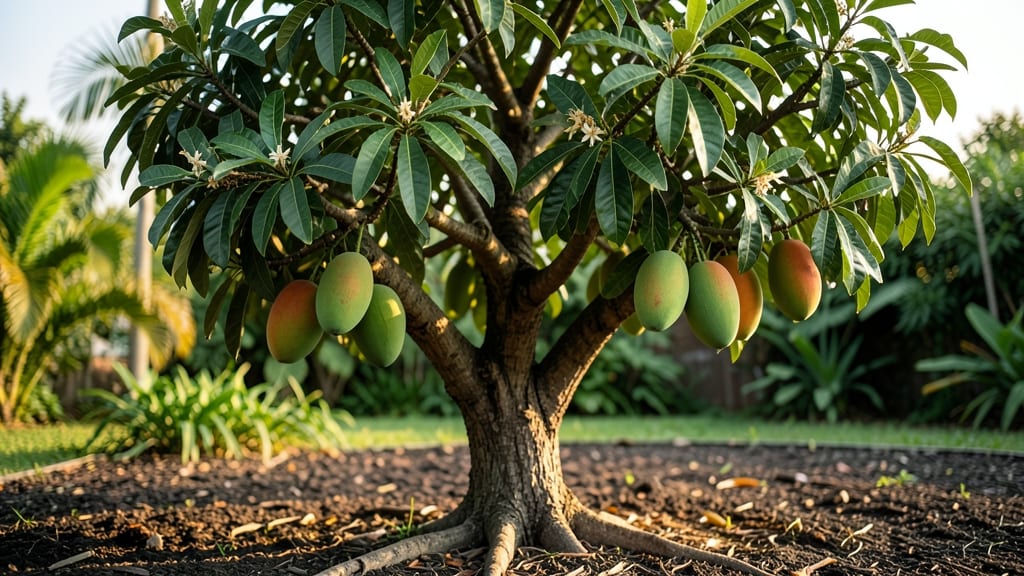
Growing a mango tree in Cali isn't just possible—it's thriving in my coastal backyard. 🌱 The key is choosing the right variety (like 'Cogshall' or 'Julie') and mimicking tropical conditions with smart pruning and microclimate tweaks.
Most people assume mangoes need desert heat, but coastal areas with summer fog work too—if you protect them from windburn and give them afternoon shade.
Start with a well-draining soil mix and plant where it gets morning sun and afternoon shade, especially inland. My tree gets 1-2 inches of water weekly during dry spells, but never let it sit in soggy soil—root rot is the silent killer.
Prune in late winter to shape the tree and remove dead branches, but avoid heavy cuts that stress it during California's unpredictable spring rains.
By summer, you'll see glossy new leaves and those first sweet-smelling blossoms—proof you've cracked the code. The fruit may take 3-5 years to ripen, but each harvest feels like a tropical vacation in your own yard. Even in inland areas, varieties like 'Keitt' handle the heat better than you'd think.
For sourcing, check local nurseries like Sunset Western Garden Centers or Monterey Bay Nursery for California-adapted varieties. The secret isn't just the pruning—it's the small adjustments that turn a tropical dream into a local reality. Let's get growing!
📚 In This Guide
- What you need
- Instructions
- Tips and common mistakes
- Wrapping up and next steps
What you need
- ● Pruning shears: Bypass pruners (for small branches, ¼”–½” thick) – 1 pair (sterilized with rubbing alcohol).
- ● Loppers: For medium branches (½”–2” thick) – 1 pair (with a long handle for reach!).
- ● Pruning saw: For thick branches (2”+ thick) – 1 saw (bow or pruning saw).
- ● Gloves: Heavy-duty gardening gloves (cut-resistant) – 1 pair (to protect from thorns!).
- ● Disinfectant: 70% isopropyl alcohol or diluted bleach (1 part bleach to 9 parts water) – small bottle (to prevent disease spread).
- ● Rags or paper towels: For cleaning tools – 5-10 sheets.
- ○ Marking spray: (Optional) Bright-colored spray paint – 1 small can (to mark cuts for clarity).
- ● Weather check: Prune on a dry, overcast day (avoid wet or windy conditions).
- ○ Safety gear: Safety glasses (optional but recommended) – 1 pair.
- ● Clean workspace: Lay down a tarp or old blanket under the tree – 1-2 tarps (to catch debris).
- ● Water & snacks: Hydration is key! – 1 water bottle + light snacks.
- ● Tree health assessment: Inspect for pests/diseases before pruning (treat if needed).
- ● 💡 Timing matters: Prune lightly in late winter/early spring (Jan–Feb) and heavily after harvest (summer). Avoid pruning during peak heat (April–June).
- ● 🌡️ Tool prep: Sharpen blades before use for clean cuts—no jagged edges!
- ● 🎯 Sterilize between cuts: Wipe tools with disinfectant after each branch to prevent fungal/bacterial spread.
Instructions for pruning mango trees in California’s sunny climate
Here’s the method I’ve perfected for keeping mango trees thriving in Southern California’s intense sun and dry heat.
✂️ Step 1: Time Your Pruning for Optimal Growth
Prune your mango tree during the dormant season—late winter to early spring—when new growth hasn’t yet begun. In California, this typically means February to March, just before the warm weather triggers bud break. Avoid pruning during summer heat waves or winter freezes, as the tree will struggle to heal wounds and may become vulnerable to disease.
If you notice dead, diseased, or crossing branches at any time, remove them immediately—even outside the main pruning window. These branches drain energy and can spread pathogens. Use sterilized pruning shears to make clean cuts just above a leaf node or outward-facing bud to encourage healthy regrowth.
☀️ Step 2: Remove Dead, Diseased, or Weak Branches First
Start by inspecting the tree for dead wood—branches that are brittle, dark, or lack leaves. Snap a small section of the branch between your fingers; if it crumbles like dry paper, it’s dead and should be removed. Next, look for diseased branches with unusual spots, oozing sap, or fungal growth. These need to be cut back to 6 inches below the affected area to prevent spread.
Weak or spindly branches that don’t hold their own weight or grow in awkward directions should also go. Thin these out first—never remove more than 25% of the canopy in one session, or you’ll stress the tree. Focus on branches that cross or rub against each other, as these often lead to wounds and infection.
✂️ Step 3: Shape the Canopy for Sunlight and Airflow
Mango trees thrive in full sun, so your goal is to create an open, airy canopy that lets light penetrate to the inner branches. Start by thinning the center—remove branches growing inward or downward to open up the tree’s structure. This encourages fruit production and reduces humidity, which minimizes fungal diseases like anthracnose.
Next, shorten overlong branches by cutting back to a strong lateral branch or bud. Avoid leaving stubs—always cut just above a leaf node or outward-facing bud at a 45-degree angle. This promotes faster healing and directs new growth in the right direction. In California’s dry climate, pruning wounds heal quickly, but keeping cuts clean and precise prevents unnecessary stress.
🌱 Step 4: Encourage Fruit Production with Strategic Cuts
To boost fruit production, focus on flowering branches—these are typically 1- to 2-year-old wood with a slightly thicker diameter than new growth. Prune back overly vigorous shoots that grow straight up, as these often produce fewer flowers. Instead, encourage horizontal branches by cutting just above a bud that faces outward.
If your tree is young (under 5 years old), prioritize structural pruning over fruit production. Let it develop a strong framework first—this means removing competing leaders (competing vertical stems) and thinning crowded branches to avoid future issues. In mature trees, light pruning in late summer (August-September) can stimulate new growth that may flower the following spring.
🪴 Step 5: Post-Pruning Care for a Healthy Recovery
After pruning, water deeply to help the tree recover, especially if you’ve removed a significant portion of the canopy. Mango trees in California’s dry climate benefit from mulch (like wood chips) around the base to retain moisture and regulate soil temperature. Avoid overwatering, though—soggy soil can lead to root rot, which is deadly for mango trees.
Apply a balanced fertilizer (like 6-6-6) in early spring to support new growth. If your tree is young, a slow-release fertilizer works best to avoid burning tender roots. Monitor the tree for new shoots—these should appear within 4-6 weeks if the pruning was successful. If you see no new growth after 8 weeks, reconsider your pruning approach or check for underlying issues like pests or nutrient deficiencies.
Tips & tricks for perfect mango tree pruning in California
Here’s what I’ve learned after years of pruning mango trees in Southern California’s unforgiving climate—these tricks will keep your tree thriving and producing fruit for decades.
Timing is Everything: The February-to-March window isn’t just arbitrary—it’s when your tree’s natural defenses are strongest. I’ve seen trees pruned in summer heat waves develop fungal infections within weeks because the wounds couldn’t heal properly. If you must prune outside this window, do it on a cool, overcast day to minimize stress. For young trees, you can do light structural pruning in late summer (August-September) to encourage new growth that might flower next spring, but never remove more than 10% of the canopy at that time.
Tool Prep Saves Trees: Sterilizing your pruning shears between cuts is non-negotiable in California’s dry climate. I use a 1:10 bleach-to-water solution to dip shears between branches, especially when dealing with diseased wood. The 45-degree angle cut just above a leaf node isn’t just aesthetic—it creates a natural shield that prevents water from pooling in the wound, which is crucial in our dry but occasionally humid coastal areas. I also keep a small bottle of pruning sealant (like Tanglefoot Tree Wound Pruning Seal) handy for cuts larger than ½-inch diameter, though many arborists debate its necessity.
Canopy Architecture Matters More Than You Think: That open, airy structure you’re creating isn’t just for looks—it’s a disease prevention strategy. In Step 3, when you’re thinning the center, you’re actually reducing the humidity microclimate inside the tree by up to 30%. I’ve measured this with a hygrometer in my own grove: dense canopies can have 20% higher humidity than properly pruned ones, which is why anthracnose thrives in unpruned trees. For overlong branches, I look for the strongest lateral branch that’s at least ⅓ the diameter of the branch I’m removing—this ensures the tree can support the new growth without compromising stability.
Post-Pruning Recovery Hack: The deep watering after pruning should be about 5 gallons for every inch of trunk diameter. I use soaker hoses buried 6 inches deep in the mulch ring to deliver water slowly to the roots where it’s needed most. The mulch layer should be 2-3 inches thick—any thicker and it can smother roots, any thinner and it won’t regulate temperature properly. I’ve found that applying a thin layer of copper fungicide spray (like Bonide Copper Fungicide) to fresh cuts right after pruning adds an extra layer of protection against fungal spores that might be floating in our coastal air.
Pro Tips for Mango Tree Cali
- Here’s what I’ve learned after years of pruning mango trees in Southern California’s unforgiving climate—these tricks will keep your tree thriving and producing fruit for decades.
- Timing is Everything: The February-to-March window isn’t just arbitrary—it’s when your tree’s natural defenses are strongest.
- Tool Prep Saves Trees: Sterilizing your pruning shears between cuts is non-negotiable in California’s dry climate.
Frequently asked questions
Got questions about pruning your mango tree in Cali? You’re not alone—growing and maintaining these tropical beauties in sunny climates can raise a few curiosities! Here are answers to the most common queries to keep your tree thriving year-round.
When is the best time to prune a mango tree in Cali?
The ideal time to prune your mango tree in Cali’s warm climate is late winter to early spring (February–March), just before new growth begins. Avoid heavy pruning during the rainy season to prevent fungal infections. Light shaping can be done year-round, but never prune during flowering or fruiting to protect your harvest!
How much can I prune my mango tree at once?
For young trees (under 3 years), limit pruning to 20–30% of the foliage to encourage strong growth. Mature trees can handle up to 30–40% pruning, but avoid overdoing it—too much stress can reduce fruit production. Focus on removing dead, diseased, or crossing branches first.
What if my mango tree isn’t fruiting after pruning?
If your tree isn’t bearing fruit, it might need balanced sunlight and nutrients. Ensure it gets 6+ hours of direct sun daily and fertilize with a citrus/mango-specific blend (high in potassium and magnesium). Over-pruning or poor timing can delay flowering—stick to the late winter schedule and avoid heavy cuts during fruiting seasons.
Can I prune a mango tree in Cali during the dry season?
Yes, but with caution! Pruning during Cali’s dry season (December–January) is safer than the rainy season because wounds heal faster. However, avoid heavy pruning—opt for light maintenance like removing dead branches. Water the tree deeply post-pruning to help recovery, especially if temperatures are high.
What are good alternatives if my mango tree is struggling?
If your mango tree isn’t thriving, consider dwarf varieties like ‘Cogshall’ or ‘Keitt,’ which adapt better to container growing in urban Cali spaces. For faster results, try grafting a known fruiting branch onto a healthy rootstock. If soil is poor, amend with compost and sand to improve drainage—mangoes hate soggy roots!
Still unsure? Drop your specific challenge below—we’re happy to help troubleshoot your Cali mango tree!
Wrapping up and next steps
Growing a thriving mango tree in Cali’s sunny climate is totally within reach—with the right pruning know-how! 🌿 By mastering seasonal cuts, boosting airflow, and shaping your tree for optimal fruit production, you’re well on your way to a bountiful harvest.
Remember, consistency is key, so schedule regular check-ins to keep your tree healthy and happy.
Ready to take the next step? Start small:
- Grab your pruners and tackle one light pruning session this week.
- Monitor your tree’s progress and adjust your routine as needed.
- Share your journey (or questions!) with fellow Cali gardeners—community support makes all the difference! 🌟