
Pruning
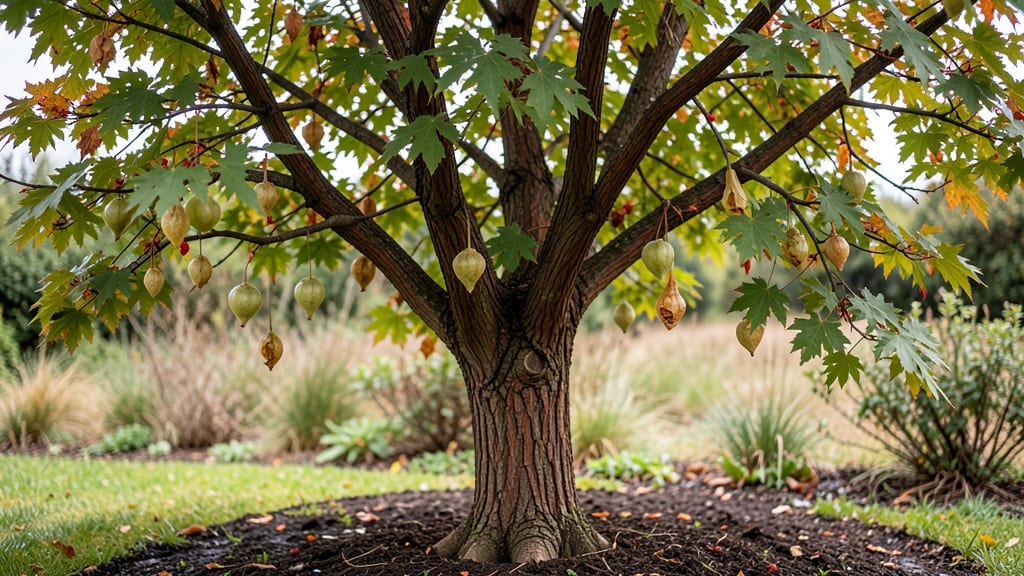
Those weird, balloon-like bladder galls on your maple tree branches? Those are tiny wasp nests that turn your tree into a craft project. 🌿 I’ve spent years watching these galls pop up every spring, and while they look alarming, they’re rarely a death sentence for your tree.
The key is knowing when to leave them alone and when to take action.
Bladder galls form when maple bladder galls wasps lay eggs in the bark, triggering the tree to grow protective pouches around them. These galls are usually ½ to 1 inch wide, translucent, and filled with a cottony substance where the wasp larvae develop.
While they’re unsightly, they rarely kill the tree—unless your maple is already stressed from drought or disease.
You can safely prune them off in late winter or early spring before the wasps emerge, or use horticultural oil in early spring to smother the eggs.
For severe infestations, insecticidal soap works, but most gardeners find that a little patience and pruning keep their maples looking sharp without harsh chemicals.
Prevention starts with keeping your tree healthy—watering deeply during droughts, mulching well, and avoiding over-fertilizing. A strong tree is less likely to let these galls take over. Once you spot them, you’ll know exactly what to do next.
The Tiny Culprits Behind Galls
Bladder galls on maple trees aren’t just random bumps—they’re the result of a fascinating (and sometimes frustrating) interaction between nature and tiny insects. These growths form when specific gall wasps lay their eggs inside young maple leaves or buds, triggering a defensive response from the tree.
The tree’s cells multiply rapidly around the eggs, forming a protective, balloon-like structure—what we call a bladder gall. Let’s break down the real reasons this happens and who’s responsible.
Bladder galls are primarily caused by Andricus species, a genus of gall wasps that specialize in maple trees. These wasps have a unique life cycle:
- 🌿 Spring egg-laying: Female wasps emerge in early spring and insert their eggs into developing maple buds or leaf tissues. The act of laying the egg triggers the tree’s immune system to overreact, forming the gall.
- 🏡 Larval development: Inside the gall, the wasp larva feeds on the tree’s nutrients, growing and maturing. The gall itself acts as a cozy, protected nursery.
- 🦋 Pupation and emergence: By late summer or fall, the wasp pupates inside the gall. The following spring, adult wasps chew their way out, ready to repeat the cycle.
Fun fact: Some gall wasps are highly specific to certain maple species, like Andricus quercusfolii, which targets sugar maples (Acer saccharum). This specificity means not all maples will develop bladder galls—it depends on the wasp species and the tree’s susceptibility.
Not all maple trees develop bladder galls, and the severity varies. Several factors make a tree more attractive (or susceptible) to gall wasp infestations:
🌿 Young, Healthy Trees Are Prime Targets
Gall wasps prefer rapidly growing, healthy maple trees because:
- Abundant sap: Young trees produce more sap, which provides the nutrients the wasp larvae need to thrive.
- Thin bark/leaves: Mature trees often have thicker bark or tougher leaves, making it harder for wasps to penetrate.
- Weakened defenses: Trees under stress (from drought, poor soil, or disease) may produce fewer galls because their energy is focused on survival—not overreacting to wasp eggs.
Pro tip: If your maple tree is overly vigorous (think lush, fast growth), it might be a magnet for gall wasps. Balancing its health with occasional pruning can sometimes reduce infestations. 🌡️
🌧️ Environmental Triggers: When Conditions Are Just Right
Gall formation isn’t random—it’s often tied to specific weather patterns:
- 🌤️ Warm, wet springs: Gall wasps are most active when temperatures hover around 50–70°F (10–21°C) and there’s moisture in the air. A damp spring = more successful egg-laying.
- ☀️ Sunny, dry summers: While wasps prefer wet springs, their larvae need stable conditions to mature. Extreme heat or drought can stress the tree, sometimes reducing gall numbers (but not always—it’s complicated!).
- 🍂 Timing of bud break: If maple buds open early in spring, wasps may get a head start on egg-laying. Late frosts can delay bud break, sometimes misaligning the wasp’s life cycle with the tree’s growth.
💡 Actionable insight: If you notice galls appearing in clusters year after year, your tree’s growth cycle might sync perfectly with the wasps’ life cycle. Monitoring local weather patterns can help predict bad years.
At first glance, bladder galls seem like a tree’s weakness, but they’re actually a brilliant (if misguided) defense strategy. Here’s what’s happening:
🛡️ The Immune System Overreacts
When a gall wasp inserts an egg into a leaf or bud, the tree’s cells detect the foreign DNA and physical damage. In response:
- 🧬 Cell division spikes: The tree floods the area with hormones (like auxin and cytokinins) that trigger rapid cell growth, encapsulating the egg.
- 🛠️ Gall formation begins: The overgrowth forms a balloon-like structure with a thickened wall, starving the wasp larva of direct access to the tree’s vascular system (which would let it drain nutrients efficiently).
- 🚫 Trapped but fed: The larva still gets nutrients, but the gall limits its growth and mobility, making it easier for the tree to tolerate the infestation.
⚖️ The Cost of Defense: Trade-Offs for the Tree
While galls protect the tree from direct damage (like sap loss or leaf death), they’re not free. The tree expends energy to:
- ✅ Maintain the gall structure (like growing a scar).
- ❌ Reduce photosynthesis in affected leaves (since galls distort or kill leaf tissue).
- ⚠️ Weaken overall vigor if too many galls form (especially on young trees).
🔥 Key takeaway: Galls are a compromise. The tree can’t just “kill” the wasp egg without risking its own health, so it contains the threat instead. Unfortunately for us, that containment looks like those unsightly (and sometimes hundreds of) bladder-like growths.
Simple Fixes for Maple Tree Galls
Bladder galls on maple trees might look alarming, but they’re usually harmless—and often easy to manage with the right approach. Whether you’re dealing with unsightly growths or worried about long-term damage, these targeted solutions will help you restore your tree’s health.
Below, we’ve broken down the most common causes and their fixes, plus prevention tips to keep your maple tree thriving.
The first step in treating bladder galls is physical removal, especially if they’re large, unsightly, or causing stress to the tree.
🍳 When to Prune Them Out
- Timing matters: Remove galls in late winter or early spring (before new growth) or fall (after leaves drop).
Avoid pruning during active growing seasons, as this can stress the tree. - Use the right tools: Wear gloves (to avoid skin irritation from sap) and use sharp pruners or shears to cut galls at the base.
For stubborn galls, a small saw may help. - Dispose properly: Place galls in a sealed bag and dispose of them in the trash (not compost)—this prevents wasps from emerging later.
⚠️ What NOT to Do
- Don’t crush galls—this can release wasp larvae or sap, which may attract pests.
- Avoid over-pruning—only remove galls that are large, deformed, or clustered.
Healthy galls (small, few in number) can be left alone. - Skip chemical sprays unless severe—most galls are harmless and self-resolve.
If galls persist or worsen, the tree may need extra care to boost its resilience.
🌱 Strengthen Tree Health
Bladder galls thrive on weak or stressed trees. Improve your maple’s vigor with these steps:
| Issue | Solution |
|---|---|
| Poor soil nutrition | Apply a balanced fertilizer (10-10-10) in early spring. Focus on phosphorus and potassium for root strength. |
| Drought stress | Water deeply 1-2 times per week during dry spells (1-2 inches per session). Use mulch to retain moisture. |
| Compacted soil | Aerate the root zone with a garden fork or soil aerator to improve drainage. |
| Fungal/bacterial infections | Treat with a copper fungicide (like Bordeaux mixture) if galls appear mushy or oozing. |
🐝 Control Gall Wasps (If Needed)
While most galls are harmless, severe infestations (hundreds of galls) may require intervention:
- Horticultural oil spray (applied in late winter/early spring) can smother overwintering wasps.
- Beneficial nematodes (like Steinernema carpocapsae) can target gall wasp larvae in the soil.
- Pheromone traps (for monitoring, not eradication) can help track wasp activity.
An ounce of prevention is worth a pound of cure! Follow these long-term strategies to minimize galls:
💡 Proactive Tree Care
- Prune regularly: Remove dead, weak, or crossing branches to improve airflow and reduce stress.
- Monitor for pests: Check your tree monthly during growing seasons for early signs of wasps or galls.
- Encourage natural predators: Birds, parasitic wasps, and ladybugs feed on gall wasps—plant native flowers to attract them.
🌡️ Seasonal Maintenance Checklist
| Season | Action |
|---|---|
| Spring | Apply fertilizer and horticultural oil (if needed). Prune galls. |
| Summer | Water deeply during droughts; watch for new gall formation. |
| Fall | Remove last year’s galls; apply mulch to protect roots. |
| Winter | Inspect tree for dormant wasp eggs (tiny white specks); prune if necessary. |
While most bladder galls are manageable at home, consult an arborist if:
- Galls are spreading rapidly or covering large branches.
- Your tree shows signs of decline (yellowing leaves, dieback, oozing sap).
- You’re unsure about pruning large branches (safety risk).
Final Tip: 🎯 Patience is key! Maple trees often recover well from galls, especially with proper care. Focus on health first, and the galls will become less noticeable over time.
Frequently asked questions
Are bladder galls harmful to my maple tree?
Most bladder galls are harmless and won't kill your tree. They're actually the tree's defense mechanism against gall wasp eggs. However, if your tree is already stressed from drought or disease, excessive galls can weaken it by reducing photosynthesis in affected leaves. Focus on keeping your tree healthy to minimize their impact.
What's the best time of year to remove bladder galls?
The ideal time is late winter or early spring before new growth begins, or in fall after leaves drop. Avoid pruning during active growing seasons as this can stress the tree. Always use sharp pruners and dispose of galls properly in sealed bags to prevent wasp emergence.
Can I use chemical treatments on bladder galls?
Chemical treatments are rarely needed for bladder galls. For severe infestations, horticultural oil applied in late winter can smother overwintering wasps. If you prefer chemical options, insecticidal soap is safer than broad-spectrum pesticides. Always test treatments on a small area first and follow label instructions carefully.
Why do some maple trees get galls while others don't?
Gall formation depends on tree health, species, and environmental conditions. Young, vigorous trees with abundant sap are prime targets. Some maple species are more susceptible than others, and warm, wet springs create perfect conditions for gall wasp activity. Healthy trees with balanced nutrition often develop fewer galls.
Will removing galls prevent future infestations?
Removing galls helps reduce the wasp population but won't prevent future infestations completely. The key is combining removal with proper tree care—watering deeply during droughts, applying balanced fertilizer, and encouraging natural predators like birds. Consistent monitoring and seasonal maintenance provide the best long-term protection.