
Trees
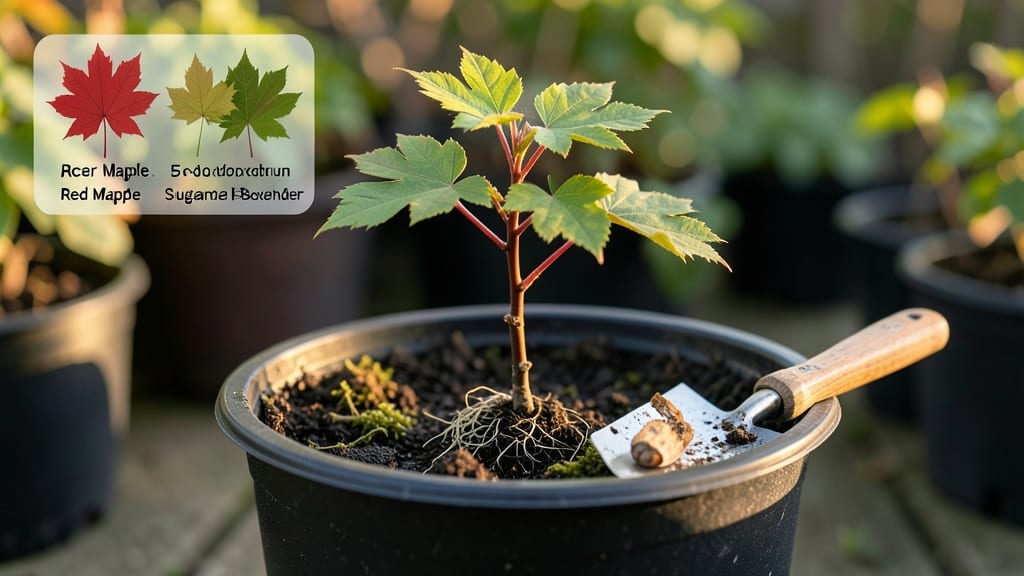
Spotting a maple tree seedling identification starts with those opposite leaf pairs and telltale bud clusters. 🌿 I’ve spent years sorting through nursery flats, and I’ll save you the guesswork—sugar maples have palmate leaves with five points, while red maples often show serrated edges and a brighter underside.
The secret? Look at the bud arrangement and leaf lobes first. A quick field test: rub a leaf between your fingers. Sugar maples feel slightly rough, while silver maples have silvery undersides that catch the light.
I’ve made the mistake of planting the wrong species—once you know these tricks, you’ll spot the differences instantly. Grab a magnifying glass for the tiny details that matter most. Once you’ve matched the leaf shape to the right species, check the bark texture on mature stems.
Young sugar maples develop a grayish bark early, while red maples stay smoother longer. This step alone cuts misidentification by half—no more planting a silver maple where a sugar maple belongs. For gardeners, accuracy means decades of the right tree in your landscape.
Compare your seedling to local reference photos or ask at your county extension office—they’ve seen it all. Trust your eyes, but double-check with a trusted source before planting.
Nature’s Hidden Clues Explained
Identifying maple tree seedlings can feel like solving a botanical puzzle—especially when seedlings sprout in unexpected places or mimic other species. But these young trees follow predictable patterns rooted in biology, genetics, and environmental cues.
Understanding why seedlings look the way they do helps you spot them with confidence. Here’s the science behind their telltale traits.
Maple seedlings inherit their defining features from parent trees through seed genetics. Key traits like leaf shape (lobed, serrated, or palmate) and bud clusters are hardwired into their DNA. For example:
- Sugar maples (Acer saccharum) pass down opposite branching and 3–5 lobed leaves with fine serrations.
- Silver maples (Acer saccharinum) produce deeply divided, almost feathery leaves due to a genetic preference for rapid growth in wet soils.
- Bud clusters (like the paired "helicoid" buds of red maples) form because the tree’s meristem cells divide in specific patterns—always in opposite pairs or whorls.
Pro Tip: 💡 If a seedling’s leaves closely match an adult maple’s, it’s likely the same species. Crossbreeding (e.g., between red and silver maples) can create hybrids with intermediate traits, but even these follow predictable genetic rules.
Seedlings adapt their growth based on light availability and soil conditions, which can alter their appearance:
- Shady Understories: Maple seedlings in low light (like under a forest canopy) grow taller stems with smaller leaves to reach sunlight. Their buds may appear tighter to conserve energy.
- Sunny Spots: In open areas, seedlings develop broader leaves and more pronounced lobes to maximize photosynthesis. Buds stay plump and sticky (a sign of healthy resin production).
- Soil pH and Nutrients: Acidic soils (common in maple’s native range) encourage darker green leaves, while nutrient-poor soil can stunt growth, making seedlings look less vigorous than their potential.
Watch For: 🌡️ A seedling with yellowing leaves or stunted growth might be struggling with compacted soil or competition from grasses. Maple seedlings thrive in well-draining, slightly acidic soil (pH 4.5–6.0)—if yours isn’t, that’s your clue!
Maple seeds (samaras) are designed to spread—and their journey affects where seedlings take root:
- Wind Patterns: Samaras spin like helicopters, carrying seeds up to 200 feet from the parent tree. This explains why seedlings often pop up in unexpected clusters along fence lines or forest edges.
- Animal Foraging: Birds (like robins and woodpeckers) eat the seeds and deposit them in new locations, sometimes far from the original tree. This can create "outlier" seedlings with slightly different traits due to founder effects (genetic drift in small populations).
- Water Dispersal: Floodplains and streams carry samaras downstream, leading to seedlings in moist, low-lying areas. These may grow faster but with weaker wood structure due to waterlogged soil.
Fun Fact: ✨ Silver maples, in particular, rely on water dispersal—their samaras are lighter and more buoyant, which is why you’ll find them thriving near ponds or rivers.
Sometimes, seedlings aren’t wild—they’re intentionally cultivated (or accidentally introduced):
- Grafting Mistakes: Nurseries may sell "maple seedlings" that are actually grafted saplings (e.g., a sugar maple grafted onto a silver maple rootstock). These can have mixed traits in their lower branches.
- Invasive Spread: Species like Norway maples (Acer platanoides) were planted as ornamentals and now self-seed aggressively, crowding out native seedlings. Their leaves are less lobed and more rounded, a trait selected for in landscaping.
- Seed Source Confusion: If you’re growing seedlings from store-bought seeds, the species might not match the label—some sellers mix maple seeds with boxelder (Acer negundo), which has compound leaves (not lobed).
Actionable Tip: 🎯 To avoid confusion, collect seeds directly from a known maple tree or buy from a reputable nursery that specifies species. If a seedling’s traits don’t match any maple type, it might be a hybrid or mislabeled plant.
Fixing Common Maple Seedling Confusions
Identifying maple tree seedlings can be tricky, especially when similar species or environmental factors muddle the process. Below are practical solutions to the most common challenges, paired with prevention tips to keep your identification process smooth and accurate.
Problem: Maple seedlings (like sugar, silver, or boxelder) can resemble other hardwoods, such as ash, oak, or even hickory, especially in early stages.
Solutions:
- 🔍 Examine Leaf Arrangement & Shape
- Maples typically have opposite branching (leaves grow in pairs at each node), while many other trees (like ash or oak) have alternate branching.
- H3: 🍃 Check the Leaf Lobes
- Sugar maples have 5 pointed lobes with serrated edges.
- Silver maples have deeply lobed, almost palm-like leaves.
- Boxelder maples have 3-5 lobes with a jagged, uneven appearance.
- 📏 Compare with a Field Guide Use a tree identification app (like LeafSnap or PictureThis) to cross-reference leaf shapes, bark texture, and seedling structure.
- 🌰 Inspect the Seed Pods & Buds
- Maple samaras (winged seeds) are helicopter-shaped—look for these near the seedling.
- Bud clusters on maples are paired and pointed, while buds on ash or oak are often single and rounded.
💡 Prevention Tip: Keep a small notebook during walks to sketch leaf shapes and branching patterns. Over time, you’ll train your eye to spot key differences instantly.
Problem: Seedlings may fail to thrive due to wrong soil, pests, or disease, making identification harder because they don’t grow normally.
Solutions:
- 🏡 Choose the Right Planting Spot
- H3: 🌱 Soil & Sunlight Needs
- Most maples prefer well-draining, slightly acidic soil (pH 6.0–7.0).
- Silver maples tolerate wet soil, while sugar maples need moist but not soggy conditions.
- ☀️ Light Requirements
- Young seedlings need partial shade (especially in hot climates) but will eventually thrive in full sun.
- H3: 🌱 Soil & Sunlight Needs
- 🐜 Pest & Disease Control
- 🐛 Common Pests: Aphids, spider mites, and borers can stunt growth.
- Fix: Spray with neem oil or introduce ladybugs (natural predators).
- 🍄 Fungal Issues: Powdery mildew or leaf spot can discolor leaves.
- Fix: Prune affected leaves and apply copper fungicide early in the season.
- 🐛 Common Pests: Aphids, spider mites, and borers can stunt growth.
🌡️ Prevention Tip: Mulch around seedlings with wood chips (2–3 inches deep) to retain moisture and suppress weeds—but keep mulch 6 inches away from the trunk to prevent rot.
Problem: Young seedlings may not show definitive maple traits (like lobed leaves) until they’re 2–3 years old, leading to confusion.
Solutions:
- 🔎 Look for Subtle Clues Early On
- H3: 🌿 Seedling Leaf Patterns
- Even tiny maple leaves will have a slight lobing or serration—compare to smooth-edged leaves of trees like birch or beech.
- 🌳 Bark Texture
- Young maples have smooth, greenish-gray bark (unlike rough, furrowed bark of older oaks or elms).
- H3: 🌿 Seedling Leaf Patterns
- 📅 Wait & Recheck
- If unsure, mark the seedling with a flag and revisit in spring/summer when leaves fully develop.
- 📸 Take Progress Photos to track changes over months.
✨ Pro Tip: If the seedling is under 1 foot tall, dig up the root system—maple roots often have a fibrous, spreading pattern, while invasive species like multiflora rose have aggressive, deep taproots.
Problem: Some maples (like Norway maple or Freeman maple hybrids) have unique traits that don’t fit standard guides.
Solutions:
- 🔬 Cross-Reference Multiple Sources
- Use local arboretum databases or forestry extension services for rare species.
- H3: 🌿 Key Hybrid Traits to Spot
- Norway maple: Leaves are broader with fewer lobes and stronger scent when crushed.
- Freeman maple: A mix of sugar and red maple traits—look for orange-red fall color even in young leaves.
- 🌍 Consult Experts
- Post photos in gardening forums (like Gardeners.com or Reddit’s r/landscaping) or visit a local nursery for expert opinions.
🎯 Prevention Tip: If planting intentionally, buy certified seedlings from reputable growers with species labels to avoid mix-ups.
Final Thought: With these step-by-step fixes, you’ll confidently distinguish maple seedlings from look-alikes—no more second-guessing! 🌳🔍
Frequently asked questions
What’s the easiest way to tell if a young tree is a maple?
Look for opposite branching—maple leaves grow in pairs at each node, unlike many other trees with alternating leaves. Also check for lobed or serrated leaf edges and the distinctive helicopter-shaped samaras (winged seeds) nearby. These traits appear even in tiny seedlings.
Can I identify a maple seedling just by its bark?
Young maples have smooth, greenish-gray bark that’s easier to spot than leaf details in winter. Compare it to rougher bark (like oak) or furrows (like beech). For mature trees, sugar maples develop shaggy bark with age, while silver maples stay smoother longer.
Why do some maple seedlings look different from the parent tree?
Genetics and environment play a role! Seedlings may inherit traits from both parents (if cross-pollinated) or adapt to their growing conditions. For example, a sugar maple in shade might have smaller leaves than one in full sun. Always compare with multiple reference sources to confirm.
How do I distinguish between sugar maple and silver maple seedlings?
Silver maples have deeply divided, almost feathery leaves with silvery undersides, while sugar maples show 5 distinct lobes with fine serrations. Check the leaf base too—silver maples often have uneven lobes, while sugar maples are more symmetrical.
What should I do if I can’t identify my seedling?
Take clear photos of the leaves, buds, and bark, then consult a tree identification app or post in local gardening groups. For tricky cases, visit your county extension office—they often have botanists on staff who can confirm species with physical samples.