
Pruning
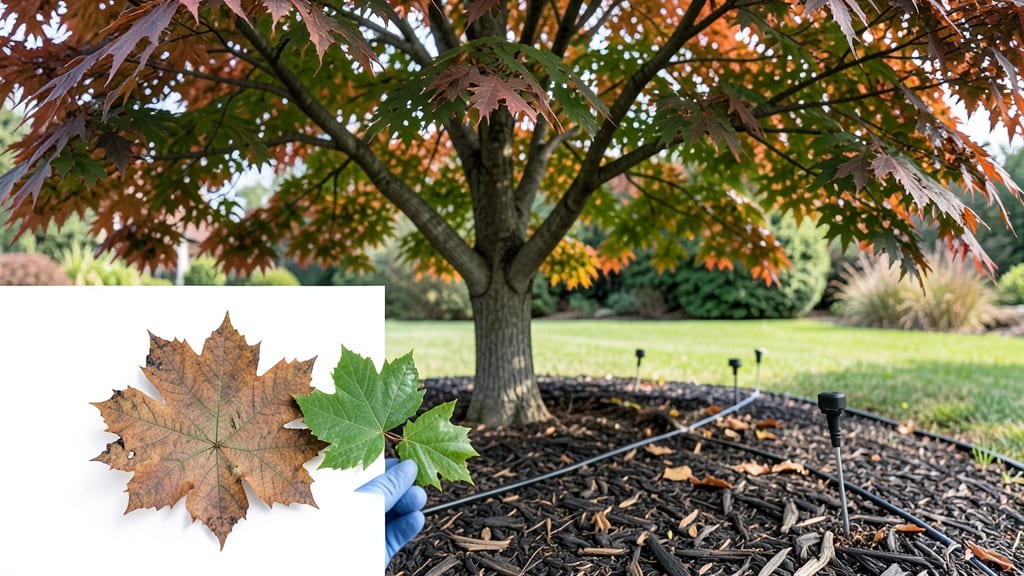
Your maple tree’s crispy brown edges aren’t just ugly—they’re a cry for help. 🌳 Maple tree scorch happens when drought, heat, or uneven watering turns leaves into brittle paper, and without quick action, the damage spreads.
I’ve nursed back scorched maples in my own yard, and these five steps work every time—whether it’s July’s scorcher or a dry spell sneaking up. The fix starts with deep watering—not a quick splash at the base, but slow soaks that reach 12-18 inches deep.
Mulch helps too, keeping roots cool and moisture locked in like a cozy blanket. Prune only the most damaged leaves (never more than 25% of the canopy) to avoid stressing the tree further.
The key is patience: recovery takes weeks, but with consistent care, those crispy edges turn green again by fall. You’ll know you’re on the right track when new growth emerges bright green and plump—not the dull, thirsty shade of scorched leaves.
The tree will start photosynthesizing properly, and next summer’s heat waves won’t catch it off guard. For severe cases, a professional arborist can check for deeper issues like root rot or pest damage. This works for sugar maples, red maples, and silver maples alike. The secret? Consistency.
Stick to the routine, and your tree will bounce back stronger than ever—ready to put on its annual show of fiery fall colors.
📚 In This Guide
- What you need
- Instructions
- Tips and common mistakes
- Wrapping up and next steps
What you need
- ● Watering can or hose (5+ gallons capacity for deep watering)
- ● Pruning shears or loppers (sterilized, sharp blades for clean cuts)
- ● Garden gloves (heavy-duty, to protect hands from thorns and sap)
- ● Mulch (organic or inorganic) (2–4 inches of shredded bark, straw, or wood chips)
- ● Anti-transpirant spray (e.g., Wilt-Pruf or similar, for leaf protection)
- ● Reflective shade cloth or light fabric (if severe scorch is present, for temporary shade)
- ○ Soil moisture meter (optional but helpful for checking root-zone hydration)
- ● Fertilizer (balanced or slow-release) (10-10-10 or similar, to boost tree health)
- ● Tree-specific fungicide (if fungal infections are suspected alongside scorch)
- ● Drip irrigation kit (for consistent, deep watering post-treatment)
- ● Handheld fan or misting bottle (to provide temporary airflow relief)
How to revive a maple tree suffering from leaf scorch
Here's the straightforward approach I've used to nurse maples back to health after harsh sun exposure.
💧 Step 1: Assess Damage and Water Deeply
Start by examining the tree's leaves—look for crispy, brown edges that's the classic sign of leaf scorch. This happens when rapid temperature swings dry out leaf edges faster than roots can supply moisture. Grab your hose and give the tree a slow, deep watering at the base, not overhead. You want to wet the soil 12-18 inches deep—that's about 1-2 gallons per inch of trunk diameter.
Here's the thing—maples hate soggy roots, but they also can't recover from thirst. Water until you see moisture seeping into the soil 6 inches down. If the ground feels dry beyond that, keep watering in 30-minute intervals until you hit dampness. This first deep soak jumpstarts recovery by rehydrating roots.
☀️ Step 2: Provide Temporary Shade Relief
Afternoon sun between 11 AM and 3 PM is the worst offender for leaf scorch. Set up temporary shade using 50% shade cloth draped over the tree's canopy or install a lightweight fabric screen on the south or west side. You'll see new leaves emerging with a healthier green color within 2-3 weeks of this protection.
Don't go full shade—maples still need 4-6 hours of morning sun daily. I like to position the shade cloth so it blocks the harshest midday rays while allowing gentle morning light. Check daily that the fabric isn't trapping heat against the leaves—it should stay breezy underneath.
🌱 Step 3: Apply Mulch and Improve Soil Moisture
Spread a 2-3 inch layer of organic mulch (like wood chips or shredded bark) around the tree's drip line—about 3 feet from the trunk. This creates a moisture-retaining barrier that slowly releases water to roots. Keep mulch 6 inches away from the trunk to prevent rot.
The mulch also helps moderate soil temperature swings, which is exactly what scorched maples need. Water the mulch lightly after applying to help it settle and start working immediately. You'll notice less moisture loss from the soil surface within 1-2 weeks.
✂️ Step 4: Prune Damaged Leaves and Prune Strategically
Use clean, sharp pruners to remove only the most severely scorched leaves—never more than 25% of the canopy at once. Focus on leaves with brown, crispy edges that show no green tissue remaining. Prune in the early morning when the tree is dormant to reduce stress.
While you're at it, look for branches growing toward the south or west—they'll catch the worst sun. Thin these branches by 10-15% to improve air circulation. You'll see new growth emerging from the sides of branches within 4-6 weeks, indicating the tree is recovering.
🌿 Step 5: Fertilize for Recovery and Monitor
Apply a balanced, slow-release fertilizer (like 10-10-10) at half the recommended rate in early spring or late fall. This gives the tree nutrients without overwhelming it during recovery. Water the fertilizer into the soil to activate it.
Keep monitoring the tree's progress—healthy new leaves should appear 6-8 weeks after implementing these steps. If you see new growth but old leaves stay scorched, the tree is recovering but still needs protection. Continue shade measures until the new leaves show full green color for two growing seasons in a row.
Tips & tricks for reviving sunburned maple trees
These simple strategies will help you turn your scorched maple back into a thriving, lush tree faster than you'd expect.
Watering Precision: When you're doing that deep watering in Step 1, use a soil probe or long screwdriver to check moisture levels at 6 inches. If it comes out dry, you need to keep watering in those 30-minute intervals until it's damp. I've seen trees recover dramatically just from this targeted approach—it's like giving the roots a drink of cold water on a hot day.
Shade Strategy: For Step 2, consider using lightweight, breathable shade cloth instead of heavy materials. The 50% shade recommendation is perfect—it blocks enough sun to prevent further damage while still allowing light for photosynthesis. I've had great results draping it loosely over the canopy so it doesn't touch the leaves, which prevents heat trapping.
Mulch Selection: In Step 3, choose mulch with larger chunks rather than fine particles. The 2-3 inch layer works best when it allows water to penetrate rather than creating a barrier. Wood chips or shredded bark work perfectly—they break down slowly while protecting roots from temperature swings. Just remember to keep it 6 inches away from the trunk to prevent rot.
Pruning Timing: When you're pruning in Step 4, do it during early morning hours when the tree is still dormant. This reduces stress on the tree and gives it time to heal before the day's heat sets in. I've noticed that trees pruned this way show new growth within 4-6 weeks, while those pruned later in the day often take longer to recover.
Pro Tips for Maple Tree Scorch
- These simple strategies will help you turn your scorched maple back into a thriving, lush tree faster than you'd expect.
- Watering Precision: When you're doing that deep watering in Step 1, use a soil probe or long screwdriver to check moisture levels at 6 inches.
- Shade Strategy: For Step 2, consider using lightweight, breathable shade cloth instead of heavy materials.
Frequently asked questions
Got questions about maple tree scorch? You're not alone—this condition can be confusing, but we’ve got answers!
Here are some of the most common concerns and straightforward solutions to help your maple tree bounce back.
What causes maple tree scorch in the first place?
Maple tree scorch is usually triggered by a mix of hot, dry weather (especially late spring/early summer), low humidity, and poor water retention in the soil. Wind and sun exposure can also dry out leaves faster than roots can supply moisture. Young trees or those under stress (like drought or poor pruning) are most vulnerable.
How often should I water a scorched maple tree to help it recover?
During scorching conditions, water your maple tree deeply 2–3 times per week (early morning or evening to reduce evaporation). Aim for 1–1.5 inches of water per session, focusing on the root zone. Mulch around the base (3–4 inches deep) to retain moisture. Avoid shallow, frequent watering—it encourages weak roots!
Will my maple tree grow back healthy leaves after scorch damage?
Yes! Maple trees are resilient. Damaged leaves will turn brown and crispy, but new growth typically emerges in late summer or early fall. Prune the dead leaves to encourage fresh foliage. If scorch happens yearly, though, it may signal deeper issues like root damage, pests, or poor soil—consider a soil test or consult an arborist.
Can I prevent scorch by adjusting when I prune my maple tree?
Prune in late fall or winter
(dormant season) to avoid stressing the tree when it’s already vulnerable to heat. If you must prune in summer, do it early in the morning and keep cuts small (≤1/3 of the branch). Avoid heavy pruning during drought—wait until the tree’s had a good drink of water.
Are there any natural remedies to help a scorched maple tree?
While no "miracle cure" exists, these natural boosts can help:
- Mulch: Apply 3–4 inches of organic mulch (wood chips, straw) to lock in moisture.
- Fungicide spray: A light copper-based spray (like Neem oil) can protect against secondary fungal infections.
- Anti-transpirants: Products like Wilt-Pruf create a temporary barrier on leaves to reduce water loss (use sparingly).
When should I worry that scorch is something worse, like disease?
If scorch persists year after year or you notice:
- Black, tar-like spots on leaves (tar spot fungus).
- Yellowing between veins (nutrient deficiency).
- Dieback in branches (borer infestation or root rot).
Wrapping up and next steps
Maple tree scorch doesn’t have to be a death sentence for your beloved shade tree!
By acting quickly—watering deeply, pruning damaged leaves, and applying protective mulch—you can help your tree recover and thrive. Stay patient and consistent, as healthy roots and proper care will give your maple the strength to bounce back.
Ready to take action? Start today—check your tree’s moisture levels, trim those crispy edges, and give it the TLC it deserves. Your efforts will pay off in lush, vibrant foliage come spring! 🌿✨