
Pruning
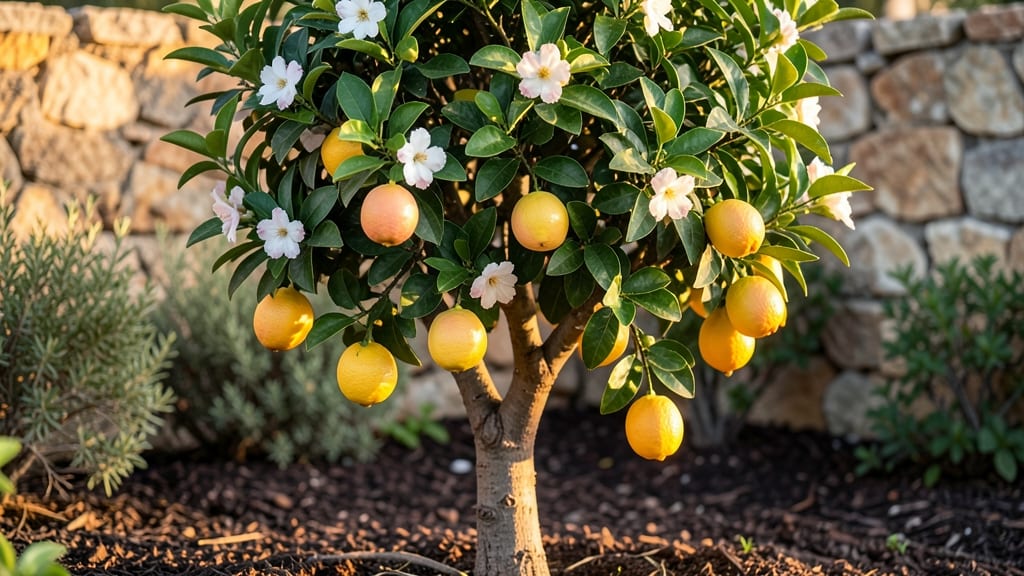
Meyer lemon trees thrive best in USDA hardiness zones 9-11, where they naturally endure brief cold snaps down to 25°F (-4°C). Below 20°F (-7°C), the trees risk permanent damage, though container-grown specimens can adapt to zones 8-9 with proper winter protection like frost cloth or indoor relocation.
Understanding your Meyer lemon tree zone is key to preventing frost damage, which starts at the cellular level. 🌱 The tree’s leaves and young shoots are particularly vulnerable, while mature bark can handle colder temps better.
Unlike their Eureka lemon cousins, Meyer lemons are slightly more cold-tolerant but still need protection in marginal zones. Container-grown trees have an advantage—their roots stay warmer, and you can move them indoors before winter hits.
For gardeners in zones 8-9, the secret lies in preparation: wrap the trunk with bubble wrap, cover the tree with frost cloth, and mulch heavily around the base.
I’ve found that gradually hardening off potted trees in fall—moving them outside during the day and back in at night—helps them adjust to temperature swings. This approach can push their cold tolerance just a few degrees lower, making all the difference in a close-call winter.
💡 In This Article
- How Cold Temperatures Affect Meyer Lemon Tree Survival
- Protecting Meyer Lemon Trees in Marginal Zones
How cold temperatures affect Meyer lemon tree survival
When temperatures drop below 28°F (-2°C), Meyer lemon trees begin experiencing cellular damage, particularly in their leaves and tender new growth. The real trouble starts at 25°F (-4°C), where ice crystals form within the plant's vascular system, rupturing cell walls and blocking water transport.
This process, called freeze-induced dehydration, causes leaves to blacken and drop, while the tree's energy reserves deplete rapidly trying to repair the damage. Young trees are especially vulnerable because their bark is thinner and lacks the protective lignin layers found in mature specimens.
Roots are surprisingly resilient—Meyer lemon roots can survive brief exposure to 20°F (-7°C) without permanent damage, thanks to their insulating soil layer. However, the foliage and fruit are far more sensitive: buds begin dying at 28°F (-2°C), while fruit may develop brown patches even at 30°F (-1°C).
This explains why container-grown trees often fare better—their roots stay warmer in pots, and you can move them to sheltered spots before cold snaps. 🌿 Compared to Eureka lemons, which are typically limited to zones 10-11, Meyer lemons have a 2-3°F (1-2°C) wider cold tolerance range due to their hybrid vigor from pomelo ancestry.
The tree's age plays a critical role in cold hardiness. A 3-year-old Meyer lemon tree might handle 25°F (-4°C) for short periods, while a 10-year-old specimen could survive 22°F (-6°C) with minimal damage. This is because mature trees develop thicker bark and deeper root systems that act as natural insulation.
The bark's ability to insulate the cambium layer—where new growth emerges—is the key difference between survival and death during cold snaps. Even a 1°F (0.5°C) difference in minimum temperature can mean the difference between a thriving tree and one that struggles to recover.
What most gardeners don't realize is how wind chill accelerates damage. A calm night at 25°F (-4°C) might cause only minor leaf burn, but the same temperature with 10 mph winds creates a 15°F (-9°C) wind chill, potentially killing exposed foliage.
This is why microclimates near south-facing walls or under eaves can make all the difference—these spots often stay 5-10°F (3-6°C) warmer than open areas during cold nights.
The tree's natural defenses include producing antifreeze proteins similar to those in cold-hardy citrus varieties, but these only provide 2-3°F (1-2°C) of extra protection.
Fruit production takes the biggest hit from cold exposure. Even if the tree survives, lemons exposed to 28°F (-2°C) or below may develop brown rot and drop prematurely. The fruit's skin contains volatile oils that become unstable in cold temperatures, leading to cellular breakdown.
This is why commercial groves in marginal zones often use heated root zones or tree wraps—these methods can extend the safe temperature range by 4-5°F (2-3°C).
The science behind this involves maintaining root zone temperatures above 45°F (7°C), which keeps the tree's metabolic processes active enough to recover from brief cold exposure.
One fascinating adaptation is how Meyer lemons recover from dormancy differently than other citrus. While most citrus trees enter a true dormancy phase, Meyer lemons remain semi-active, which means they can resume growth faster in spring.
However, this also makes them more susceptible to late-season frosts after buds have already formed.
The ideal strategy is to monitor 10-day temperature forecasts and protect the tree when nighttime lows are predicted to drop below 30°F (-1°C)—this gives the tree's natural defenses time to activate before the cold hits. 🌱