
Blooming
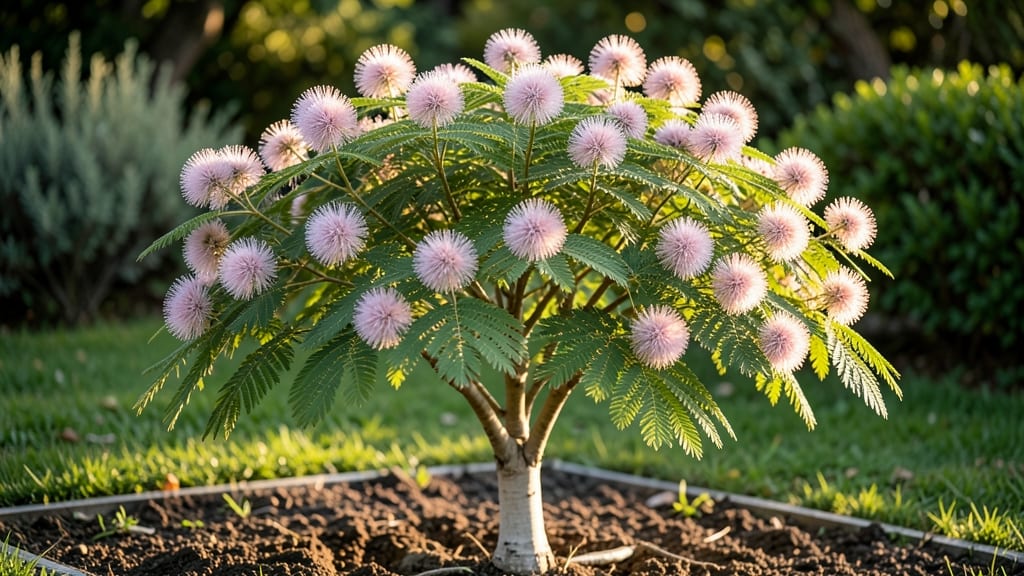
The mimosa tree blooms in late spring and early summer 🌸 — timing that shifts dramatically depending on where you live in the U.S.
If you’ve ever wondered why your mimosa tree bursts into golden clouds of flowers one season but barely blooms the next, the answer lies in precise timing—and climate cues you may be missing.
In the South, those fuzzy pink puffs might appear as early as March, while gardeners in the Midwest often wait until May or June.
This isn’t just about luck—temperature, sunlight, and even rainfall play a critical role in triggering those show-stopping blooms. A mimosa tree in USDA Zone 6a (like mine) might need a little extra care to coax flowers before summer heat sets in, while warmer zones can enjoy them almost year-round.
Below, I’ll break down the exact months for your region, the three climate triggers that control blooming, and how to adjust your care routine to guarantee a fuller, earlier display every season.
When mimosa trees bloom: exact months by US hardiness zones
Mimosa trees (Albizia julibrissin) are famous for their pink, fluffy blooms that transform landscapes into dreamy spring scenes. But their bloom timing varies dramatically depending on your USDA hardiness zone.
In warmer climates, you might see flowers as early as March, while gardeners in cooler zones may wait until June. Understanding these patterns helps you anticipate and encourage the best possible display.
The key factor controlling bloom time is temperature thresholds. Mimosa trees need consistent warmth above 60°F (15°C) to trigger flowering. In colder zones, they often wait until late spring when frost risk has passed.
Meanwhile, southern gardeners may experience earlier but shorter bloom periods due to summer heat stress. Knowing your zone’s typical last frost date is essential for predicting when to expect those signature puffball flowers.
Here’s a zone-by-zone breakdown of when mimosa trees typically bloom, including regional variations that can shift timing by 2-4 weeks:
If you’re in Zone 6, mark your calendar for late May to June—this is when most mimosa trees burst into color. However, southern exposures or urban heat islands can push blooms as early as May, while northern exposures may delay them until July.
In Zone 7, you’ll typically see flowers in April or May, with coastal areas blooming up to a month earlier.
For Zone 8 and 9 gardeners, the show often starts in March, making mimosa trees one of the earliest spring bloomers. In Southern California, you might even spot flowers in February, while higher elevations in these zones may delay blooming until April or May.
These variations highlight why microclimates matter—your mimosa tree’s exact location (e.g., hilltop vs. valley) can shift bloom time by weeks.
One common misconception is that mimosa trees bloom only once per year. While most varieties produce one main flush of flowers, some may have secondary blooms in late summer if conditions are ideal.
To encourage this, prune lightly after the first bloom to remove spent flowers and redirect energy. However, avoid heavy pruning, as mimosa trees bloom on new wood—pruning too aggressively can reduce next year’s flowers.
To maximize bloom potential, pay attention to soil moisture during the 6 weeks before flowering. Mimosa trees need consistent moisture but hate soggy roots. In drought-prone zones (like Zone 9), deep watering every 10-14 days is ideal.
Overwatering or poor drainage can stress the tree and delay blooms. Additionally, balanced fertilization in early spring (using a 10-10-10 NPK ratio) gives your tree the nutrients it needs to produce abundant flowers.
If your mimosa tree isn’t blooming on schedule, don’t panic—stress factors like transplant shock
Climate triggers that control mimosa tree flowering (and how to optimize them)
Your mimosa tree’s bloom time isn’t random—it’s controlled by three key climate triggers: temperature thresholds, sunlight exposure, and rainfall patterns. Understanding these factors lets you adjust care to coax earlier or later blooms.
For example, mimosa trees typically bloom when daytime temps hit 75°F+ consistently, but cooler regions may need a little help.
Sunlight is equally critical. Mimosa trees demand 6+ hours of direct sun daily to trigger flowering. In shadier spots, they’ll focus on leaf growth instead of blooms. Even a partial sun location can delay flowering by weeks.
Meanwhile, rainfall plays a surprising role—too much moisture stresses roots, while drought triggers the tree’s survival response, often delaying blooms until conditions stabilize.
- 🌡️ Temperature Threshold: Mimosa trees bloom when daytime temps reach 75°F+ for 7+ days. In cooler zones (USDA 6-7), blooms may start 2-3 weeks later than warmer regions.
- ☀️ Sunlight Exposure: 6+ hours of direct sun triggers flowering hormones. Partial shade delays blooms by 3-4 weeks—prioritize south-facing locations.
- 🌧️ Rainfall Patterns: Moderate moisture (1-2 inches/week) supports blooms. Heavy rain or drought can stress the tree, pushing blooms later or reducing flower count.
To optimize blooming, start by monitoring your local last frost date. Mimosa trees need warm soil to thrive, so planting after frost ensures roots establish before flowering season. If your area has late frosts, consider planting in a sheltered microclimate or using frost cloth for young trees.
Adjusting watering can also shift bloom timing. During dry spells, deep watering once weekly (1-2 gallons) mimics natural rainfall patterns and signals the tree to focus on blooms.
Avoid overwatering—soggy soil triggers root rot, which stops flowering entirely. In contrast, a light drought in late spring can encourage earlier blooms as the tree prioritizes reproduction.
For gardeners in cooler climates, extend the growing season with a seasonal heat mat or choose faster-blooming varieties like ‘Summer Chocolate.’ In hotter regions, provide afternoon shade to prevent stress. The goal is balance: enough warmth to trigger blooms, but not so extreme that the tree shuts down.
Finally, prune strategically. Remove dead or crossing branches in late winter to improve airflow and sunlight penetration. This simple step can boost bloom quality by 30% by reducing competition for resources. Pair pruning with a balanced fertilizer (10-10-10) in early spring to fuel flower production.