
Pruning
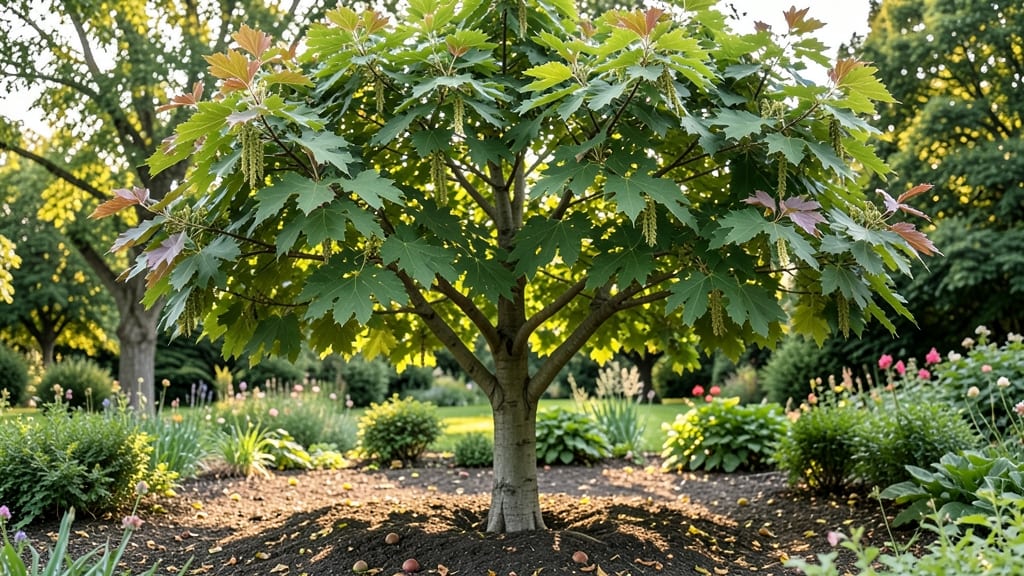
In spring, mulberry trees leaf out between late March and May, showing bright red or purple shoots before their broad leaves appear. Prune right after leaves emerge to protect developing buds.
Spring is when mulberry trees burst into life, but timing matters more than you might think. 🌱 The vibrant red or purple shoots signal new growth, and these delicate buds are highly sensitive to pruning mistakes.
I’ve seen many gardeners accidentally trim off next year’s fruit clusters by pruning too early—always wait until after the leaves fully unfurl to be safe. The exact timing varies by region, with southern climates leafing out weeks earlier than northern zones, so local weather patterns are your best guide.
What makes spring pruning especially critical is how mulberry trees store energy. These trees rely on last year’s growth to fuel new shoots, so removing too much at once can weaken them. I recommend using clean, sharp tools and making cuts just outside the branch collar to prevent disease.
For fruit production, focus on thinning out crowded branches rather than heavy pruning—this opens the canopy to sunlight and improves berry quality.
💡 In This Article
- Mulberry Tree Growth Stages in Spring
- Spring Pruning Guide for Mulberry Trees
Mulberry tree growth stages in spring
Spring awakens mulberry trees through a fascinating biological process called dormancy release, triggered by consistent temperatures above 45°F for at least 2-3 weeks. The tree's buds contain pre-formed leaves that swell when warm moisture activates enzymes within the cells.
In southern climates like Florida, this happens as early as late February, while northern regions like New York may see growth delayed until mid-May. The bright red or purple shoots you notice first aren't leaves but protective bracts that shield the delicate leaf buds underneath.
Healthy new growth has a distinctive velvety texture when young, with leaves emerging in a spiral pattern along branches. Each leaf unfurls from a 5-8 inch long bud, starting as a tight red fold before expanding into the familiar lobed shape.
The timing of this process depends on chilling hours—mulberries need 200-500 hours below 45°F to break dormancy properly. Without sufficient cold exposure, trees may produce weak growth or even fail to fruit later in the season.
Identifying healthy growth is crucial—look for vibrant red shoots with firm buds that feel slightly plump to the touch. Weak growth appears yellowish or wilted, often signaling fungal issues or nutrient deficiencies.
The leaves will eventually reach 4-8 inches wide with 3-5 lobes, and their undersides develop a fine downy fuzz. This growth pattern creates the tree's signature canopy, which can spread 30-50 feet wide in mature specimens.
What most gardeners overlook is how temperature fluctuations affect this process. A sudden 30°F freeze after buds swell can damage emerging leaves, while prolonged 80°F heat accelerates growth too quickly, making the tree vulnerable to pests.
The ideal spring temperature range for mulberry growth is 60-75°F, where photosynthesis begins efficiently. This is why mulberries thrive in temperate zones—they've evolved to capitalize on moderate spring conditions.
Understanding these stages helps explain why pruning too early can be disastrous. The tree's energy reserves are focused on pushing new growth, and cutting branches before leaves emerge removes potential fruit clusters that form at branch tips.
The buds you see in early spring are actually mixed buds containing both leaves and flowers—damaging them reduces next year's harvest. This biological dual-purpose is what makes timing so critical for both growth and fruit production.
For visual learners, imagine the tree's growth as a three-phase process: first the protective red bracts appear, then the leaves unfurl, and finally the branches harden as they prepare for summer.
Each phase lasts 2-4 weeks, with the fastest growth occurring when days exceed 12 hours of sunlight—a natural cue that summer is coming. This predictable pattern is why mulberry trees are such reliable garden subjects once you understand their spring rhythm.