
Diseases
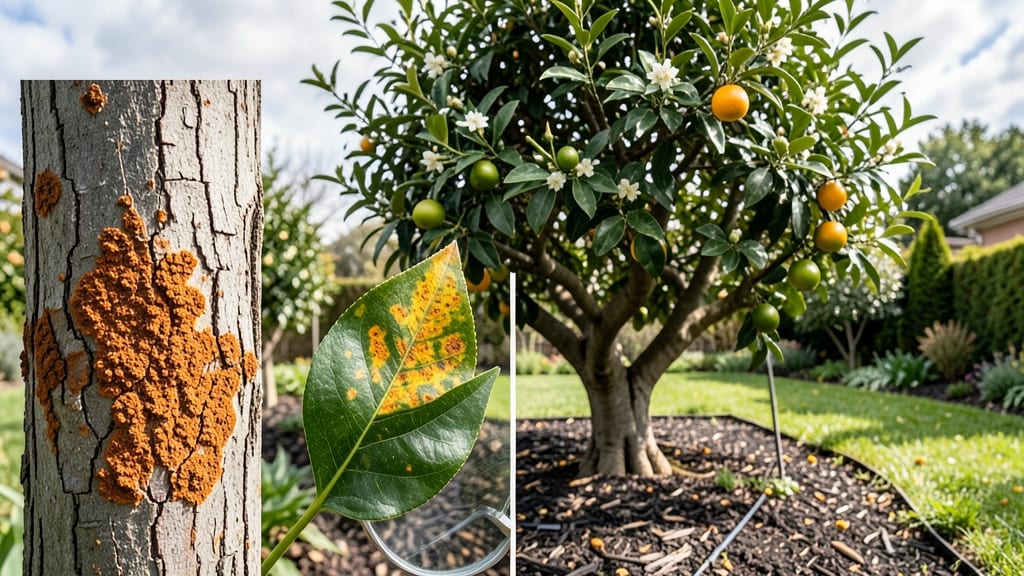
That orange, rust-colored powder on your tree bark isn’t just unsightly—it’s a fungal warning sign that could weaken your tree if ignored. 🌳 I’ve seen this Gymnosporangium infection turn healthy citrus and fruit trees into stressed, weakened plants, and the key to stopping it is acting fast with the right organic treatments.
The fungus thrives in humid conditions and spreads through wounds or old pruning cuts, so your first move is identifying infected branches (look for bright orange spores on bark or fallen leaves).
Most homeowners panic and grab harsh chemicals, but copper fungicides and neem oil work just as well—without harming bees or your soil.
You’ll see improvement within 2-3 weeks of consistent treatment, with new growth free of spores. Prune infected branches in dry weather (never when wet) to prevent spread, and always sterilize tools between cuts to avoid cross-contamination.
Prevention is easier than cleanup: space trees for airflow, avoid overhead watering, and choose rust-resistant varieties like ‘Valencia’ oranges or ‘Liberty’ apples. This isn’t just about saving your tree—it’s about keeping your whole yard healthy for years.
Root Causes of Bark Discoloration
When you spot that unsettling orange-red hue creeping across your tree’s bark, it’s rarely a coincidence—it’s a cry for help from the plant itself. Understanding the why behind this fungal invasion is the first step to stopping it in its tracks.
Let’s break down the key triggers, from environmental stress to microbial opportunists.
The primary culprit behind orange rust on tree bark is the fungus Gymnosporangium spp. (commonly linked to cedar-apple rust) or other rust-causing pathogens like Puccinia. These fungi thrive in moist, shaded conditions and rely on alternate hosts—often junipers or cedars—to complete their life cycle. Here’s how it happens:
- Spores land on bark: Wind or rain carries fungal spores from infected plants to your tree’s surface. If the bark is already compromised (cracked, wounded, or stressed), spores latch on and germinate.
- Moisture fuels growth: Rust fungi require free water to infect. Heavy dew, overhead irrigation, or poor drainage create the perfect breeding ground. Pro tip: 🌡️ If your area has humid summers or frequent rain, your tree is at higher risk.
- Weak bark = easy entry: Trees under stress (drought, poor soil, or pest damage) produce thinner bark, making it easier for fungi to penetrate. Even minor scratches from pruning tools can serve as entry points.
Actionable fix: Remove infected branches immediately (sterilize tools with 70% alcohol) and dispose of them in sealed bags. Avoid overhead watering to reduce spore splash.
Fungi don’t act alone—weather and habitat play a huge role in whether orange rust becomes a full-blown problem. These factors create the ideal storm for infection:
| Factor | How It Helps Fungi | What You Can Do |
|---|---|---|
| High Humidity (60%+) | Keeps spores alive longer and encourages fungal growth. Rust spores need 12+ hours of leaf wetness to infect. | Improve airflow with proper pruning (remove dense branches) and mulch correctly (2–4 inches, not piled against the trunk). |
| Poor Drainage | Water pools at the base, creating a fungal-friendly zone where spores thrive near the bark. | Test soil drainage and amend with compost or sand if needed. Elevate tree bases with a slight mound of soil. |
| Close Plantings | Shaded, crowded trees have higher bark moisture and slower drying times after rain. | Thin out nearby vegetation to increase sunlight and airflow around the trunk. |
| Extreme Temperature Shifts | Stresses trees, weakening defenses. Rust fungi often peak in spring/fall when temps hover around 60–75°F. | Mulch to regulate soil temp and water deeply during droughts to reduce shock. |
Pro tip: ✨ Monitor your local weather—if your area has had consistent rain or high humidity for a week, be extra vigilant for early signs of rust.
A healthy tree can fight off fungal invaders, but stress from nutritional deficiencies, pests, or physical damage leaves it vulnerable. Common stressors that invite orange rust include:
- Nutrient Deficiencies:
- Low nitrogen = weak new growth (fungi target tender bark).
- Deficient potassium = poor disease resistance.
- Solution: Test soil and amend with organic matter (compost, worm castings, or a balanced fertilizer like 10-10-10).
- Pest Damage:
- Bark-boring insects (e.g., Sirex woodwasps) or scale insects create wounds where fungi enter.
- Solution: Inspect for sawdust-like frass or sticky honeydew. Treat with neem oil or horticultural oil in early spring.
- Physical Injury:
- Improper pruning (tearing bark), lawnmower damage, or string/garden tool cuts expose inner tissue.
- Solution: Prune in dry weather with sharp tools and seal wounds with pruning paint (optional for small cuts).
- Compaction or Root Restriction:
- Roots struggling to access water/nutrients = stunted growth and thinner bark.
- Solution: Aerate compacted soil and avoid over-mulching near the trunk.
Key takeaway: A well-cared-for tree is your best defense. Preventative care—like regular pruning, soil testing, and pest control—can reduce rust risk by 70%.
How to Treat and Prevent Fungal Bark Issues
Fungal infections like orange rust on tree bark can be frustrating, but with the right approach, you can restore your trees to health—naturally and effectively.
Below, we’ll break down targeted solutions based on the root cause of the problem, from pruning to organic treatments, plus prevention tips to keep your trees thriving long-term.
If orange rust is spreading due to fungal spores in the air or on nearby surfaces, containment is key.
✅ What to Do:
- Remove infected bark 🔪 – Use sterilized pruning shears to cut away affected areas (up to 6 inches beyond visible rust). Bag and dispose of debris in sealed trash.
- Sanitize tools 🧼 – Wipe pruners with a 1:10 bleach-water solution or 70% isopropyl alcohol after each cut.
- Isolate infected trees 🌳 – If possible, keep diseased trees separate from healthy ones until fully treated.
💡 Pro Tip: Avoid pruning during wet weather—spores spread more easily when humidity is high.
Orange rust thrives in moist, oxygen-deprived bark. If your tree’s environment is too damp, adjust care to discourage fungal growth.
✅ What to Do:
- Improve drainage 💦 – Amend soil with compost or perlite to enhance airflow. For potted trees, ensure pots have drainage holes.
- Water at the base 🌱 – Avoid overhead watering, which can splash spores onto bark. Use a soaker hose or drip irrigation instead.
- Space mulch properly 🌿 – Keep mulch 3–4 inches away from the trunk to prevent moisture buildup against the bark.
✨ Bonus Fix: If your tree is in a shaded, humid area, consider pruning nearby foliage to increase sunlight and airflow.
Stressed trees (from drought, pests, or poor nutrition) are vulnerable to fungal attacks. Strengthen your tree’s natural defenses with these steps.
✅ What to Do:
- Fertilize organically 🌱 – Use a balanced, slow-release fertilizer (like fish emulsion or compost tea) in early spring to promote healthy growth.
- Deep water weekly 💧 – During dry spells, water deeply once a week (instead of frequent shallow watering) to encourage strong root development.
- Apply neem oil 🌿 – This natural fungicide (1–2% solution) smothers fungal spores. Spray on bark and foliage every 7–10 days until rust disappears.
🔥 Warning: Test neem oil on a small bark area first—some trees may react to its strong scent.
Temperature swings can weaken bark, making it easier for fungi to take hold. Protect your tree’s skin with these adjustments.
✅ What to Do:
- Shade young trees ☀️ – Use lightweight shade cloth in scorching summers to prevent bark cracking.
- Winterize vulnerable species ❄️ – Wrap young or thin-barked trees in burlap to shield against frost damage.
- Avoid late-season pruning ⏰ – Prune 3–4 weeks before winter to allow wounds time to heal before cold stress sets in.
🎯 Prevention Hack: If your area has hot, humid summers, consider planting rust-resistant tree varieties (like oak or hickory) in susceptible zones.
Once your tree is healthy, keep it that way with these low-maintenance habits:
- Inspect trees monthly 👀 – Catch rust early by checking bark for orange pustules or discoloration. - Encourage beneficial insects 🐞 – Ladybugs and lacewings prey on fungal spores.
Plant native flowers to attract them. - Aerate compacted soil 🌱 – Use a garden fork to loosen soil around the root zone annually. - Avoid wounding bark ⚠️ – Use sharp, clean tools when pruning to prevent tears that invite infection.
Final Thought: With consistent care and organic treatments, most trees recover fully from orange rust within a few months. The key is acting fast—don’t wait until the infection spreads! 🚀
Frequently asked questions
Is orange rust on tree bark always harmful?
Not immediately, but it’s a serious warning sign. While the fungus itself won’t kill mature trees quickly, it weakens bark over time, making your tree vulnerable to pests, disease, and environmental stress. Left untreated, it can reduce fruit production (in fruit trees) or cause structural damage. Early action prevents long-term harm.
Can I use household vinegar to treat orange rust?
No, vinegar is too harsh and won’t effectively treat fungal infections. Instead, use a 1% copper fungicide solution (like copper sulfate) or neem oil spray—both are safer for plants and more effective. Vinegar can actually damage bark and disrupt soil pH.
How do I know if my tree has orange rust or just natural bark discoloration?
Look for these key differences: orange rust appears as bright orange pustules that release powdery spores, while natural bark changes are usually smooth, uniform discoloration (like sun exposure). Also check for yellowing leaves or leaf drop—common with fungal infections but rare with normal bark aging.
Will removing infected branches stop the spread?
Yes, but only if you do it correctly. Cut at least 6 inches beyond visible rust and sterilize tools between cuts (use 70% alcohol). Bag and dispose of infected branches immediately—never compost them. This reduces spore spread by 90% when done properly.
Are there tree species that never get orange rust?
No tree is completely immune, but some are highly resistant. For example, oak, hickory, and walnut trees rarely show severe symptoms. Citrus and fruit trees (like apples and pears) are most vulnerable. If you’re planting new trees, choose rust-resistant varieties (like ‘Liberty’ apples) for your climate.