
Watering
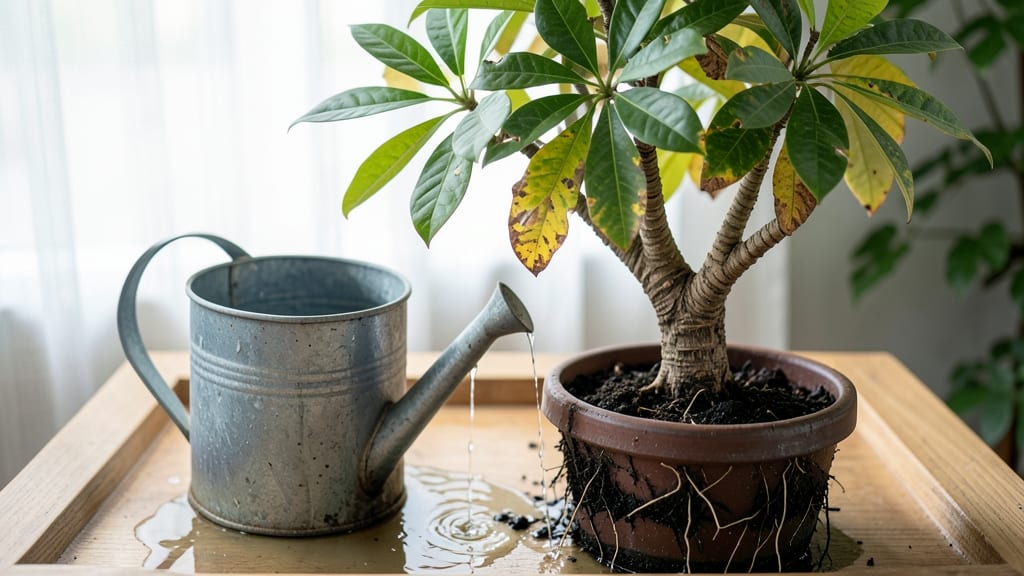
Your money tree plant’s drooping leaves and yellowing foliage aren’t a death sentence—just a cry for help. 🌱 I’ve nursed back more overwatered money trees than I can count, and the secret lies in three simple steps that stop root rot before it spreads.
The key is acting fast: soggy soil and mushy roots can’t be ignored, but with the right approach, your Pachira aquatica will bounce back stronger than ever.
The real villain here is root rot, which thrives when soil stays soggy for weeks. Check the roots—if they smell foul or turn black and mushy, that’s your first warning sign.
Most people panic and water even more, but the fix is counterintuitive: let the soil dry out completely between waterings. A quick repot in fresh, well-draining mix can work wonders, and within weeks, you’ll see new growth pushing through.
Once you’ve saved the roots, the real magic happens with consistent care. Water only when the top inch of soil feels dry, and always use a pot with drainage holes.
Your money tree will reward you with glossy, vibrant leaves and that satisfying, sturdy growth—proof that even the most neglected plants can make a comeback. The best part? This method works for any overwatered houseplant.
Fair warning: the first few weeks after revival are critical. Keep the plant in bright, indirect light and avoid fertilizing until you see fresh leaves emerging. Patience pays off—within a month, your money tree will look like it’s never been stressed.
And trust me, once you’ve mastered this, you’ll spot overwatering signs before they become a problem.
The Hidden Triggers Behind Soggy Roots
If your money tree (Pachira aquatica) is looking more like a sad, droopy puddle than a thriving tropical beauty, overwatering is likely the culprit. But why does this happen? Let’s break down the science—and the sneaky habits—behind why your plant’s roots are drowning instead of breathing.
Money trees are drought-tolerant plants, meaning they store water in their thick, succulent-like stems. When you water them too often—especially on a strict schedule—you disrupt their natural rhythm. Here’s what’s really going on:
- Soil Saturation: Overwatering keeps the root zone perpetually wet, cutting off oxygen supply. Roots need both water and air to function. Without oxygen, they suffocate, turn mushy, and can’t absorb nutrients efficiently.
- Fungal Invaders: Excess moisture creates the perfect breeding ground for Pythium and Phytophthora—fungi that rot roots. These pathogens thrive in soggy soil, weakening the plant’s structure and leading to collapse.
- Nutrient Lockout: Waterlogged soil binds nutrients like nitrogen and phosphorus, making them unavailable to the roots. Even if you’re using fertilizer, your plant might be starving because it can’t access what’s already there.
💡 Pro Tip: Stick your finger 2 inches deep into the soil before watering. If it’s damp, wait. If it’s dry, it’s time—but don’t overcompensate!
Not all pots are created equal. If your money tree’s container lacks drainage holes—or if you’re using a cache pot without proper airflow—the water has nowhere to go. Here’s the breakdown:
| Problem | What Happens |
|---|---|
| No drainage holes | Water pools at the bottom, creating a permanent swamp around the roots. |
| Compacted or clay-heavy soil | Water drains too slowly, leaving roots in a waterlogged state for days. |
| Cache pots without airflow | Even with drainage, excess water stays trapped between the inner and outer pots, suffocating roots. |
🔥 Fix It: Upgrade to a pot with drainage holes and use a well-draining mix (think perlite, orchid bark, or coco coir). If using a cache pot, ensure the outer container has drainage too!
Money trees are tropical, but that doesn’t mean they love all tropical conditions. Cold drafts, humid bathrooms, or even a chilly windowsill can mess with their water balance:
- Slow Evaporation: In cool or humid environments, soil stays wet longer. Roots can’t dry out between waterings, leading to rot.
- Transpiration Shutdown: Low light or humidity reduces the plant’s ability to transpire (release water vapor through leaves). Without this natural drying process, excess water lingers.
- Bacterial Growth: Cold temps weaken the plant’s defenses, making it easier for Erwinia bacteria to attack waterlogged roots.
🌡️ Ideal Conditions: Keep your money tree in bright, indirect light (like an east-facing window) and maintain temps between 65–80°F. If your bathroom is the only spot, boost airflow with a small fan!
Now that you know the real reasons behind the soggy roots, you’re one step closer to reviving your money tree. Next up: 3 actionable steps to save it!
Revive Your Money Tree Fast
Overwatering can turn your money tree’s lush green leaves into sad, yellowing messes—but don’t panic! With the right steps, you can nurse it back to health and prevent future soggy soil disasters. Below, we’ll break down cause-specific fixes, so you can diagnose and act like a pro.
---
Cause: Too much water suffocates roots, leading to rot and nutrient starvation.
How to Fix It: 1. 🚰 Stop Watering Immediately Let the soil dry out completely before watering again. Stick your finger 1–2 inches deep—if it’s damp, wait.
2. 🌱 Repot in Fresh, Well-Draining Soil - Remove the plant gently and inspect the roots. Trim any black, mushy roots with sterilized scissors. - Use a cactus or succulent mix (or add perlite/pumice to regular soil for drainage). - Choose a pot with drainage holes—no exceptions!
3. 🌿 Adjust Your Watering Routine - Water only when the top 2 inches of soil are bone-dry (usually every 2–3 weeks in warm climates, less in winter). - Pro Tip: 💡 Use the "thumb test"—press your finger into the soil to check moisture levels.
Prevention: ✅ Upgrade your pot to terracotta or ceramic (they wick away moisture). ✅ Mistake-proof hack: Place pebbles at the bottom of the pot to improve drainage.
---
Cause: Overwatering + poor airflow = fungal issues or salt buildup from tap water.
How to Fix It: 1. 🧼 Flush the Soil Run water through the pot for 30 seconds to leach out excess salts. Let it drain fully.
2. 🌬️ Boost Air Circulation - Move your money tree to a bright, indirect spot (no direct sun). - Use a small fan on low for 10 mins/day to dry leaves faster.
3. 💧 Switch to Filtered or Rainwater Tap water minerals can clog soil. If that’s not an option, let tap water sit 24 hours before using.
Prevention: ✅ Water in the morning so leaves dry by night. ✅ Skip the saucer—never let your plant sit in standing water.
---
Cause: Overwatering stresses the plant, halting growth. Roots need oxygen to thrive!
How to Fix It: 1. 🔄 Let the Soil Dry Out Completely - For severe cases, go 4–6 weeks without water to reset the roots. - Monitor closely—if leaves wrinkle, it’s thirsty (but not as bad as rot).
2. 🌿 Fertilize Lightly (But Only When Needed) - Wait 4–6 weeks after repotting before using fertilizer. - Use a diluted, balanced liquid fertilizer (half-strength) once every 2 months.
3. 🌱 Prune Dead Growth - Snip off yellow/brown leaves with clean scissors to redirect energy to healthy growth.
Prevention: ✅ Use a moisture meter ($10 on Amazon) to avoid guesswork. ✅ Rotate the pot weekly so all sides get even light.
--- 🔥 Quick Revival Checklist: | Problem | Action Steps | Frequency | |---------------------------|-------------------------------------------|-------------------------| | Root rot | Repot + trim roots + dry soil | Once (then prevent) | | Yellowing leaves | Flush soil + adjust watering | Weekly check | | Slow growth | Dry soil + light fertilizer | Bi-monthly |
🌟 Pro Tip: If your money tree is past saving, propagate a cutting! Snip a healthy stem, let it dry for a day, then plant in fresh soil. Many overwatered plants bounce back this way!
--- Remember: Your money tree is resilient—consistency is key. With these fixes, it’ll be back to its happy, coin-printing self in 3–6 weeks! 💰🌿
Frequently asked questions
How do I know if my money tree is overwatered?
Check for these key signs: yellowing leaves (especially lower ones), mushy black roots, or soil that stays damp for more than 3-4 days. If the leaves feel soft or fall off easily, or if the plant smells foul, it’s definitely overwatered. The pot may also feel unusually light because the roots can’t hold moisture properly.
Can I save a money tree with completely black, mushy roots?
You might still save it! Trim all black/mushy roots with sterilized scissors, then repot in fresh, well-draining soil. For severe cases, let the soil dry completely for 4-6 weeks before watering again. Healthy roots should be firm and white—if you see any green or firm roots remaining, your plant can recover with proper care.
Why does my money tree need drainage holes if it's a tropical plant?
Even tropical plants like money trees need airflow to their roots! Without drainage, water pools at the bottom, creating a swampy environment that suffocates roots. The key is balance—tropical plants love humidity but hate soggy soil. Use pots with holes and a mix of 60% potting soil, 20% perlite, and 20% orchid bark for perfect drainage.
How often should I water a money tree after reviving it?
After recovery, wait until the top 2 inches of soil are completely dry before watering again. In summer, this might be every 2-3 weeks; in winter, stretch it to 3-4 weeks**. Always check with your finger—if it’s damp, wait longer. Overwatering is the #1 cause of relapse!
What's the best way to prevent overwatering in the future?
Use these three tricks: 1) Upgrade to a terracotta pot (it dries faster than plastic), 2) add a moisture meter ($10 on Amazon), and 3) water only when leaves feel slightly wrinkled—not crispy. Pro tip: Place pebbles at the bottom of the pot to improve drainage and reduce soggy soil. Consistency beats schedules!