
Pests and Diseases
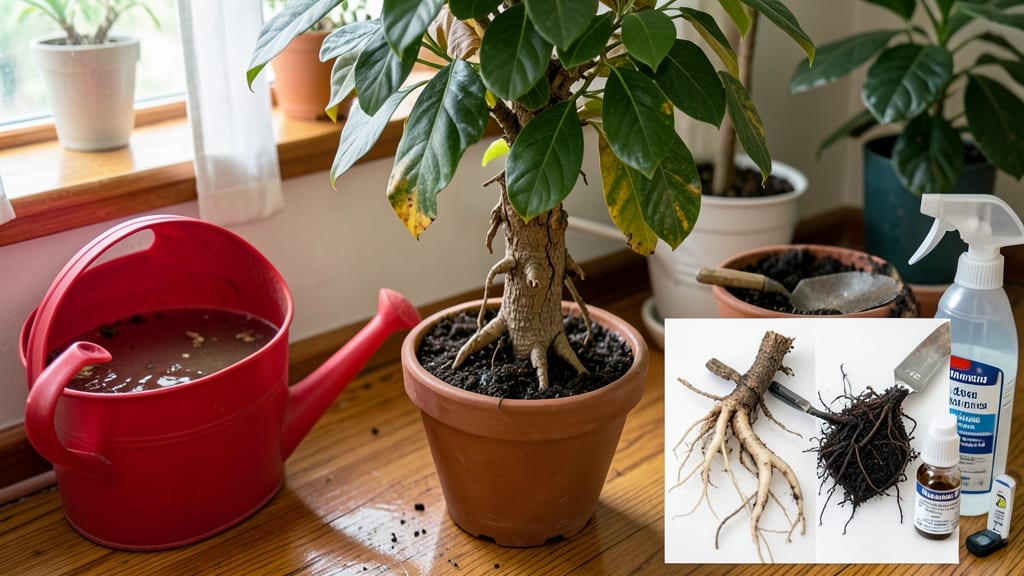
Your money tree’s drooping leaves and mushy stems signal a silent crisis—overwatered money tree root rot—but don’t panic. 🌱 I’ve nursed back plants that looked hopeless with these three targeted steps, and the best part?
You can stop the rot before it spreads. The key is acting fast, adjusting your watering routine, and giving those roots the air they crave.
Root rot starts when soggy soil suffocates roots, turning them black and slimy. Yellowing leaves, a foul smell, and stems that feel soft to the touch are your warning signs.
Most people overwater because they think tropical plants need constant moisture—but money trees (pachira aquatica) actually thrive in well-draining soil and prefer drying out between waterings. That’s where the recovery begins.
First, trim away the rotten roots with sterilized scissors, then repot in fresh, chunky potting mix (add perlite or orchid bark for drainage). Water lightly only when the top inch of soil feels bone-dry, and place your plant in bright, indirect light—no more dark corners.
Within weeks, you’ll see new growth pushing through, and those once-wilted leaves will perk up like they’re flirting with sunlight.
Long-term, keep a finger-test routine: stick your index finger into the soil before watering. If it’s damp, wait. If it’s dry, give it a drink—but never let it sit in saucers of water.
Your money tree will bounce back faster than you think, and you’ll learn to read its thirst signals like a pro. Trust the process, and soon you’ll have a thriving plant that’s the envy of every room.
Root Rot’s Silent Triggers
Root rot in a money tree (Pachira aquatica) isn’t just a random plant tragedy—it’s usually a chain reaction caused by a few sneaky factors. Understanding these triggers is your first step to preventing (or reversing) the damage. Here’s why your plant’s roots might be drowning in disaster:
Money trees thrive in well-draining soil, but when they’re overwatered, their roots suffocate. Here’s the science behind it:
- Oxygen Deprivation: Roots need oxygen to respire (yes, they breathe!). When soil stays soggy for days, water fills the air pockets roots rely on. Without oxygen, roots can’t process nutrients or energy efficiently, leading to cell death.
- Fungal Feast: Waterlogged soil is a buffet for Phytophthora and Pythium fungi—two common root rot culprits. These microbes thrive in wet conditions and release toxins that break down root cell walls.
- Nutrient Lockout: Overwatering leaches essential nutrients (like nitrogen and potassium) from the soil, starving the roots even further. A money tree’s roots may start to rot because they’re literally starving.
Pro Tip: 🌡️ Stick your finger 2 inches into the soil—if it’s damp, wait. If it’s bone-dry, you’ve likely underwatered (another stressor!). Money trees prefer soil that’s 60-70% moisture but never soggy.
Even if you’re watering correctly, the wrong pot or soil can turn your money tree into a root rot magnet. Here’s how:
- Clay or Glazed Pots: These materials don’t breathe. Water pools at the bottom, creating a permanent wet zone where roots can’t escape. Plastic pots trap moisture too, but they’re slightly better than clay.
- Compacted or Heavy Soil: Potting mixes with high clay or peat content don’t drain well. If water can’t escape within 30 minutes, your roots are in danger.
- No Drainage Holes: This is a dealbreaker. Without holes, excess water has nowhere to go—roots sit in a swamp, and root rot parties begin.
Pro Tip: ✨ Use a terracotta pot with drainage holes and a chunky, airy mix (like 60% potting soil + 30% perlite + 10% orchid bark). If repotting, upgrade to a container 2 inches larger—no bigger!
Money trees are tropical, but that doesn’t mean they love all tropical conditions. Extreme temps or humidity can weaken roots, making them vulnerable to rot:
- Cold Drafts: Roots below 60°F (15°C) slow down, reducing their ability to absorb oxygen. Combined with overwatering, this is a double whammy for root health.
- High Humidity Near Roots: While money trees enjoy humidity (40-50% is ideal), excessive moisture in the air near the soil can create a condensation trap—think of it as a sauna for fungi.
- Sudden Temp Shifts: Moving a plant from a warm bathroom to a chilly windowsill stresses roots, weakening their defenses against pathogens.
Pro Tip: 🌡️ Keep your money tree in 65-80°F (18-27°C) and avoid placing it near AC vents or drafty windows. If humidity drops below 40%, use a pebble tray (not direct water contact!).
Not all root rot is caused by your watering habits—sometimes, microbes are the real villains. These pathogens lie in wait, pouncing when conditions are right:
- Fungal Invaders:
- Phytophthora (“water mold”): Loves waterlogged soil and spreads via contaminated water or tools.
- Pythium: Thrives in compacted, anaerobic soil and can consume roots in days if conditions are perfect.
- Bacterial Blight: Erwinia or Pseudomonas bacteria enter through root wounds (like overzealous pruning) and release enzymes that dissolve root tissue.
- Secondary Infections: Once roots are weakened by overwatering, any soilborne pathogen can move in for the kill.
Pro Tip: 🔥 Sterilize tools with rubbing alcohol before repotting, and never reuse contaminated soil. If you suspect a pathogen, treat with hydrogen peroxide (3%) or a copper fungicide (follow label instructions!).
Root rot doesn’t happen overnight—it’s usually a slow buildup of these factors. The good news? Once you spot the signs (yellow leaves, mushy roots, foul smells), you can act fast to save your money tree. Next up: how to diagnose and treat the damage before it’s too late.
How to Revive Your Money Tree
Root rot from overwatering can feel like a death sentence for your money tree (Pachira aquatica), but with the right steps, you can nurse it back to health—and even prevent future mishaps.
The key is acting fast, diagnosing the damage, and giving your plant the care it desperately needs. Below, we’ll break down practical solutions tailored to the root cause of your money tree’s distress, plus long-term prevention tips to keep it thriving.
Before diving into fixes, check how severe the rot is. Gently remove your money tree from its pot and inspect the roots:
- Healthy roots: Firm, white or light tan, with a slight sheen.
- Rotten roots: Mushy, dark brown/black, and may smell foul.
- Partially affected roots: Soft or discolored but not completely mushy.
💡 Pro Tip: If more than 30% of the roots are rotten, your plant may need aggressive treatment. If 50%+ are gone, it might not survive—but don’t give up yet!
Tools you’ll need: Clean, sharp scissors or pruning shears (sterilized with rubbing alcohol), hydrogen peroxide (3%), and fresh potting mix.
- 🔪 Snip the bad roots: Cut away all black, mushy, or slimy roots using your sterilized shears. Aim to remove only the damaged parts—healthy roots should stay intact.
- 🌡️ Disinfect the cuts: Dip the shears in hydrogen peroxide (3%) between cuts to prevent bacterial spread.
- 🧼 Clean the pot: Scrub the old pot with soapy water or a 10% bleach solution to kill lingering pathogens. Rinse thoroughly.
✨ Prevention Tip: If the pot is cracked or has drainage issues, replace it—plastic or terracotta pots with drainage holes are best for money trees.
Money trees hate soggy feet, so rewrite the rules for its new home.
- 🪴 Choose the right pot: Select a container 1-2 inches larger than the root ball, with drainage holes (non-negotiable!).
- 🌱 Use a well-draining mix: Combine: - 60% peat-free potting soil (or coco coir) - 30% perlite or pumice (for aeration) - 10% orchid bark or sand (to improve drainage)
- 🌿 Repot carefully: - Place a 1-inch layer of gravel or perlite at the bottom for drainage. - Position the trimmed roots above the soil line—burying the stem can cause more rot. - Fill gaps with the new mix, gently pressing down to secure the plant.
💡 Pro Tip: Avoid compacting the soil too tightly—money trees prefer loose, airy roots.
Now that your money tree is back in a fresh pot, watering habits must change dramatically.
| Old Habit 🚫 | New Habit ✅ |
|---|---|
| Watering every 2-3 days | Water only when the top 1-2 inches of soil are dry (stick your finger in to check!) |
| Letting it sit in saucers of water | Empty saucers immediately after watering |
| Low-light placement | Bright, indirect light (east or north-facing windows are ideal) |
| Humidity neglect | Mist leaves 2-3x weekly or use a pebble tray with water |
🌡️ Recovery Signs to Watch For:
- New growth in 4-6 weeks = Good!
- Yellow leaves = Still adjusting; trim them to redirect energy.
- No change after 2 months = Try root hormone powder (like RootBoost) to encourage regrowth.
Root rot is sneaky—once it’s gone, it’s easy to forget. Stay vigilant with these long-term fixes:
- 📅 Watering schedule: Stick to a biweekly check—money trees store water in their trunks, so they’re drought-tolerant!
- 🌧️ Humidity control: If your home is dry (below 40%), use a humidifier or group plants together.
- 🌿 Prune regularly: Trim yellow or brown leaves to prevent fungal spread.
- 🚫 Avoid over-fertilizing: Wait 4-6 weeks after repotting before fertilizing. Use a balanced, diluted liquid fertilizer (half-strength) every 2 months in spring/summer.
💡 Emergency Fix: If your money tree won’t recover, try air layering—propagate a healthy stem while saving the parent plant’s genetics!
Final Thought: Root rot recovery is a patience game, but with these steps, your money tree can bounce back stronger. Celebrate small wins—like a single new leaf—and soon, you’ll have a lush, lucky charm of a plant again! 🌿💚
Frequently asked questions
My money tree leaves are yellowing—could it still be root rot if the soil feels dry?
Yellow leaves with dry soil can still signal root rot if the damage happened earlier. Check the roots—if they're black/mushy near the base despite dry topsoil, the rot may have spread inward. This often happens when plants recover from overwatering but retain damaged roots. Trim any affected areas and repot immediately.
Will my money tree survive if half its roots are rotted away?
It's possible with aggressive treatment! If you remove all black/mushy roots and repot in fresh, well-draining mix, the remaining healthy roots can regenerate. Monitor closely—water only when the top 2 inches are completely dry, and expect new growth in 4-6 weeks. If no improvement after 2 months, consider propagation from healthy stems.
Can I use hydrogen peroxide to treat root rot without repotting?
Yes, but with limitations. Mix 1 part 3% hydrogen peroxide with 4 parts water and water the plant thoroughly (let it drain completely). Repeat weekly for 2 weeks to disinfect roots. However, this won't replace repotting—soil pathogens will linger without fresh mix. Always combine with proper drainage improvements for best results.
How often should I check my money tree's roots after recovery?
After recovery, inspect roots every 3 months by gently removing the plant from its pot. Healthy roots should be firm and white. If you notice any softness or discoloration, act immediately by trimming affected areas and adjusting your watering schedule. This preventative check helps catch early signs before they worsen.
Is it safe to use cinnamon on money tree root rot?
Cinnamon can help as a natural antifungal, but it's not a complete solution. Sprinkle a thin layer on the soil surface after repotting to deter fungal growth, but focus on the root cause: proper drainage and watering habits. For serious rot cases, combine cinnamon with hydrogen peroxide treatment and repotting in fresh mix for best results.