Pruning
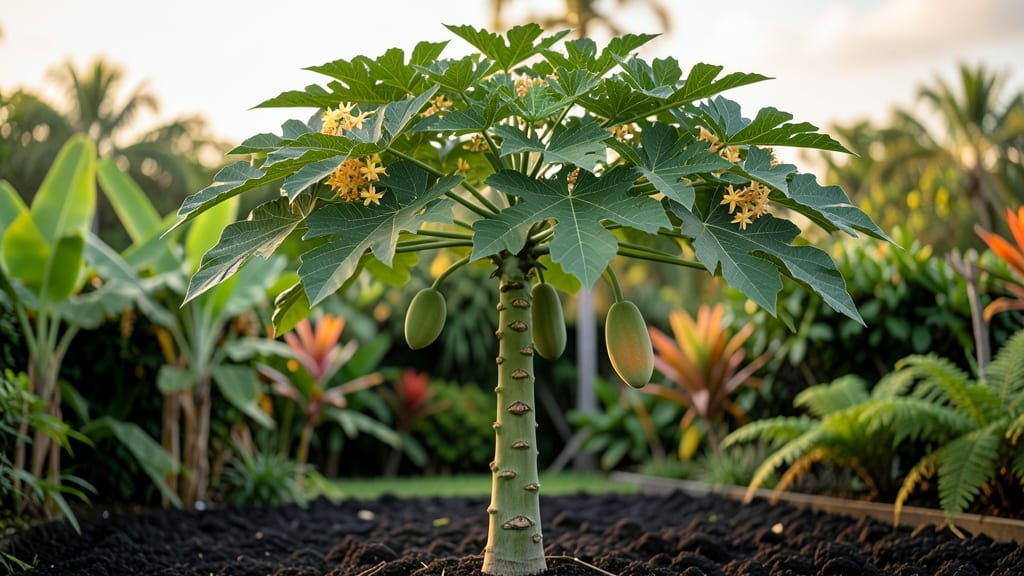
Growing a papaya tree in Florida is easier than you think—no frost, no excuses. 🌴 The key is matching its tropical roots to Florida's heat and humidity, which actually makes it thrive with almost no pruning once established.
My first tree went from a 6-inch cutting to fruit-bearing in under a year, and I've since learned the simple secrets that keep them producing reliably.
You'll need well-draining soil (even sandy Florida soil works with a little compost), full sun (6+ hours daily), and consistent moisture—but not soggy roots. Papayas love heat, so they handle Florida's summers perfectly, and their shallow roots appreciate the state's warm winters too.
The real trick is spacing: give them 10-15 feet between plants for airflow, which cuts down on fungal issues that plague crowded trees.
Within months, you'll see glossy leaves and the telltale papaya flower—orange with long stamens—followed by fruit in 8-12 months from seed or cutting. The first harvest is always a shockingly sweet reward for that initial patience.
Even in Florida's humidity, these trees stay disease-resistant when you avoid overwatering and prune only to shape or remove dead growth.
Works equally well in containers for patios or as a permanent landscape tree. The only real challenge? Keeping squirrels from stealing the fruit before you do. Here's how to set yours up for success from the start—no greenhouse or fancy equipment needed.
📚 In This Guide
- What you need
- Instructions
- Tips and common mistakes
- Wrapping up and next steps
What you need
- ● Papaya seeds or seedlings: Choose disease-resistant varieties like Solo or SunUp (available at nurseries or online). 1-2 seeds or 1 seedling per tree.
- ● Well-draining potting mix: A blend of peat moss, perlite, and coconut coir (50% each) for containers. For in-ground planting, amend soil with compost or aged manure (10 lbs per planting hole).
- ● Container (if not planting in-ground): 5-gallon pot or larger with drainage holes. 1 pot per tree.
- ● Fertilizer: Balanced 10-10-10 NPK fertilizer (2 tbsp per planting hole or container) or organic options like fish emulsion.
- ● Pruning tools: Bypass pruners (sharp, sterilized)
- ● Loppers (for thicker branches)
- ● Disinfectant (rubbing alcohol or bleach solution)
- ● Mulch: Pine bark or straw (2-3 inches thick) to retain moisture.
- ● Support stake: Bamboo or metal stake (5-6 ft tall) for young trees.
- ● pH test kit (ideal range: 6.0-7.0)
- ● Slow-release fertilizer tablets (for containers)
- ● Shade cloth (30-50% coverage for young trees in harsh sun)
- ● Drip irrigation system (for consistent moisture)
- ● Gloves (to protect hands during pruning)
Step-by-step guide to establishing a thriving papaya tree in Florida
Florida’s climate is perfect for papaya trees—just follow these steps to get yours growing strong with minimal fuss.
🌱 Step 1: Select and Prepare the Planting Site
Papayas thrive in full sun (at least 6-8 hours daily), so choose a spot with minimal shade. In Florida’s heat, afternoon shade helps prevent sunburn on young leaves. I dig a hole twice as wide as the root ball but only as deep—papayas hate being buried too deeply, which can rot the stem.
Test your soil’s drainage by digging a 12-inch hole and filling it with water. If it drains in under an hour, your site is ready. If water pools, amend with 2-3 inches of coarse sand or perlite mixed into the native soil. Papayas despise soggy roots, so good drainage is non-negotiable.
☀️ Step 2: Plant and Water for Initial Establishment
Remove the papaya from its container and loosen the roots if they’re circling. Place it in the hole so the top of the root ball sits level with the ground—never deeper. Backfill with native soil mixed with a handful of balanced 6-6-6 fertilizer to give it a nutrient boost right away.
Water deeply right after planting to settle the soil, then let it dry slightly before watering again. In Florida’s humidity, papayas need 1-2 inches of water weekly, but check the soil—top 2 inches dry is your signal to water. Overwatering here causes root rot faster than you’d think.
✂️ Step 3: Prune Strategically for Airflow and Fruit Production
Florida’s heat means pruning isn’t just about shape—it’s about airflow. Remove any dead, yellowing, or crossing branches with clean, sharp pruners. I cut just above a leaf node at a 45-degree angle to prevent water pooling. This keeps energy focused on fruit production instead of weak growth.
Watch for suckers (shoots growing from the base)—these steal nutrients. Snip them off at the base immediately. If you see flowers forming, leave them unless your tree is young (under 2 years), when you’ll want to remove some to build root strength first.
🪴 Step 4: Maintain Soil and Fertility for Year-Round Growth
Papayas are heavy feeders, so every 3 months, top-dress with 2-3 inches of compost around the drip line (not touching the trunk). In Florida’s sandy soil, this keeps nutrients available without leaching away. I also side-dress with a low-nitrogen fertilizer (like 3-4-6) in spring to encourage flowering.
Mulch with 3-4 inches of wood chips to retain moisture and regulate soil temperature. Keep mulch 6 inches away from the trunk—too close invites pests. In Florida’s wet summers, this also prevents fungal issues that can wipe out young trees overnight.
🌿 Step 5: Monitor for Pests and Adjust Care Seasonally
Florida’s pests love papayas, so inspect leaves weekly for aphids, mealybugs, or scale. A strong spray of neem oil (mixed weekly) keeps them at bay without chemicals. I also watch for fruit flies—cover young fruit with paper bags if they appear, as they’ll lay eggs inside.
In summer, papayas may drop leaves due to heat stress. Move young trees to partial shade (50% sun) temporarily until they acclimate. Mature trees handle Florida’s heat, but a light morning watering helps them recover faster. Adjust care based on fruit—if it’s small and bitter, increase potassium with a banana peel tea brew.
Tips & tricks for perfect papaya tree growth in Florida
Florida’s heat and humidity can make or break your papaya tree—here’s how to give it the best shot at thriving with minimal fuss.
Sunlight Strategy: That 6-8 hours of full sun is non-negotiable, but Florida’s afternoon sun can scorch young leaves. I’ve found that positioning your tree slightly east of a fence or building creates natural afternoon shade without blocking morning light—critical for the first year. Use a white shade cloth (30% shade) on the western side if you notice leaf burn starting.
Root Ball Precision: When planting, resist the urge to bury the root ball too deeply—papayas are sensitive to stem rot. The top of the root ball should sit level with the ground, no higher, no lower. I’ve seen beginners bury these up to 2 inches too deep, which suffocates the tree within weeks. Use a level to check before backfilling.
Watering Wisdom: The 1-2 inches weekly guideline works, but Florida’s humidity means you’ll often need less. Instead of watering on a schedule, stick your finger 2 inches into the soil—if it’s dry, water; if damp, wait. Overwatering here is the #1 killer, and papayas show stress by dropping leaves before roots rot. A moisture meter solves the guessing game completely.
Pruning Payoff: Those 45-degree angle cuts above leaf nodes aren’t just for looks—they prevent water from pooling and creating fungal entry points. I’ve also noticed that removing suckers within 48 hours of appearance prevents them from stealing 30% of the tree’s energy. Use sterilized pruners to avoid introducing diseases through cuts.
Pro Tips for Papaya Tree In Florida
- Florida’s heat and humidity can make or break your papaya tree—here’s how to give it the best shot at thriving with m...
- Sunlight Strategy: That 6-8 hours of full sun is non-negotiable, but Florida’s afternoon sun can scorch young leaves....
- Root Ball Precision: When planting, resist the urge to bury the root ball too deeply—papayas are sensitive to stem ro...
Frequently asked questions
Got questions about growing papaya trees in Florida?
You’re not alone! Here are answers to the most common queries—from planting to pruning—so you can keep your tropical fruit tree thriving with ease.
How cold can a papaya tree tolerate in Florida?
A papaya tree (Carica papaya) is tropical and struggles below 32°F (0°C). In Florida, while rare, light freezes can damage leaves or young trees. Protect yours with frost cloth or move potted trees indoors. Mature trees in warmer zones (like South Florida) often survive brief dips if roots stay insulated.
How long does it take for a papaya tree to bear fruit in Florida?
With ideal conditions (full sun, warm soil, and patience!), papaya trees can fruit in 9–12 months from transplanting. Dwarf varieties may bear sooner (6–9 months), while larger trees take longer. Florida’s year-round growing season speeds this up—just ensure consistent watering and well-draining soil!
Can I grow a papaya tree in a pot in Florida?
Potted papayas thrive in Florida if you use a large container (15+ gallons) with drainage holes. Choose a dwarf variety like ‘SunUp’ or ‘Solo’ for easier management. Move pots indoors or to a garage during cold snaps, and fertilize monthly with a balanced citrus/palm mix for best results.
Why aren’t my papaya tree leaves turning yellow?
Yellowing leaves often signal overwatering, nutrient deficiency, or root stress. Check soil moisture—papayas hate soggy roots. Test soil pH (ideal: 6.0–7.0) and amend with compost if needed. Yellow edges? It could be magnesium deficiency—try Epsom salt (1 tbsp/gallon of water) every 2 weeks. Pests like aphids also cause discoloration; spray with neem oil if spotted.
Do papaya trees need pruning in Florida’s warm climate?
Minimal pruning is key! Trim dead, diseased, or crossing branches to improve airflow. Remove suckers (shoots from the base) to direct energy to fruit production. Florida’s heat means less pruning overall—focus on shaping the tree after harvest to encourage new growth. Avoid heavy cuts; papayas regenerate slowly!
Wrapping up and next steps
Growing a papaya tree in Florida is a rewarding experience—thanks to the state’s perfect climate, you can enjoy lush, fruit-bearing trees with minimal effort! 🌴 With the right location, soil prep, and a few pruning tricks, your papaya tree will thrive year-round, offering sweet, tropical rewards.
The key? Stay consistent with care and don’t overcomplicate pruning—just focus on removing dead growth and encouraging airflow.
Ready to take the next step? Start by planting your own papaya tree this season or share your newfound knowledge with fellow Florida gardeners. Whether you’re harvesting your first fruit or refining your pruning skills, every small action brings you closer to that juicy, sun-ripened papaya! 🍈