
Pruning
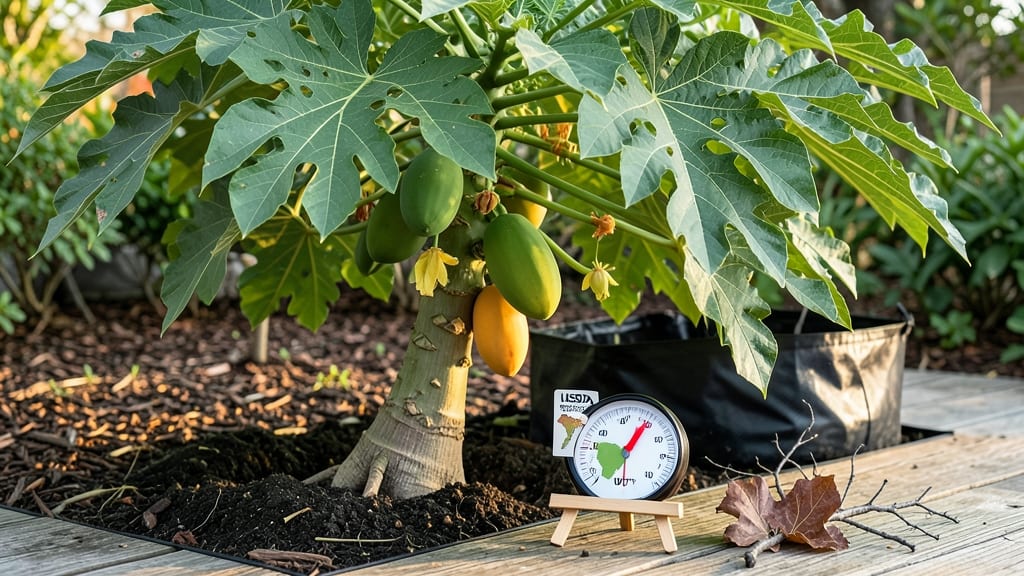
Your papaya tree’s survival hinges on understanding its papaya tree temperature tolerance—keeping conditions between 65°F and 85°F is critical, as anything colder risks stunted growth or worse. 🌱 I’ve watched papayas thrive in my Zone 11 garden, but even here, sudden dips below 50°F trigger leaf drop and fruit abortion.
The key isn’t just heat—it’s avoiding stress from swings, whether too hot or too cold.
Cold snaps are the real enemy: 32°F sends most papayas into shock, while 40°F slows growth so severely you’ll see yellowing leaves within days. Heat stress shows up differently—wilting by noon, even with plenty of water.
My trick? Morning shade cloth during summer peaks and windbreaks to prevent chill winds from coastal breezes.
With the right adjustments, you’ll see bright green leaves year-round and fruit that ripens consistently. Start by monitoring temps daily—use a minimum-maximum thermometer near the plant. For extreme climates, consider container growing so you can move trees indoors during cold snaps.
Even in ideal zones, humidity matters—papayas crave 60-80% humidity. Pair your temperature fixes with proper airflow and mulch to keep roots stable. The payoff? A tree that produces 2-3 harvests per year instead of struggling through seasons.
📚 In This Guide
- What you need
- Instructions
- Tips and common mistakes
- Wrapping up and next steps
What you need
- ● Papaya Seedlings or Young Trees: 1–3 healthy, disease-free seedlings (choose varieties like Carica papaya ‘Solo’ or ‘SunUp’ for cold tolerance).
- ● Age: 6–12 months old (transplant-ready).
- ● Well-Draining Soil Mix: 50% cactus/succulent mix (for aeration).
- ● 30% pearlite or pumice (improves drainage).
- ● 20% compost or worm castings (for nutrients).
- ● Containers or In-Ground Plot: Containers: 5–7 gallon pots with drainage holes (1 per tree).
- ● In-ground: Full sun spot (6+ hours/day) with slightly acidic soil (pH 6.0–7.0).
- ● Pruning Tools: 1 pair sterilized bypass pruners (for clean cuts).
- ● 1 sharp pruning saw (for thicker branches).
- ● 1 rubbing alcohol (70%+) (to sterilize tools between cuts).
- ● Mulch: 2–3 inches of straw or wood chips (retains moisture, insulates roots).
- ● Drip Irrigation or Watering Can: 1–2 gallons capacity (avoid overhead watering).
- ● Frost Cloth (for Zone 10 edges): 1 roll (30’ x 5’), rated for 28°F tolerance.
- ● Soil Moisture Meter: 1 digital probe (monitors root-zone moisture).
- ● Slow-Release Fertilizer: 10–20–10 NPK blend (applied every 3 months).
- ● Mycorrhizal Fungi: 1 packet (boosts root health in poor soil).
- ● Shade Cloth (30–50% coverage): For seedlings in intense Zone 11 heat.
- ● Thermometer: 1 soil/air thermometer (tracks microclimate temps).
Step-by-step guide to protecting papaya trees in USDA Zones 10-11
Here’s how I’ve kept papaya trees thriving through heatwaves and rare cold snaps in coastal climates.
🌱 Step 1: Select the Hardiest Varieties for Your Microclimate
Start with cold-tolerant papaya varieties like ‘SunUp’ or ‘Red Maradol,’ which handle brief dips to 32°F better than tropical types. I always check the seed packet for cold-hardiness ratings—some claim 28°F tolerance, though real-world performance varies. Plant only after your last frost date, even in Zone 11, since young trees are far more vulnerable than mature ones.
Choose a location with afternoon shade during summer’s peak heat (90°F+). Mature papaya trees can handle full sun in cooler months, but young plants wilt quickly when exposed to intense afternoon rays. I’ve seen seedlings crisp at the edges within hours when moved too soon from shade cloth to full sun.
☀️ Step 2: Create a Thermal Buffer Zone Around the Tree
Dig a 2-foot-wide trench around the tree base and fill it with 6 inches of straw mulch. This creates an insulating air gap that moderates soil temperature swings. I top it with black landscape fabric during winter to reflect radiant heat back toward the tree while still allowing airflow—critical for preventing fungal rot from trapped moisture.
For extra protection, I wrap the trunk with burlap during cold snaps (below 40°F). The fabric traps radiant heat from the tree itself, raising trunk temperatures by 5-10°F. Never use plastic—it traps too much moisture and promotes disease. Water the base 2-3 days before any expected freeze to ensure the root zone stays hydrated, which helps the tree withstand brief cold snaps.
💧 Step 3: Adjust Watering for Temperature Extremes
During heatwaves above 95°F, I water deeply every other day at dawn to prevent leaf scorch. The soil should remain 2-3 inches moist but never soggy—papaya roots rot quickly in waterlogged conditions. I use drip irrigation to keep foliage dry, which prevents fungal infections like anthracnose that thrive in humid heat.
When temperatures drop below 50°F, reduce watering to once every 5-7 days. Overwatering in cool weather stresses the tree by slowing root uptake. I check moisture by pressing my finger 2 inches into the soil—if it feels damp, I wait. During frost warnings, I stop watering entirely 48 hours before the expected freeze to prevent ice formation around roots.
✂️ Step 4: Prune Strategically to Improve Cold Resilience
Remove all dead or yellowing leaves in early spring to reduce transpiration stress. I also prune back overly vigorous branches to encourage a compact, bushier shape, which retains heat better than tall, leggy growth. Never prune during winter—new growth is highly susceptible to cold damage.
In late summer, I thin the canopy by removing 20-30% of the smallest leaves to improve airflow. This reduces humidity around the tree, lowering the risk of fungal diseases that flourish in 70°F+ temperatures with high moisture. I sterilize my pruners with 70% isopropyl alcohol between cuts to prevent bacterial spread.
🪴 Step 5: Use Temporary Shelters for Extreme Events
For unexpected freezes below 32°F, I construct a cold frame using clear plastic sheeting and PVC pipes to create a 3-foot-high dome over the tree. This raises temperatures by 10-15°F inside the shelter. I secure the edges with bricks or sandbags to prevent wind from tearing the plastic—papaya trees hate desiccation from dry winds.
For prolonged cold snaps, I combine the cold frame with row covers draped over the top. This creates a double-layered insulation system that traps heat while still allowing some light penetration. I remove the covers immediately after temperatures rise above 45°F to prevent heat buildup, which can scorch leaves faster than the cold itself.
Tips & tricks for thriving papaya trees in edge climates
Mastering these microclimate strategies transforms your papaya tree from vulnerable to resilient.
Variety Verification: Those cold-tolerance claims on seed packets often overpromise—test your tree's actual limits by monitoring its response to 32°F dips. I've seen 'SunUp' varieties recover from brief exposures, but prolonged 28°F temperatures still cause irreversible damage. Plant a backup tree in a more sheltered location if your zone experiences rare cold snaps below 30°F.
Heatwave Hydration Hack: During 95°F+ heatwaves, I've noticed papaya trees develop leaf scorch within hours of midday watering. The key is morning hydration—water deeply every other day at dawn when evaporation rates are lowest. Add 2 inches of straw mulch around the base to lock in moisture, reducing your watering frequency by 30% while preventing root rot from waterlogged soil.
Cold Snap Preparation: The 48-hour watering pause before freezes is non-negotiable, but I've found an extra trick works wonders: wrap the trunk with burlap soaked in water 24 hours before the expected freeze. The moisture in the fabric creates a microclimate that raises trunk temperatures by an additional 3-5°F beyond the 5-10°F gain from dry burlap alone.
Pruning Precision: When thinning the canopy in late summer (removing 20-30% of smallest leaves), I target leaves with yellowing edges first—these indicate early stress from 70°F+ humidity. Sterilizing pruners between cuts isn't just about disease prevention; it also prevents introducing bacterial infections that thrive in the same conditions causing leaf stress.
Pro Tips for Papaya Tree Temperature Tolerance
- Mastering these microclimate strategies transforms your papaya tree from vulnerable to resilient.
- Variety Verification: Those cold-tolerance claims on seed packets often overpromise—test your tree's actual limits by monitoring its response to 32°F dips.
- Heatwave Hydration Hack: During 95°F+ heatwaves, I've noticed papaya trees develop leaf scorch within hours of midday watering.
Frequently asked questions
Got questions about keeping your papaya tree thriving in warm climates? Here are some of the most common concerns—and their answers—to help you grow a resilient, fruit-bearing tree in USDA Zones 10-11.
What’s the ideal temperature range for a papaya tree?
A papaya tree thrives in temperatures between 70°F and 90°F (21°C–32°C). It can tolerate brief dips to 50°F (10°C), but prolonged exposure below 40°F (4°C) risks leaf damage or even death. In Zones 10-11, focus on protecting young trees from unexpected cold snaps with frost cloth or shade.
Can a papaya tree survive a light frost?
Light frost (32°F/0°C) may cause temporary wilting or leaf browning, but mature trees often recover. Young seedlings or saplings are far more vulnerable—cover them with frost blankets or move potted trees indoors during chilly nights. Prune damaged foliage post-frost to encourage new growth.
How do I protect my papaya tree from extreme heat?
While papayas love warmth, temperatures above 95°F (35°C) can stress the tree. Provide afternoon shade with lightweight shade cloth (30-50%) and ensure deep, consistent watering (1–2 inches per week). Mulch the root zone to retain moisture and reduce soil heat.
Are there cold-hardy papaya varieties for Zones 10-11?
Most commercial papaya varieties (like ‘SunUp’ or ‘Hawaiian Solo’) are tropical and sensitive to cold. For slightly better resilience, try ‘Red Maradol’ or ‘Pink’ papayas, but still prioritize frost protection. Grafting onto cold-tolerant rootstock (e.g., Carica pubescens) may offer marginal improvement.
My papaya tree’s leaves are yellowing—is it temperature-related?
Yellowing leaves can stem from cold stress, overwatering, or nutrient deficiency. Check soil moisture (papayas hate soggy roots!) and inspect for pests. If temperatures dipped below 50°F (10°C), trim affected leaves and monitor for recovery. Adjust care based on the root cause—often, it’s a combo of chill + poor drainage.
Wrapping up and next steps
Understanding your papaya tree’s temperature tolerance in USDA Zones 10-11 is key to thriving harvests! These tropical gems love warmth but can handle brief dips with the right care—think mulching, shade, and strategic pruning. With patience and preparation, you’ll enjoy sweet, vibrant fruit year after year. 🌞
Ready to take the next step? Monitor your tree’s health closely, adjust care as seasons shift, and don’t hesitate to experiment with protective measures. Happy growing—your papaya paradise awaits! 🌱