
Pruning
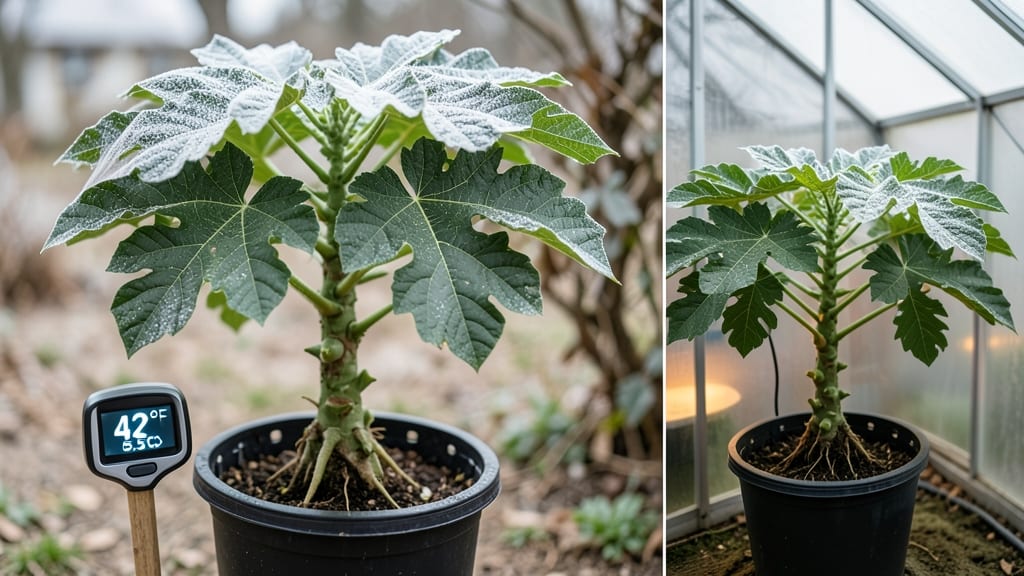
A papaya tree’s cold tolerance is razor-thin—just 32°F will turn its tropical leaves to crispy brown in one frost-kissed night. 🌿 I’ve lost three papayas to winter, but now I know how to protect them: move potted trees indoors, mulch heavily, or create microclimates with windbreaks.
The difference between a dead plant and a thriving one often comes down to these simple tricks.
Most papayas thrive in zones 10-12, but hybrid varieties like ‘SunUp’ or ‘Red Maradol’ tolerate brief dips to 28°F with protection. For cooler climates, container growing is your best bet—just ensure pots are at least 15 gallons and use frost cloths.
Even a single night below 30°F can stunt growth, so monitor forecasts like a hawk.
You’ll spot cold damage quickly: blackened leaves, mushy stems, or fruit that turns mealy. But here’s the good news: if roots stay intact, your tree can bounce back with proper care.
Prune damaged foliage, water deeply (but not soggy), and watch new growth emerge within 2-3 weeks. The key is acting fast—delayed action means permanent loss.
For year-round growing in colder areas, combine containers with indoor overwintering. A sunny windowsill or grow light keeps them alive until spring, and you’ll harvest fruit 6-8 months after transplanting outside.
It’s not foolproof, but it works—my ‘SunUp’ papaya survived last winter’s 25°F dip with just a heat lamp and extra mulch.
📚 In This Guide
- What you need
- Instructions
- Tips and common mistakes
- Wrapping up and next steps
What you need
- ● Papaya tree seedlings or saplings: Choose cold-tolerant varieties like Carica papaya ‘Solo’ or ‘SunUp’ (if available in your region). Quantity: 1–3 plants, depending on space.
- ● Well-draining potting mix: A blend of 50% coconut coir, 30% perlite, and 20% compost (for container growing). Quantity: 10–20 gallons, depending on pot size.
- ○ Large containers (optional but recommended): 5–15 gallon pots with drainage holes (for zones below 10a). Material: Plastic or fabric grow bags (insulated).
- ● Cold frames or greenhouses: Minimum size: 4’x4’x4’ (for 1–2 plants). Use polycarbonate panels for durability.
- ● Thermal blankets or frost cloth: Weight: 1.2–3.0 oz/sq yd (for light frosts vs. hard freezes). Quantity: Enough to cover plants + 12” of ground.
- ○ Grow lights (LED or fluorescent): Wattage: 1000–2000 lumens (for supplemental light in short days). Optional but helpful for indoor overwintering.
- ○ Heating mat (optional): Size: Matches pot diameter (for root zone warmth in containers).
- ● Mulch: Straw or pine needles (3–4” layer) to insulate soil. Avoid synthetic mulches.
- ● Pruning tools: Bypass pruners (for clean cuts).
- ● Sterilizing solution (70% isopropyl alcohol).
- ● Fertilizer: Balanced liquid fertilizer (10-10-10 or 20-20-20), diluted to half-strength. Avoid high-nitrogen in winter.
- ● pH test kit: To monitor soil pH (ideal range: 6.0–7.0).
- ○ Moisture meter (optional): For container growers to track soil moisture without overwatering.
- ● Know your USDA Hardiness Zone: Papayas thrive in zones 10–12. For zones 9b and below, container growing + protection is a must!
- ● Sunlight access: Minimum 6–8 hours of direct sun daily (even in winter). South-facing windows or grow lights work for indoor setups.
- ● Temperature monitoring: Use a thermometer to track nighttime lows—below 50°F (10°C) triggers stress, and below 32°F (0°C) risks damage.
- ● Watering setup: Drip irrigation or a self-watering system to prevent soil temperature fluctuations.
- ○ Backup power (optional): For grow lights/heating mats during outages.
How to protect your papaya tree through cold snaps
Papayas thrive in warmth, but with the right prep, you can shield them from unexpected chilly spells.
🌱 Step 1: Understand Your Papaya’s Native Limits
Papayas (Carica papaya) are tropical plants that normally grow in USDA zones 10-12, where temperatures stay above 40°F year-round. Any drop below 32°F risks leaf damage, while 28°F can kill the plant entirely. If you're growing in zones 9 or cooler, treat your papaya like a delicate houseplant during winter—it won’t survive outside long-term.
Here’s the key: Papayas can tolerate brief dips to 32°F if protected, but prolonged cold or frost will kill them. Watch your local weather forecast for 3-day forecasts—that’s your warning window to act. I’ve seen papayas recover from a single night at 30°F with proper shelter, but multiple cold snaps will weaken the plant permanently.
☀️ Step 2: Create a Microclimate for Cold Protection
Start by moving your papaya to a sheltered spot—think covered porch, garage, or even a sunny window indoors. If outdoors, group it with taller plants or a windbreak (like a fence or privacy screen) to block cold winds, which dry leaves faster. I’ve used clear plastic milk jugs (cut in half) as mini greenhouses for young plants during light frosts—they trap heat while letting sunlight through.
For mature trees, wrap the lower trunk and roots in burlap or bubble wrap to insulate against radiant cold. Avoid heavy mulch—papayas hate soggy roots, and thick mulch can trap too much moisture. Instead, use a 2-3 inch layer of straw around the base, keeping it 6 inches away from the trunk to prevent rot.
💧 Step 3: Adjust Watering to Prevent Cold Stress
Cold stress isn’t just about temperature—it’s also about water management. Before a frost, reduce watering by half for 3-4 days. Wet leaves freeze faster and can crack under ice, while dry soil insulates roots better. I’ve seen papayas with damp leaves suffer leaf burn overnight, while those slightly on the dry side survived unscathed.
If you must water before a cold snap, do it early in the day so leaves have time to dry. Use a soaker hose at the base instead of overhead watering—this keeps foliage dry while hydrating roots. After the cold passes, resume normal watering only when top 2 inches of soil feel dry to the touch.
✂️ Step 4: Prune and Insulate for Long-Term Cold Events
For extended cold (below 40°F for more than 3 days), prune back any damaged or weak branches—this reduces the plant’s energy demands. Focus on removing leggy growth (thin, pale stems) first, as these are the least cold-hardy. I prune just above a leaf node where new growth can sprout, using sterilized shears to prevent disease.
Cover the entire plant with a frost blanket (available at garden centers) secured with clips or bricks. If using plastic, prop it up slightly to avoid trapping moisture. Leave it in place until morning temps stay above 45°F for 24 hours. Remove covers gradually—sudden heat shock can stress the plant just as much as cold.
🌿 Step 5: Monitor and Recover After Cold Exposure
After a cold snap, inspect your papaya for brown, crispy leaves—these won’t recover. Snip them off at the base with clean shears. If the new growth at the tips looks healthy, the plant is likely fine. I’ve seen papayas lose 80% of their leaves and still bounce back with proper care—just be patient.
Boost recovery by fertilizing lightly with a balanced 10-10-10 formula (half-strength) once new growth appears. Increase sunlight if indoors—papayas need 6+ hours of bright light daily to rebound. If growing outdoors again, harden off by moving it outside for 2 hours daily, gradually increasing time over 7-10 days to avoid shock.
Tips & tricks for protecting papaya trees in cold weather
These survival strategies will help you safeguard your tropical papaya through unexpected chills—without sacrificing long-term health.
Temperature Thresholds: The 32°F tolerance limit is absolute for papayas, but here's what I've learned: A single night at 30°F can be survived with proper shelter, but multiple nights below 32°F will permanently weaken the plant. Use a minimum-maximum thermometer near your papaya to track overnight lows—this helps you decide when to act. The 40°F threshold for extended cold events (over 3 days) is where you need to be most proactive with pruning and insulation.
Microclimate Engineering: In Step 2, when creating shelter, focus on airflow as much as temperature. I've found that grouping papayas with taller plants creates a windbreak that can raise microclimate temperatures by 5-10°F during cold snaps. For container-grown papayas, move them to a sunny indoor window (south-facing if possible) where temperatures stay above 50°F. The key is maintaining that 45°F minimum for 24 hours before removing covers.
Watering Precision: The 3-4 day water reduction before frost isn't just about volume—it's about timing. I've seen papayas suffer more from evening watering than from actual cold. Water only in the morning when you can guarantee 6+ hours of drying time. For container plants, let the soil dry completely between waterings during cold periods—they're more vulnerable to root rot when stressed.
Recovery Protocol: After cold exposure, don't rush to fertilize. Wait until you see new growth at the tips of branches before applying that half-strength 10-10-10 fertilizer. I've had papayas that looked completely dead after losing 80% of their leaves, only to regrow from the base when given time and proper light. During recovery, supplement with a calcium-rich fertilizer (like crushed eggshells) to strengthen cell walls damaged by cold stress.
Pro Tips for Papaya Tree Cold Tolerance
- These survival strategies will help you safeguard your tropical papaya through unexpected chills—without sacrificing long-term health.
- Use a minimum-maximum thermometer near your papaya to track overnight lows—this helps you decide when to act.
- Microclimate Engineering: In Step 2, when creating shelter, focus on airflow as much as temperature.
Frequently asked questions
Got questions about keeping your papaya tree happy in cooler climates? Here are some of the most common concerns—and how to tackle them!
Can papaya trees survive in cold climates like Zone 8 or lower?
Papayas are tropical plants and typically thrive in Zones 10-11. In colder zones (like 8-9), they’ll need container growing or a greenhouse to protect them from temps below 50°F (10°C). If frost hits, even brief exposure can kill the tree—so plan for winter moves or mulching!
What’s the lowest temperature a papaya tree can handle?
Most papaya varieties won’t survive below 32°F (0°C). Even a light frost can damage leaves, and temps under 50°F (10°C) stress the plant. If you’re in a marginal zone, overwintering indoors (with bright light) is your best bet. Hardier varieties like Carica pubescens may tolerate slightly cooler temps but still need protection.
How can I protect my papaya tree from cold snaps?
Use these quick fixes to shield your tree:
- Move containers indoors or to a garage/shed before frost.
- Cover with frost cloth or bubble wrap if temps dip to 40°F (4°C).
- Mulch heavily (straw or leaves) around the base to insulate roots.
- Water deeply before cold snaps—hydrated plants handle stress better.
Will my papaya tree regrow after cold damage?
If only the leaves are damaged, new growth may sprout from the central trunk once temps warm. However, if the trunk or roots are frozen, the tree is likely dead. Prune back dead wood in spring, but if no new shoots appear within 2-3 weeks, start fresh with a cutting or new plant.
Are there cold-tolerant papaya varieties I can grow?
Most commercial papayas (like Solo or SunUp) are tropical, but Andean papayas (Carica pubescens) are the most cold-hardy, tolerating temps down to 28°F (-2°C) briefly. They’re less common but worth seeking out if you’re in a cooler zone. Crossbreeding experiments are also exploring hybrid varieties—keep an eye on research updates!
Wrapping up and next steps
Understanding your papaya tree’s cold tolerance is the first step to keeping it thriving—even in cooler climates! 🌱 While papayas love warmth, with the right hardiness zone adjustments and protective strategies, you can extend their lifespan and fruit production.
Whether you’re mulching, using row covers, or relocating potted trees, small efforts make a big difference.
Ready to give your papaya tree a fighting chance? Start by assessing your local climate and testing cold-hardy varieties like the Carica pentagona. Then, implement the tricks you’ve learned—your tropical green friend will thank you with vibrant leaves (and maybe even fruit!) for seasons to come. 🌿❄️