
Tools
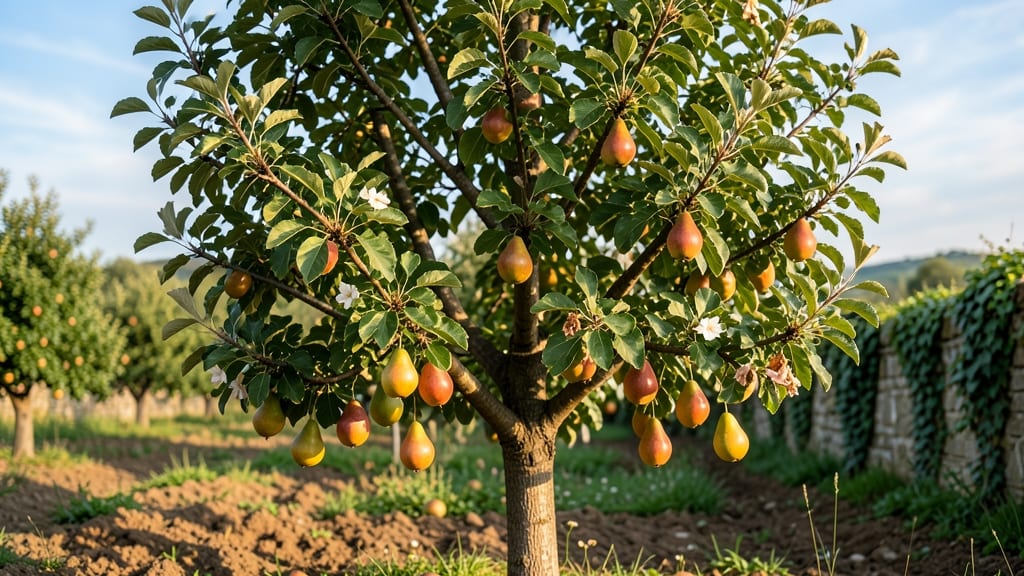
A pear tree in your garden isn’t just about fruit—it’s a living sculpture that shifts with the seasons. 🌿 From spring blossoms to autumn foliage and winter structure, this tree transforms your space year-round while offering privacy and shade.
The key? Choosing the right variety and placement to maximize its beauty and function.
Start by matching your tree to your space: dwarf varieties fit small yards, while standard trees create bold focal points. Plant it where it gets 6+ hours of sunlight daily, near a fence or patio for natural screening.
Pair it with companion plants like lavender or roses to extend the seasonal interest—imagine fragrant blooms at your feet while the pears ripen overhead.
By summer, you’ll have a private oasis with dappled shade and sweet-scented flowers, followed by harvestable fruit. In winter, the bare branches add architectural interest, and evergreen shrubs tucked nearby keep the area lively. This isn’t just a tree—it’s a multi-season masterpiece that works harder than any fence.
Whether you prioritize privacy, beauty, or harvests, a pear tree delivers. The trick is blending it into your design like a pro—here’s how to make it work seamlessly in any garden style.
📚 In This Guide
- What you need
- Instructions
- Tips and common mistakes
- Wrapping up and next steps
What you need
- ● Pear Tree Sapling: 1–2 dwarf or semi-dwarf varieties (e.g., Bartlett, Anjou, or Asian pears) for manageable size. Ensure it’s bare-root or potted (check local nurseries for seasonal availability).
- ● Planting Hole Supplies: 1 shovel (round-point or spade, 12–18" wide).
- ● 1 garden trowel (for delicate root handling).
- ● 1 measuring tape (to mark planting depth—2–3x wider than the root ball).
- ● 1 garden fork (for loosening compacted soil).
- ● Soil Amendments: 5–10 lbs compost or well-rotted manure (blend into native soil).
- ● 1–2 lbs balanced fertilizer (10-10-10 or organic alternative, mixed into soil).
- ● Support & Protection: 1 tree stake or bamboo support (4–6 ft tall, avoid wire cages that restrict growth).
- ● 1 roll tree guard or hardware cloth (12–18" wide, to deter voles/squirrels).
- ● Watering Tools: 1 hose with adjustable nozzle (soaker hose preferred).
- ● 5–10 gallons water storage (bucket or watering can for deep soaks).
- ● Mulch (3–4" layer of wood chips or straw) to retain moisture and suppress weeds.
- ● Pruning shears (for shaping young branches—sterilize blades with rubbing alcohol).
- ● Organic pest control (e.g., neem oil or horticultural soap for early-season pests).
- ● Drip irrigation kit (for automated watering during dry spells).
- ● Decorative stakes or paint (to mark drip line and avoid future damage).
Step-by-step guide to planting a pear tree for year-round privacy
Here's how to establish a pear tree that delivers seasonal interest while serving as a natural privacy screen.
🌱 Step 1: Select and Prepare the Planting Site
Choose a location with full sun exposure (6-8 hours daily) and well-draining soil. Pear trees thrive in slightly acidic to neutral soil (pH 6.0-7.0). Dig a hole twice as wide as the root ball but only as deep—planting too deep suffocates roots and causes stress.
Test your soil's drainage by digging a 12-inch hole and filling it with water. If it drains in under an hour, your site is ready. If water pools after 2 hours, amend the soil with 2-3 inches of compost mixed into the native soil at the bottom of the planting hole. This improves aeration and prevents root rot.
🌿 Step 2: Plant the Tree at the Right Depth and Stake for Support
Remove the tree from its container and gently loosen the roots if they're circling. Position the tree so the top of the root ball sits 1-2 inches above ground level—this prevents soil from settling and burying the trunk over time. Backfill with native soil mixed with 5 gallons of compost, tamping lightly every 4-6 inches to eliminate air pockets.
Install two 4-foot stakes on opposite sides of the tree, 6 inches from the trunk. Use a 1-inch wide rubber tree collar to secure the trunk between the stakes and tie it with soft cloth strips (never wire or plastic). This protects the bark while providing stability against wind.
☀️ Step 3: Water Deeply and Mulch to Retain Moisture
Water the tree immediately after planting with 5 gallons of water, soaking the root zone until water runs out the bottom of the hole. This eliminates air pockets and helps roots establish contact with the soil. Avoid overhead watering—the wet foliage invites fungal diseases like powdery mildew.
Spread 3 inches of wood chips or shredded bark mulch in a 3-foot diameter circle around the base, keeping it 3 inches away from the trunk to prevent rot. Mulch retains moisture, regulates soil temperature, and suppresses weeds. Replenish mulch annually as it breaks down.
✂️ Step 4: Prune for Structure and Encourage Strong Growth
Prune the tree immediately after planting to remove any broken branches and shape the canopy. Focus on open-center growth by cutting back crossing branches and those growing inward. Use clean, sharp pruners and make cuts just outside the branch collar to promote healing.
Remove any suckers (shoots growing from the base) and water sprouts (vertical shoots from the trunk). These divert energy from fruit production. In the first year, limit pruning to structural shaping—avoid heavy cuts that stress the young tree. You'll see new growth within 4-6 weeks if the tree is healthy.
🌿 Step 5: Maintain Seasonal Care for Long-Term Health
Fertilize in early spring with 1 pound of 10-10-10 fertilizer spread evenly in the root zone. Water deeply after applying to help nutrients reach the roots. Avoid high-nitrogen fertilizers—they promote leafy growth at the expense of fruit production. Thin young fruit when it's pea-sized to improve size and quality.
Monitor for pests like pear psylla and fire blight bacteria. Remove infected branches immediately and disinfect pruners with 70% rubbing alcohol between cuts. In fall, apply 2 inches of mulch to insulate roots from winter temperature fluctuations. Mature pear trees provide year-round privacy with their dense foliage and seasonal interest from blooms to fruit.
Tips & tricks for perfect pear tree planting
A few strategic moves can transform your pear tree from a simple planting into a thriving, year-round privacy powerhouse. Here's what I've learned from years of trial and error.
Sunlight Secret: While 6-8 hours of daily sun is ideal, pear trees can tolerate partial shade—just expect slightly less fruit production. If your site gets only 4-5 hours of sun, position the tree where it receives the most direct morning sunlight, as this is when sunlight is most beneficial for photosynthesis.
Soil Test Shortcut: Don't have a pH test kit? Use the baking soda test: Mix 1 tablespoon of baking soda in 1 cup of water. Add a handful of your soil—if it fizzes, your soil is alkaline (pH 7.5+). If nothing happens, your soil is likely acidic (pH 6.0-7.0). For neutral soil, you'll need to amend with peat moss or sulfur accordingly.
Staking Strategy: The 4-foot stakes should be installed at a slight angle (about 15 degrees) away from the tree, not straight up. This creates a natural support system that mimics wind movement. Use the rubber tree collar to create a gentle cradle—too tight can girdle the trunk, while too loose won't provide proper support.
Mulching Mastery: That 3-inch layer of mulch isn't just for looks—it's a living system. Refresh it annually in early spring before new growth begins. For extra winter protection in colder climates, add an additional 2 inches of mulch in late fall, creating a gradual temperature buffer for the roots.
Pro Tips for Pear Tree In Garden
- A few strategic moves can transform your pear tree from a simple planting into a thriving, year-round privacy powerhouse.
- Sunlight Secret: While 6-8 hours of daily sun is ideal, pear trees can tolerate partial shade—just expect slightly less fruit production.
- Soil Test Shortcut: Don't have a pH test kit?
Frequently asked questions
Got questions about growing a pear tree in your garden for privacy and beauty? You’re not alone! Here are some of the most common queries—plus quick, actionable answers to help you plan like a pro.
How long does it take for a pear tree to grow into a privacy screen?
A young pear tree (like Pyrus calleryana) can reach 15–20 feet tall in 5–10 years with proper care. For faster results, plant multiple trees in a staggered row (spaced 10–15 feet apart) to create an instant visual barrier. Pro tip: Choose dwarf varieties (e.g., Pyrus communis ‘Moonglow’) if space is tight—they mature in 3–5 years!
Do pear trees need a lot of maintenance?
Moderate! Prune in late winter to shape the tree and remove dead branches. Thin out fruit in spring to avoid overburdening branches. Watch for:
- Fire blight (bacterial infection—prune infected limbs 6 inches below the damage).
- Codling moths (use pheromone traps or organic sprays).
- Powdery mildew (spray with neem oil if leaves look dusty).
Are pear trees cold-hardy enough for northern climates?
Most pear varieties thrive in USDA Zones 4–8. For colder regions, opt for ornamental pears like Pyrus calleryana ‘Chanticleer’ (hardy to -30°F) or ‘Aristocrat’. Winter care:
- Mulch the base with 3–4 inches of wood chips to insulate roots.
- Avoid pruning in late fall (it encourages new growth that may freeze).
Can I grow a pear tree in a small garden or container?
Yes! Dwarf or semi-dwarf varieties (e.g., ‘Seckel’ or ‘Hood’) thrive in large containers (20+ gallons) with well-draining soil. Key tips:
- Use a balanced fertilizer (10-10-10) in spring.
- Move containers to full sun (6+ hours/day).
- Water deeply 2–3 times/week (containers dry out fast!).
What’s a good alternative if I don’t want fruit but still want privacy?
If you prefer ornamental value over harvests, try these pear-tree-like options:
Option
Height
Bonus Features
Crabapple (Malus spp.)
15–25 ft
Stunning spring blooms, disease-resistant, wildlife-friendly.
Serviceberry (Amelanchier)
10–20 ft
Edible berries, four seasons of interest (flowers, fruit, fall color).
Hawthorn (Crataegus)
15–30 ft
Thorny (deters intruders), white spring flowers, bird magnet.
Wrapping up and next steps
A pear tree in your garden isn’t just a stunning addition—it’s a year-round investment in beauty, privacy, and even fresh fruit! 🌳 From its delicate spring blossoms to its lush foliage and vibrant autumn hues, this tree transforms your outdoor space into a serene retreat.
Plus, with the right care, it’ll thrive for decades, offering shade, wildlife support, and seasonal charm.
Ready to plant the seeds (literally!) of your dream garden? Start by choosing the perfect variety for your climate, then gather your tools and soil.
Whether you’re a beginner or a green thumb, this project is rewarding—and your future self (and neighbors!) will thank you. Roll up your sleeves and get growing! 🌱