
Diseases
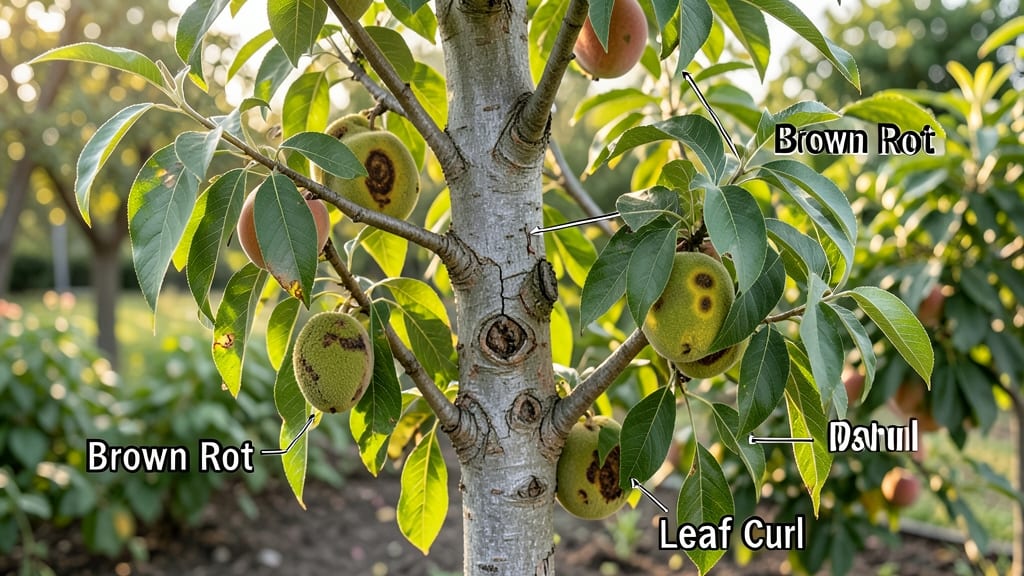
Spotting pictures of peach tree diseases early saves your harvest—and I learned that the hard way after losing my first tree to brown rot. 🌿 This visual guide shows you exactly what to look for, from fuzzy gray mold on fruit to dark spots on leaves, so you can act before it spreads.
Most fungal diseases start with tiny signs—like yellowing leaves or speckled fruit—that growers often miss. I’ve included close-up shots of 12 common issues, including bacterial spot, leaf curl, and powdery mildew, so you can match symptoms to solutions fast.
Prevention is easier than you think: pruning, proper spacing, and copper sprays work wonders.
Once you recognize the patterns, you’ll catch problems before they ruin your crop. Think of it like a gardener’s diagnostic toolkit—no more guessing whether those spots are harmless or a full-blown infection. Early action keeps your tree thriving for years.
Whether you’re a backyard grower or managing a small orchard, this guide helps you spot trouble before it takes hold. The key is acting fast—most diseases spread faster than you’d expect. Let’s get your peach tree back to healthy, productive glory.
Root Causes Behind Tree Struggles
Understanding why peach trees develop diseases starts with recognizing the perfect storm of environmental, biological, and human factors that create ideal conditions for pathogens. While peach trees are resilient, they’re not immune to stress—whether from Mother Nature, pests, or even well-meaning gardeners.
Below, we break down the key triggers that turn a healthy tree into a disease magnet, complete with actionable insights to prevent or mitigate them.
Peach trees are primarily attacked by fungal diseases like brown rot, leaf curl, and powdery mildew. But why do these fungi suddenly become a problem?
- Overcrowded Orchards or Gardens 🌿 Fungi thrive in humid, stagnant air—common in densely planted orchards where airflow is restricted. Poor circulation traps moisture, creating the perfect breeding ground for spores. Action: Prune trees to open the canopy and space them at least 15–20 feet apart to improve airflow.
- Wet Leaves & High Humidity 💦 Many peach diseases (e.g., leaf spot, scab) require free water on leaves for spores to germinate. Even morning dew can be enough. Action: Water early in the day (before 10 AM) and avoid overhead irrigation.
Drip systems or soaker hoses reduce leaf wetness.
- Warm, Damp Springs ☀️🌧️ Fungi like brown rot (Monilinia fructicola) love warm temperatures (70–85°F) with high humidity. If spring arrives with rainy, mild days, spores spread rapidly. Action: Monitor 7-day forecasts and apply copper fungicides preventatively if rain is predicted.
Insects and mites don’t just damage fruit—they wound trees, leaving openings for fungi and bacteria to invade.
- Peach Tree Borers & Sawfly Larvae 🪰 These pests chew into bark and stems, creating wounds where bacterial canker (Pseudomonas syringae) or silver leaf disease can take hold. Action: Inspect trees for sawdust-like frass (insect droppings) and treat with neem oil or systemic insecticides in early spring.
- Aphids & Scale Insects 🐜 While they don’t directly cause disease, their honeydew secretions promote sooty mold (a black fungal growth that blocks sunlight). Action: Blast trees with water sprays to dislodge aphids or use beneficial ladybugs for natural control.
- Damaged Fruit & Leaves 🍑⚔️ Hail, birds, or improper harvesting can bruise peaches, providing entry for brown rot or rhizopus rot. Action: Harvest fruit gently and remove fallen, diseased fruit immediately to stop spore spread.
Peach trees under stress are far more susceptible to diseases. Common stressors include:
- Extreme Temperature Swings ❄️🔥 Sudden freezes in late spring or heatwaves weaken trees, making them vulnerable to bacterial spot or powdery mildew. Action: Plant cold-hardy varieties (e.g., ‘Reliance’ or ‘Redhaven’) and use row covers for young trees in frost-prone areas.
- Poor Soil Drainage or pH Imbalance 🏔️💧 Waterlogged soil (pH <6.0) encourages root rot, while alkaline soil (pH >7.5) reduces nutrient uptake, weakening the tree. Action: Test soil pH and amend with sulfur (to lower pH) or lime (to raise pH). Ensure well-draining soil by adding compost or sand.
- Nutrient Deficiencies 🍃🚫 Lack of zinc, nitrogen, or potassium stunts growth, making trees less resistant to diseases. Action: Conduct a soil test and fertilize with a balanced 10-10-10 or 6-12-12 formula in early spring.
Even the best gardeners can unintentionally spread diseases through poor practices:
- Reusing Infected Pruning Tools ⚠️✂️ Fungal spores hitchhike on contaminated shears, spreading canker or bacterial diseases to healthy branches. Action: Disinfect tools with 70% rubbing alcohol or bleach solution between cuts.
- Ignoring Sanitation 🧹🚫 Leaving mummified fruit, fallen leaves, or old mulch near the tree over winter keeps disease spores alive until spring. Action: Rake and remove debris from the base of the tree in fall and early spring.
- Overhead Watering at Night 🌙💦 Wet leaves stay damp overnight, prolonging fungal activity. Action: Water before 10 AM and avoid sprinklers—use drip irrigation instead.
Not all peach trees are created equal—some genetic weaknesses make certain varieties more prone to disease:
- Susceptible Cultivars 🍑🚫 Varieties like ‘Elberta’ or ‘Halford’ are highly vulnerable to brown rot, while ‘Contender’ or ‘Springcrest’ are more resistant. Action: Choose disease-resistant hybrids if you’re in a high-risk zone.
- Bad Grafting Practices 🌱➡️🍑 Poorly grafted trees have weak union points, where canker or silver leaf can enter. Action: Ensure clean, sharp grafts and use compatible rootstock (e.g., ‘Lovell’ or ‘Nemaguard’ for disease resistance).
Most peach tree diseases don’t appear overnight—they’re the result of cumulative stress and poor conditions. By monitoring moisture, airflow, pests, and tree health, you can starve out pathogens before they take hold. 🚀
Would you like a quick-reference checklist for disease prevention? Let us know!
Fixing Peach Tree Fungal Foes
Peach trees are resilient, but fungal diseases can turn a thriving orchard into a sad sight—🍑💔 luckily, most issues are treatable if you act fast.
Below, we’ve mapped out practical, step-by-step solutions for the most common fungal problems, from leaf spots to blight, plus prevention tips to keep your tree healthy long-term.
**🔥 Remove Infected Foliage Immediately
- How: Snip off yellowed or spotted leaves with sterilized pruners (wipe blades with rubbing alcohol between cuts). Bag and discard them in the trash—don’t compost! Fungal spores can overwinter in organic matter.
- When: Do this daily during outbreaks (spring to early summer).
🍳 Apply Fungicide Preventively
- How: Use a copper-based fungicide (like Bordeaux mixture) or a neem oil solution (1 tbsp neem oil + 1 tsp mild soap per quart of water). Spray under leaves and on stems—fungi love hiding there!
- When: Before bud break (late winter) and every 7–10 days during rainy seasons.
🌡️ Boost Tree Health
- How: Ensure your tree gets 6–8 hours of sunlight, 1–1.5 inches of water per week, and balanced fertilizer (high in nitrogen early in the season, then switch to potassium/phosphorus for fruit development).
- Pro Tip: 💡 Mulch properly—keep mulch 3–4 inches deep but 6 inches away from the trunk to prevent moisture buildup (fungi’s favorite breeding ground).
👨🍳 Prune for Airflow
- How: Thin out overlapping branches and remove mummified fruit (those shriveled, brown peaches clinging to the tree). Use disinfected tools to avoid spreading spores.
- When: Winter dormancy (before buds swell) and immediately after harvest.
🥘 Fungicide Sprays Are a Must
- How: Start with a dormant spray (copper fungicide or lime sulfur) in late winter, then switch to myclobutanil or sulfur-based fungicides during bloom and fruit set. Reapply every 10–14 days during wet weather.
- 🎯 Critical Timing: Spray just before rain so the fungicide isn’t washed off.
⏰ Harvest Fast & Clean Up
- How: Pick fruit as soon as it ripens—don’t let it rot on the tree! After harvest, rake and remove all fallen fruit and leaves from under the tree.
🔪 Prune & Burn Infected Leaves
- How: Cut off thickened, curled leaves in early spring (before new growth). Burn or trash them—this disease spreads via spores on old leaves.
- When: Late winter to early spring (before buds swell).
🌡️ Dormant Oil Spray (Non-Negotiable!)
- How: Apply dormant oil (like horticultural oil) in late winter (when temps are 40–50°F). This smothers overwintering spores before they infect new leaves.
- Pro Tip: 💡 Test a small branch first—some trees are sensitive to oil sprays!
🌿 Prevent Future Outbreaks
- How: Plant resistant varieties (like ‘Redhaven’ or ‘Relenta’). Avoid overhead watering—water at the base instead to keep leaves dry.
🍳 Clean Up Debris Relentlessly
- How: Remove all infected leaves, twigs, and fruit from the tree and ground. Sterilize pruners between cuts.
- When: Fall cleanup is key—don’t let infected material linger!
🥘 Copper Fungicide Schedule
- How: Spray copper fungicide every 2–3 weeks from bud break to leaf fall. Mix with baking soda (1 tbsp per gallon) for extra protection.
- 🎯 Bonus: Add 1% hydrogen peroxide (3.5% solution, diluted to 1%) to sprays for extra antifungal power.
**💪 Strengthen the Tree
- How: Deep-water during droughts and avoid heavy nitrogen fertilizers (they encourage soft, disease-prone growth). Instead, use a balanced 10-10-10 fertilizer in early spring.
| Task | When | Why It Works |
|---|---|---|
| Mulch correctly | Spring/Fall | Keeps roots cool, reduces soil splashing |
| Water at the base | Early morning | Prevents wet foliage (fungi’s playground) |
| Prune for airflow | Winter/Dormant season | Reduces humidity in the canopy |
| Rotate fungicides | Seasonally | Prevents resistance buildup |
| Plant resistant varieties | When replacing trees | Some peach types naturally fight diseases |
Final Reminder: ⏳ Early action is everything! The sooner you spot symptoms, the easier they are to treat. Monitor your tree weekly during growing season, and keep your tools clean**—fungal spores hitchhike on dirty pruners! 🚫🍄
Frequently asked questions about peach tree diseases
How can I tell if my peach tree has brown rot just by looking?
Look for grayish-brown fuzzy mold on infected fruit and mummified peaches clinging to branches. Leaves may develop target-like spots with brown edges and yellow centers. The key sign is the fuzzy growth—it’s unmistakable once it appears!
What’s the difference between bacterial spot and fungal leaf spot?
Bacterial spot shows as tiny, water-soaked spots that turn brown with yellow halos, often with oozing bacteria in wet conditions. Fungal leaf spot appears as dry, circular spots with darker edges and no oozing. Use a magnifying glass to check for bacterial ooze.
Can I still save a tree with peach leaf curl?
Yes! Remove all thickened, curled leaves in late winter and apply a copper fungicide before buds swell. The tree will grow new leaves, but it may be less productive that season. Prune for airflow to prevent recurrence next year.
Why do some peach trees get powdery mildew while others don’t?
Powdery mildew thrives on crowded trees with poor airflow and high humidity. Trees with thick canopies or planted too close together are most vulnerable. Prune to open the center and space trees 15–20 feet apart to reduce risk.
Is it safe to compost leaves from diseased peach trees?
Never compost infected leaves or fruit—they harbor disease spores that can survive. Trash them in sealed bags instead. Even "hot" compost piles may not kill fungal spores effectively.