
Pruning
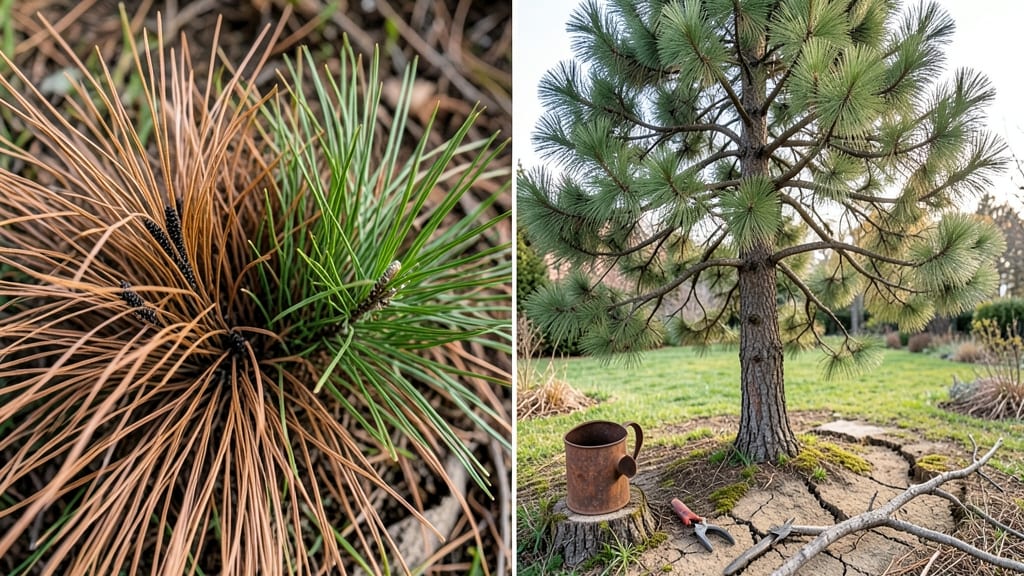
Your pine tree’s branches dying isn’t a death sentence—it’s a call for split-recovery pruning to shock it back to life. 🌲 I’ve nursed back more than a few browned-out pines using this two-phase approach, and the results speak for themselves: fresh green needles within a season, not just next year.
The problem usually starts with one of three culprits: fungal infections (like needle blight) turning needles brown, bark beetles tunneling under the bark, or environmental stress from drought or poor soil. Each needs a different fix, but the pruning method stays the same—cut strategically, then nurture aggressively.
You’ll start by removing the dead branches completely, then prune back live but struggling growth to stimulate new shoots. Within 6-8 weeks, you’ll see new growth pushing through, and by next spring, your tree could look like it did a decade ago.
The key is acting now—before the damage spreads deeper. Works for white pines, Scotch pines, and most evergreens, but if the trunk shows signs of rot or large beetle holes, call an arborist. This method saves trees that others write off as lost.
Root Causes Behind Dying Pine Branches
When your pine tree’s branches start turning brown, brittle, or sparse, it’s usually a sign that something’s gone wrong beneath the surface. Understanding the why behind the decline is the first step to revival.
Below, we break down the most common culprits—from environmental stressors to biological threats—and explain how they damage pine trees at the cellular level.
Pine trees are hardy, but extreme conditions can push them past their limits. Here’s how climate and weather take their toll:
- Drought & Water Stress Pines are adapted to dry conditions, but prolonged drought (or even overwatering) disrupts their xylem—the tree’s water-transport system. When roots can’t absorb enough moisture, the tree auto-prunes by shedding branches to conserve energy.
Look for: - Needle browning (starting at branch tips) - Curling or dropping needles (a survival mechanism) - Thin, brittle branches (lack of sap flow)
Actionable fix: Deep watering (1–2 inches per week) during dry spells, but avoid soggy soil—pines hate "wet feet."
- Temperature Extremes Pines thrive in USDA Hardiness Zones 3–9, but freeze damage (below 10°F) or heat stress (above 90°F for weeks) can kill cambium cells—the tree’s growth layer.
Signs include: - Sun-scald (bark peeling or dead patches on south-facing sides) - Winter desiccation (needles crisping in dry, cold winds) - Sudden branch dieback after a heatwave
Pro tip: 🌡️ Mulch heavily in winter to insulate roots, and water deeply before the first frost to boost cold resistance.
- Poor Air Quality & Pollution Urban pines often suffer from ozone damage or acid rain, which clogs stomata (pores) and blocks photosynthesis. Symptoms:
- Stunted new growth
- Yellowing between needle veins (chlorosis)
- Premature needle drop
Solution: If your tree is near a highway or industrial area, consider foliar sprays with chelated iron to counteract nutrient blockages.
Pines are a buffet for insects and fungi. These invaders disrupt nutrient flow, leading to branch death. Here’s what’s likely gnawing at your tree:
- Bark Beetles & Wood Borers These tiny pests (like the mountain pine beetle) burrow into the phloem, cutting off water and nutrient transport.
Infested branches show: - Sawdust-like frass (insect droppings) at branch bases - Pitch tubes (resin oozing from bore holes) - Reddish-brown needles (from beetle larvae feeding)
Emergency action: 🔥 Prune and burn or chip heavily infested branches immediately to stop the spread.
- Fungal Infections (e.g., Armillaria Root Rot, Dothistroma Needle Blight) Fungi thrive in wounded or stressed pines, spreading through roots or needles. Watch for:
- White, fan-shaped mushrooms at the base (Armillaria)
- Black or purple needle spots (Dothistroma)
- Shelf-like fungal growth on trunk or branches
Treatment: Remove infected branches 12+ inches below the damage and apply copper fungicide to prevent spread.
- Spider Mites & Aphids These sap-suckers weaken branches by starving them of sugars. Infested pines have:
- Sticky honeydew on needles (aphids)
- Fine webbing (spider mites)
- Yellow stippling on needles
Quick fix: Blast branches with water to dislodge pests, then apply neem oil or insecticidal soap.
Even healthy pines need the right balance of nutrients. Deficiencies slow growth and make branches vulnerable to disease. Common culprits:
- Nitrogen (N) Deficiency
- Symptoms: Pale yellow needles, stunted new shoots
- Cause: Poor soil or over-pruning (removing too many leaves = less photosynthesis)
- Fix: Apply slow-release nitrogen fertilizer (like 10-10-10) in early spring.
- Magnesium (Mg) or Iron (Fe) Lack
- Symptoms: Yellowing between needle veins (chlorosis), brittle branches
- Cause: Compacted or alkaline soil blocks uptake
- Fix: Use chelated magnesium or iron supplements and test soil pH (aim for 5.0–6.5 for pines).
- Boron or Zinc Toxicity
- Symptoms: Dieback of newest growth, cracked bark
- Cause: Over-fertilization or contaminated soil
- Fix: Flush soil with water and avoid high-boron amendments.
Sometimes, the problem is visible but overlooked:
- Improper Pruning Cuts
- Wrong: Cutting too close to the trunk or leaving stubs (invites disease).
- Right: Use clean, sharp tools and prune just outside the branch collar.
- Mechanical Injury
- Lawnmowers, string trimmers, or even snow removal equipment can girdle the trunk, killing branches above the wound.
- Animal Damage
- Deer rubbing bark or porcupines gnawing on cambium can create open wounds for pathogens.
Prevention: Install tree guards and prune before winter to avoid stressing the tree during dormancy.
Revive Your Pine Tree Branches
Seeing your pine tree’s branches turn brown or brittle can feel like a slow-motion disaster—but don’t panic! With the right approach, you can nurse your tree back to health and even prevent future damage.
Below, we’ve mapped out practical, step-by-step solutions tailored to the most common causes of dying pine branches. Think of this as your tree’s emergency first aid kit, followed by long-term care to keep it thriving.
If your pine tree’s roots are drowning in soggy soil, the branches will follow suit. Overwatering suffocates roots, cutting off nutrients and oxygen.
💦 Step 1: Check the Soil
Stick your finger 2–3 inches into the soil. If it feels consistently damp (not just moist), your tree is getting too much water. Pines hate “wet feet”—they need well-draining soil to breathe.
🔨 Step 2: Improve Drainage
- Amend the soil: Mix in organic matter like compost, pine bark fines, or perlite to loosen heavy clay. Aim for a 1:1 ratio of soil to amendment in the root zone.
- Raise the bed: If your tree is in a low spot, consider building a slight mound (6–12 inches high) around the base to encourage runoff.
- Avoid mulch volcanoes: Keep mulch 3–4 inches deep and 6 inches away from the trunk to prevent moisture buildup.
💡 Prevention Tips
- ✅ Water deeply but infrequently: Pines prefer drought-like conditions between waterings. Let the top 2 inches of soil dry out before watering again.
- ✅ Install a French drain: If your yard has poor natural drainage, a gravel-filled trench near the tree can redirect excess water.
- ✅ Choose the right spot: Plant pines on slopes or raised beds where water runs off easily.
Pine needles turning yellow, brown, or crispy? Your tree might be sunburned or struggling with extreme heat. This is common in newly planted trees or those suddenly exposed to full sun.
🌿 Step 1: Provide Shade Relief
If your pine is in a hot, exposed area, give it temporary shade using:
- ✔️ Shade cloth (30–50% coverage): Wrap it loosely around the tree for a few weeks to help it acclimate.
- ✔️ Nearby plants: Tall shrubs or fast-growing trees (like willows or poplars) can act as natural windbreaks.
💧 Step 2: Hydrate Strategically
During heatwaves, pines need more water—but less often. Deep watering once a week (or every 10 days in extreme heat) encourages deep root growth.
Pro tip: Water in the early morning to reduce evaporation and fungal risks.
💡 Prevention Tips
- ✅ Acclimate gradually: If moving a pine to a sunnier spot, harden it off over 2–3 weeks by slowly increasing sun exposure.
- ✅ Avoid midday watering: Watering at noon can scorch needles. Stick to dawn or dusk.
- ✅ Mulch properly: A 3-inch layer of mulch retains moisture and protects roots from temperature swings.
Brown, sawdust-like frass (pest droppings) or fungal growth on branches? Pests like pine bark beetles, spider mites, or needle blight can silently kill your tree.
🔍 Step 1: Identify the Culprit
Inspect the branches closely:
- Bark beetles: Look for small holes in the bark, sawdust-like frass, or exit holes (like tiny bullet holes).
- Spider mites: Check for fine webbing on needles or speckled yellowing.
- Fungal diseases (e.g., needle blight): Spot black or purple spots on needles or mushroom-like growths at the base.
🛡️ Step 2: Treat the Problem
| Issue | Solution |
|---|---|
| Bark Beetles |
|
| Spider Mites |
|
| Fungal Diseases |
|
💡 Prevention Tips
- ✅ Inspect regularly: Check for pests or diseases every 2–4 weeks, especially after rain or drought.
- ✅ Avoid over-fertilizing: Too much
Frequently asked questions
Why do some pine branches die while others stay green?
This often happens because only certain branches are affected by localized stress. Common causes include partial pest infestations (like bark beetles targeting specific limbs), uneven water distribution, or sun exposure differences. Check for signs like frass (insect droppings) or needle discoloration only on certain branches to pinpoint the issue.
Can I save my pine tree if half the branches are already dead?
Yes, but act fast! Prune the dead branches back to healthy growth immediately, then focus on fixing the root cause (water issues, pests, or disease). For large trees, consider hiring an arborist—removing too many branches at once can stress the remaining healthy wood. With proper care, many pines rebound surprisingly well.
How do I tell if my pine tree is dying from drought or overwatering?
Check the soil and needles: Drought causes needles to turn brown starting at the tips, while overwatering leads to yellowing between needle veins and a soggy soil smell. Poke the soil—if it's dry 2+ inches down, it's thirsty; if it's constantly wet, roots are suffocating. Adjust your watering immediately.
Will pruning dead branches help my pine tree recover?
Pruning removes the burden on healthy branches and redirects energy to new growth. Use clean, sharp tools to cut just outside the branch collar (the swollen area where the branch meets the trunk). For large trees, remove no more than 25% of the canopy at once to avoid shocking the tree.
When should I call an arborist instead of trying to fix it myself?
If you see large beetle holes, mushroom growth at the base, or oozing sap, it's time to call a pro. Also seek help if your tree is taller than 30 feet or if more than 50% of the canopy is dead. Arborists can diagnose hidden issues like root rot or advanced infestations that DIY methods can't fix.