
Trees
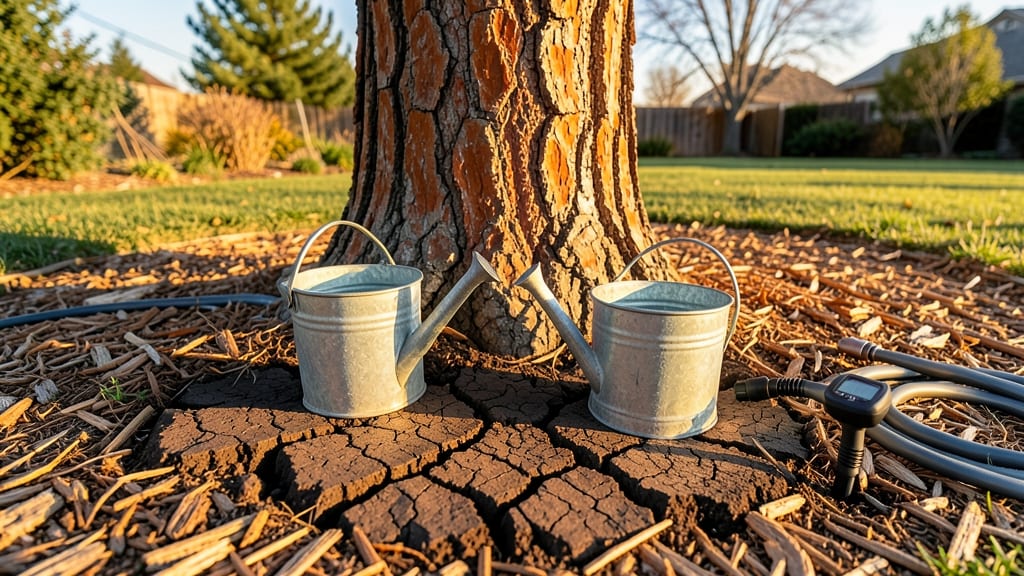
When your pine tree’s needles turn brown and brittle, it’s not just pine tree drought stress—it’s a cry for help. 🌲 I’ve seen healthy pines turn crispy overnight in dry summers, but these three watering tricks brought them back to life within weeks.
The key isn’t just how much you water, but when and how—and most people get this wrong.
Drought stress happens when roots can’t reach moisture deep enough, especially in sandy or rocky soil. I learned the hard way that shallow watering just dries out the top layer faster.
Instead, focus on deep, infrequent soaking—think of it like giving your tree a long drink instead of sipping all day. Mulch helps too: a 3-inch layer keeps moisture locked in while shielding roots from heat.
By the end of summer, you’ll see new green needles pushing through, and the bark will stay smooth (not cracked). The secret? Watering in the early morning, using a soaker hose to avoid runoff, and checking soil moisture 6 inches down.
Even drought-prone climates can work with this method—it’s what saved my 15-year-old ponderosa last year.
No fancy tools needed—just patience and the right technique. Once you master these steps, your pine will look thriving, not struggling. Here’s exactly how to do it without overcomplicating things.
Root Causes Of Tree Water Crisis
Pine trees, like all plants, rely on a delicate balance of water, nutrients, and environmental conditions to thrive. When drought stress sets in, it’s rarely just one factor at play—it’s usually a combination of environmental and physiological triggers.
Understanding these root causes is the first step to preventing or mitigating the damage. Let’s break down the science behind why pine trees struggle during dry spells.
Pine trees absorb water through their fine root systems, which extend deep into the soil to access moisture. However, when rainfall is scarce or soil drains too quickly (common in sandy or rocky soils), roots can’t keep up with the tree’s demand. Here’s why this happens:
- Drought Conditions: Prolonged dry spells reduce soil moisture levels, forcing roots to work harder to extract water.
If the soil dries out too much, roots can’t absorb enough water to sustain the tree’s transpiration (the process of water moving from roots to needles and evaporating). - Shallow Root Systems: Some pine species, like loblolly or shortleaf pines, have roots that spread widely but not deeply.
If the topsoil dries out, these trees struggle to access deeper moisture reserves. - Compacted or Poor Soil: Clay-heavy or compacted soils hold water poorly, while sandy soils drain too quickly. Both scenarios leave roots high and dry.
Actionable Insight: 💡 Mulching with organic materials (like wood chips or pine straw) helps retain soil moisture and encourages deeper root growth over time.
Heatwaves accelerate transpiration rates, causing pine trees to lose water faster than they can replenish it. High temperatures also increase stomatal conductance—the openings on needles that regulate gas exchange—leading to excessive water loss. Key factors include:
- Direct Sun Exposure: Pines in full sun (especially young trees) experience heat stress, where their needles overheat and lose moisture rapidly. - Low Humidity: Dry air reduces atmospheric moisture, forcing trees to work harder to pull water from the soil.
In arid climates, this can be a year-round issue. - Wind Stress: Wind increases evaporation from needles, making drought conditions even more severe. This is why coastal pines (like ponderosa pines) often show drought symptoms despite living near water.
Actionable Insight: 🌿 Plant drought-resistant pine varieties (e.g., Aleppo pine or Scots pine) in hot, dry areas, and provide afternoon shade for young trees.
Pine trees have unique adaptations, but these can backfire under drought stress. Their needles are adapted for water conservation, but when conditions worsen, their survival mechanisms become liabilities:
- Slow Growth Rates: Pines grow slowly compared to deciduous trees, meaning they have limited energy reserves to recover from drought.
Fast-growing trees can bounce back quicker, but pines often decline gradually. - Needle Retention: Unlike deciduous trees, pines keep their needles for 2–7 years, depending on the species.
If drought stress damages older needles, the tree can’t shed them quickly enough, leading to nutrient and water competition among healthy and dying foliage. - Hormonal Shifts: Drought triggers the production of abscisic acid (ABA), a stress hormone that closes stomata (needle pores) to prevent water loss.
While this conserves water, it also reduces photosynthesis, starving the tree of energy.
Actionable Insight: ✨ Prune 20–30% of the oldest, most yellowed needles in early spring to reduce water demand and improve air circulation.
Drought weakens pine trees, making them prime targets for pests and pathogens that thrive in stressed conditions. Common culprits include:
- Bark Beetles: These insects detect stressed trees through chemical cues and bore into the bark, disrupting water transport. Drought-stressed pines are 3–5 times more susceptible to beetle infestations.
- Fungal Infections: Fungi like Armillaria root rot or Sphaeropsis tip blight exploit weakened trees, further blocking water uptake and nutrient flow.
- Spider Mites: These pests thrive in dry, hot conditions, sucking sap from needles and accelerating dehydration.
Actionable Insight: 🔥 Monitor trees for sawdust-like frass (beetle droppings) or webbing (mite activity). Early intervention with beneficial nematodes or fungicidal sprays can save a tree.
Sometimes, the problem isn’t just the drought itself—it’s how humans and nature interact with the tree’s environment:
- Urbanization And Impervious Surfaces: Pavement and buildings reduce rainwater infiltration, leading to drier soils in urban and suburban areas. - Overwatering Then Neglect: Some homeowners overwater young pines, leading to shallow root systems that can’t handle drought later.
The fix? Deep, infrequent watering to encourage deep roots. - Climate Change: Rising temperatures and shifting rainfall patterns create longer, more severe droughts, pushing pine trees beyond their adaptive limits.
Actionable Insight: 🎯 If your pine is in a developed area, install a rain garden or French drain to improve water retention near the roots.
Understanding these causes helps you prevent drought stress before it starts—or at least catch it early enough to intervene. Next, we’ll explore three simple watering tricks to revive stressed pines and restore their health.
Revive Your Pine Tree Naturally
Drought stress doesn’t have to be a death sentence for your pine tree—with the right care, you can nurse it back to health and even prevent future struggles. Below are practical, step-by-step solutions tailored to the root causes of drought stress, from immediate relief to long-term resilience.
Cause: Shallow watering leads to surface-level root dehydration. Solution:
- 🔥 Water deeply but infrequently—aim for 1–2 inches of water per week (more in extreme heat). Use a soaker hose or drip irrigation to deliver water slowly to the root zone (6–12 inches deep).
- ⏰ Best time to water: Early morning (6–9 AM) to reduce evaporation and fungal risks.
- 🌱 Pro tip: Check soil moisture with your finger—if the top 2 inches are dry, it’s time to water. For sandy soil, water more frequently; for clay, less often.
Prevention:
- Mulch heavily (3–4 inches of organic mulch like pine straw or wood chips) to retain moisture and regulate soil temperature.
- Avoid over-trimming roots—healthy roots = better drought resistance.
Cause: Poor soil structure accelerates water loss. Solution:
- 🍳 Amend the soil with compost or peat moss (10–20% mix) to improve water retention without suffocating roots.
- 👨🍳 For compacted soil: Loosen the top 6 inches with a broadfork or garden fork to help roots access deeper moisture.
- 🌡️ Hydration hack: Apply a thin layer of hydro-mulch (like coconut coir) after watering to lock in moisture temporarily.
Prevention:
- Test your soil (pH and texture) annually—ideal pH for pines is 4.5–6.0. Adjust with sulfur (to lower pH) or lime (to raise it) if needed.
- Plant drought-tolerant ground cover (e.g., clover or creeping thyme) to shade the soil and reduce evaporation.
Cause: Direct sun and wind dry out needles faster than roots can absorb water. Solution:
- 🌳 Provide temporary shade with shade cloth (30–50%) or lightweight fabric during peak afternoon heat (12–4 PM).
- 🔪 Prune strategically: Thin out dense inner branches to improve airflow and reduce transpiration (water loss).
- 🌬️ Windbreak trick: Plant a windbreak hedge (e.g., arborvitae or juniper) on the west/southwest side of the pine.
Prevention:
- Choose the right location for new pines—avoid full sun in hot climates or exposed, windy sites.
- Group pines together (3+ trees) to create a microclimate that retains humidity.
Cause: Waterlogged soil suffocates roots, preventing them from accessing moisture efficiently. Solution:
- 📊 Check drainage: If water pools after 6 hours, your soil is too compacted. Amend with perlite or coarse sand.
- ✨ Adjust watering: Let the top 3–4 inches of soil dry out between waterings—pines hate soggy roots!
Prevention:
- Raise beds slightly (6–12 inches) if your area has heavy clay or poor drainage.
- Use raised planters for container-grown pines to control moisture better.
- 💡 Fertilize smartly: Use a slow-release, balanced fertilizer (10-10-10) in early spring to support root growth—avoid high-nitrogen fertilizers during drought.
- 🎯 Monitor needle color: If needles turn yellow-brown, it’s a sign of stress—act fast with deep watering.
- ✨ Consider drought-resistant varieties: If your area is prone to dry spells, opt for Pinus ponderosa (Ponderosa Pine) or Pinus sylvestris (Scots Pine), which tolerate drought better than others.
Remember: Pines are tough—they’ve survived wildfires and centuries of neglect. With these adjustments, your tree will bounce back stronger and stay resilient against future droughts. 🌲💦
Frequently asked questions
How can I tell if my pine tree is suffering from drought stress?
Look for brown or yellow needles that don’t fall off, thinning foliage at the tree’s tips, and cracked or peeling bark. Another clue is dry, brittle needles that crumble when touched—this means the tree isn’t getting enough moisture to its roots. Check the soil too: if the top 6 inches are bone-dry, that’s a red flag.
Why does my pine tree need deep watering instead of frequent light watering?
Pine roots grow deep to access moisture, but shallow watering only wets the top layer, forcing roots to stay near the surface where they dry out faster. Deep watering (6–12 inches down) encourages roots to grow deeper, making your tree more drought-resistant. Aim for 1–2 inches of water per week—less often but more thoroughly.
Can mulch really help my drought-stressed pine tree?
A 3–4 inch layer of organic mulch (like pine straw or wood chips) locks in moisture, keeps soil cool, and blocks weeds that compete for water. Just keep mulch 3–4 inches away from the trunk to prevent rot. For extra protection, add mulch in early spring before drought conditions worsen.
What’s the best time of day to water a pine tree?
Water in the early morning (6–9 AM) to minimize evaporation and reduce fungal risks from wet foliage. Avoid evening watering—moist needles overnight can attract pests. If you must water in the heat of the day, use a soaker hose to deliver water slowly and directly to the roots.
Will pruning help my drought-stressed pine tree recover?
Yes, but do it carefully! Prune 20–30% of the oldest, yellowed needles in early spring to reduce water demand and improve airflow. Avoid heavy pruning during drought—focus on removing dead or diseased branches instead. Never prune more than 1/3 of the tree’s foliage at once.