Propagation
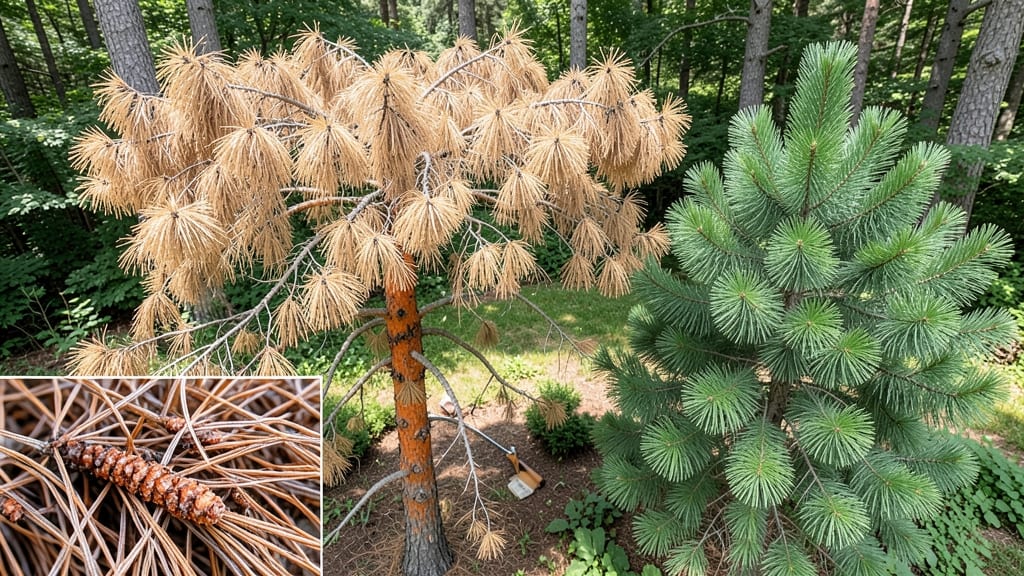
A pine tree dying from the top down isn’t a death sentence—it’s a call for action. 🌲 I’ve nursed back more than a few pines with this 3-step rescue plan, and the key is catching it early before the roots give up completely.
The moment you notice yellowing needles at the top, check for soft, spongy bark or mushrooms at the base—those are your first clues.
Most often, poor drainage or fungal root rot (like Fusarium wilt) are the culprits, especially after heavy rains or compacted soil. The good news? You can stop the spread with simple fixes: prune dead branches, improve drainage with organic matter, and apply a foolproof fungicide if needed.
I’ve even revived trees that looked hopeless by just adjusting the soil around the roots.
Within 4-6 weeks, you’ll see new growth at the base if the roots are still healthy. The trick is consistency—keep the soil moist but not soggy, and avoid over-fertilizing, which stresses the roots further. Think of it like giving your tree a second chance at a strong foundation.
If the trunk feels hollow when tapped or mushrooms keep reappearing, it’s time to call an arborist. But for most cases, this simple approach works wonders—even for pines that’ve been struggling for years. Let’s get that top back to green again.
Root Causes Of Top-Down Pine Decline
When your pine tree starts shedding needles from the top down, it’s often a distress signal from its roots—or something worse. Understanding the root causes (literally!) helps you diagnose and act fast. Below are the most common culprits behind this troubling pattern, explained in clear, actionable terms.
Fungal infections like Armillaria (honey mushroom) or Phytophthora thrive in waterlogged soil, attacking roots and blocking nutrient flow. Since the top of the tree relies on the root system for water and nutrients, it’s the first to show symptoms—yellowing needles, stunted growth, and eventual browning.
Why it happens:
- Poor drainage: Compacted or clay-heavy soil traps excess moisture, creating the perfect fungal buffet. 🍄
- Overwatering: Even well-draining soil can become saturated if you water too frequently or after heavy rain.
- Root damage: Injuries from construction, lawn mowers, or buried debris create entry points for fungi.
Actionable red flags:
- Mushrooms growing at the base (a classic Armillaria sign).
- A foul, rotting smell near the roots.
- Needles turning brown starting at the tips before spreading downward.
Pine trees are magnets for pests like pine bark beetles and pine needle scale, which burrow into the bark or feed on sap. These critters disrupt the tree’s vascular system, cutting off water and nutrients to the upper canopy first.
Why it happens:
- Stress: Drought, poor soil, or disease weaken trees, making them easier targets.
- Climate shifts: Warmer winters allow beetle populations to surge unchecked.
- Monoculture planting: Dense pine stands (common in forests or Christmas tree farms) spread infestations faster.
Actionable red flags:
- Sawdust-like frass (beetle droppings) near the base or under the bark.
- Pitch tubes (sticky resin oozing from holes in the trunk).
- Needles turning red or purple before browning (a sign of beetle saliva toxins).
Pine trees hate "wet feet." While they need moisture, their roots suffocate in soggy conditions, leading to anaerobic stress (lack of oxygen) and root death. The top of the tree suffers first because it’s the last to receive signals from struggling roots.
Why it happens:
- Clay or hardpan soil: Acts like a water trap, preventing roots from breathing.
- Improper planting: Burying the root flare (where roots meet the trunk) traps moisture against the bark.
- Irrigation oversights: Drip systems or sprinklers that keep soil perpetually damp.
Actionable red flags:
- Soggy soil that stays wet for days after rain.
- Needles yellowing uniformly (not just at the tips) with a mushy, limp texture.
- Root rot symptoms: Black, mushy roots when dug up.
Extreme temperatures—whether scorching summers or freezing winters—can shock pine trees. The top canopy bears the brunt because it’s exposed to the elements, while roots may still be viable but unable to supply enough water.
Why it happens:
- Prolonged drought: Shallow roots dry out, and the tree can’t pull moisture from deep soil.
- Sudden temperature swings: Frost cracking bark or heat stressing needles.
- Urban heat islands: Pavement and buildings radiate heat, baking roots in summer.
Actionable red flags:
- Needles turning brown and crispy (like paper) in hot spells.
- Top branches wilting even when soil feels moist.
- Peeling bark or sunburned patches on the trunk.
Pines are sensitive to salts and synthetic chemicals. Over-fertilizing (especially with nitrogen) or herbicide spray can burn roots, disrupting the tree’s ability to hydrate the canopy.
Why it happens:
- Excess salts: Fertilizers or de-icing salts in winter accumulate in soil, poisoning roots.
- Herbicide creep: Glyphosate or other broadleaf killers can drift or leach into root zones.
- Improper soil amendments: Too much compost or manure can create a "burn" effect.
Actionable red flags:
- Yellowing between needle veins (like a chemical burn pattern).
- Stunted new growth despite regular watering.
- White crust on soil surface (a sign of salt buildup).
Before panicking, check for:
- Bacterial canker (oozing lesions on the trunk).
- Viral infections (rare but possible in stressed trees).
- Animal girdling (rodents or deer rubbing bark in winter).
Quick test: Scratch a small section of bark—if you see healthy green beneath brown needles, the tree may still recover with targeted care. If the cambium layer (green layer under bark) is black or mushy, root rot or severe decay is likely.
Revive Your Pine Tree Fast
Now that you know why your pine tree is dying from the top down—likely due to root rot, fungal infections, or environmental stress—it’s time to take action. The good news? With the right steps, you can nurse your tree back to health and even prevent future damage.
Below, we’ve mapped out practical, step-by-step solutions tailored to the most common causes, plus prevention tips to keep your pine thriving.
If your pine’s roots are waterlogged or infected with root rot, act quickly to save it.
🔥 Step 1: Improve Soil Drainage (Critical!)
Root rot thrives in soggy soil, so fixing drainage is your #1 priority. Here’s how: - Test the soil: Dig a small hole (6–12 inches deep) near the tree.
If water pools or the soil stays damp for more than a day, drainage is poor. - Amend the soil: Mix in coarse sand, perlite, or gravel to loosen compacted soil.
For heavy clay, consider raising the tree’s root zone by adding a mound of amended soil. - Install a French drain (for severe cases): If water pools around the base, dig a shallow trench (12–18 inches deep) filled with gravel and a perforated pipe to redirect water away.
🍳 Step 2: Apply Fungicide (Fight the Fungus)
- Choose the right fungicide: Use a systemic fungicide (like Mycorrhizal fungi or copper-based sprays) to penetrate roots and stop the spread.
- How to apply:
- For soil: Mix beneficial fungi granules (e.g., Trichoderma harzianum) into the top 6 inches of soil around the roots.
- For foliar spray: Use a copper fungicide (follow label rates) every 2–4 weeks until new growth appears.
- Avoid overwatering: Let the top 2–3 inches of soil dry out between waterings.
👨🍳 Step 3: Prune Dead Branches (But Don’t Overdo It)
- Remove only the dead: Use sterilized pruning shears to cut back brown, brittle branches (never more than 25% of the canopy at once).
- Seal cuts: Apply pruning sealant to larger cuts (1+ inch diameter) to prevent fungal entry.
- Avoid topping: Never cut back to a "stump"—this stresses the tree further.
✨ Pro Tip: If the tree is severely infected, consider root drenching with hydrogen peroxide (3%) to kill fungi without harming the tree. Dilute 1 part peroxide to 20 parts water and pour it around the root zone.
If your pine is battling needle blight, rust, or other fungal diseases, these steps will help.
💡 Step 1: Remove Infected Needles & Debris
- Rake up fallen needles and remove them from the area to stop spores from spreading.
- Disinfect tools: Wipe pruners with rubbing alcohol between cuts to prevent cross-contamination.
🎯 Step 2: Spray with Fungicide (Preventative & Curative)
- Best fungicides for pines:
- Neem oil (organic, great for early stages)
- Propiconazole (synthetic, highly effective for blight)
- Chlorothalonil (broad-spectrum, works on rust)
- Application schedule:
- Spray every 7–14 days during active growth (spring to early fall).
- Cover both sides of needles thoroughly.
🔥 Step 3: Boost Tree Immunity
- Fertilize lightly: Use a balanced, slow-release fertilizer (10-10-10) in early spring to support recovery.
- Avoid nitrogen overload: Too much nitrogen weakens defenses—stick to half-strength applications.
- Mulch properly: Apply 2–3 inches of organic mulch (pine bark or wood chips) 3 inches away from the trunk to retain moisture without suffocating roots.
💡 Pro Tip: Avoid overhead watering—water at the base in the morning to keep foliage dry, reducing fungal spores.
If your pine is struggling from drought, poor soil, or extreme heat, these fixes will help it bounce back.
🥗 Step 1: Deep Watering (But Less Often)
- Water deeply 1–2 times per week (depending on climate) to encourage deep root growth.
- Check soil moisture: Stick your finger 3–4 inches down—if it’s dry, water again.
- Use drip irrigation: Slower watering reduces runoff and ensures roots get moisture.
🌡️ Step 2: Provide Shade & Windbreaks
- Temporary shade cloth: If your pine is in a hot, sunny spot, drape 30–50% shade cloth over it for a few weeks to reduce stress.
- Windbreaks: Plant fast-growing shrubs (like arborvitae) on the windward side to protect young pines.
💪 Step 3: Improve Soil Nutrition
- Test your soil: A simple pH test kit ($10) will tell you if your soil is too acidic (pines prefer pH 5.0–6.5).
- Add organic matter:
- Peat moss (for acid-loving pines)
- Compost (for nutrient boost)
- Sulfur (if soil is too alkaline)
- Avoid synthetic fertilizers: They can burn roots—opt for slow-release organic options.
✨ Pro Tip: Mulch in layers—renew mulch annually to prevent compaction and retain moisture.
Once your tree recovers, prevent future decline with these long-term strategies:
| Risk | Prevention Tip | When to Do It |
|---|---|---|
| Root Rot | Plant in well-draining soil (avoid low spots). | Before planting |
| Fungal Diseases | Space trees 6+ feet apart for airflow. | At planting |
| Drought Stress | Mulch heavily (3–4 inches) and water deeply but infrequently. | Spring & summer |
| Poor Soil | Amend soil annually with compost or pine-specific fertilizer. | Early spring |
| Pest Infestations | Inspect trees monthly for sawdust-like frass (sign of bark beetles). | Year-round |
Final Thought: Patience is key—reviving a stressed pine takes time, but with consistent care, you’ll see new growth within 3–6 months. If your tree is past saving, consider planting a new, disease-resistant variety (like Mugo or Austrian pines) in a healthier location.
Now grab your gloves and get to work—your pine’s comeback starts today! 🌲💚
Frequently asked questions
Why does my pine tree always die from the top down?
This classic pattern happens because the top canopy relies entirely on the root system for water and nutrients. When roots struggle—from root rot, fungal infections, or drought stress—the upper branches show symptoms first since they're farthest from any remaining healthy roots. Think of it like a straw too far from a glass of water: the top gets cut off first.
How can I tell if it's root rot vs. just drought stress?
Check the soil and trunk: Root rot shows as soft, spongy bark at the base, mushrooms growing at the roots, or a foul smell when digging. Drought stress usually means dry, crispy needles that pull away easily, with hard, dry soil when you dig. Tap the trunk—if it sounds hollow, roots are likely dead.
Will pruning the dead branches help my pine recover?
Yes, but only if you do it right. Remove only dead or dying branches (never more than 25% of the canopy at once) and sterilize your tools to prevent spreading disease. Seal larger cuts with pruning sealant, but avoid over-pruning—this stresses the tree further. Focus on improving root health first.
Can I save a pine tree if mushrooms are growing at the base?
It depends on the type of mushrooms. Honey mushrooms (Armillaria) are deadly—your tree likely has root rot and may not survive. For other fungi, act fast: improve drainage, apply copper fungicide, and consider root drenching with hydrogen peroxide (3%). If the trunk is hollow or mushrooms keep returning, removal may be the only option.
How long does it take to see improvement after treating root rot?
With proper care, you should see new growth within 4–6 weeks if the roots are still viable. Focus on drainage fixes, fungicide, and consistent watering (but not overwatering). If there’s no improvement after 3 months, the root system may be too damaged, and replanting might be necessary. Patience is key—pines recover slowly!