
Trees
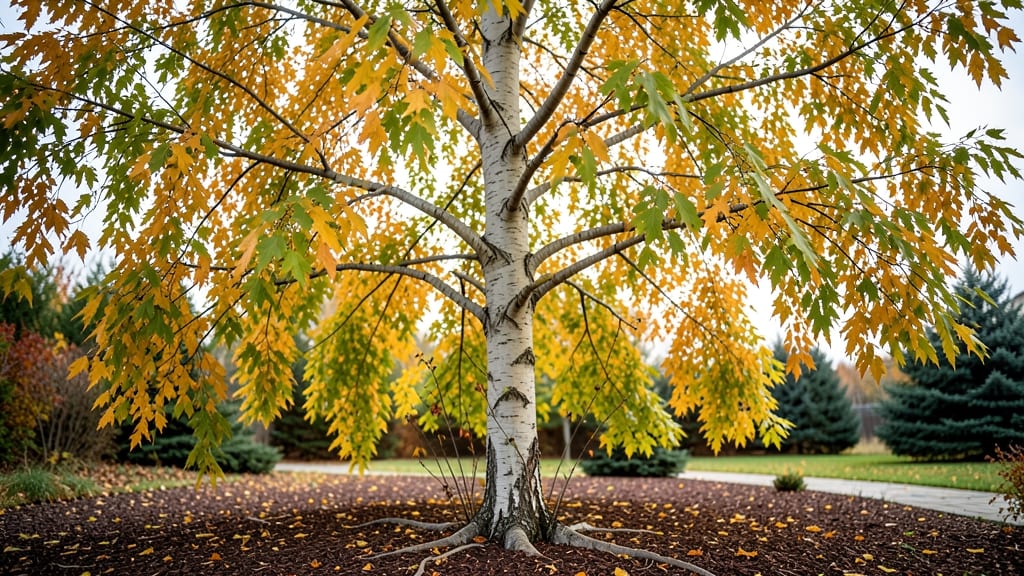
Poplar tree leaves in fall remain vibrant for 3-4 weeks before dropping, often shifting to bright yellow first due to chlorophyll breakdown and nutrient recycling. This rapid color change sets them apart from hardwoods like oaks.
Poplar trees are fast-growing, and their leaves reflect this energy in autumn. 🌳 The bright yellow phase happens because carotenoids—pigments present year-round—become visible as chlorophyll fades. Unlike oaks, poplars don't linger in red hues; they prioritize nutrient recovery before shedding.
This early senescence is a survival strategy, allowing them to redirect energy to roots and buds for next year's growth.
What's fascinating is how environmental factors accelerate this process. Cooler nights and shorter days trigger hormonal changes, while consistent moisture helps maintain leaf health longer. If your poplar's leaves brown prematurely, it might signal stress—check for pests or soil compaction.
Proper care now ensures a healthier tree for next season's vibrant display.
💡 In This Article
- Why Poplar Leaves Yellow Before Turning Brown in Autumn
- How to Care for Poplar Trees During Fall Leaf Drop
Why poplar leaves yellow before turning brown in autumn
Poplar leaves turn yellow first because their biochemical process prioritizes efficiency over prolonged color displays. Unlike hardwoods like maples, poplars contain high levels of carotenoids—yellow and orange pigments that remain hidden under green chlorophyll all summer.
When autumn arrives, cooler temperatures trigger the breakdown of chlorophyll, revealing these carotenoids in a bright yellow phase. This happens within 1-2 weeks of senescence beginning, creating that striking contrast against remaining green foliage.
The science behind this involves two key mechanisms: chlorophyll degradation and nutrient translocation. Poplars rapidly degrade chlorophyll using enzymes like chlorophyllase, which breaks down the green pigment into simpler compounds. Simultaneously, nutrients like phosphorus and nitrogen are recycled from the leaves back into the tree's roots and buds.
This process is so efficient that poplars often complete their yellow phase in just 2-3 weeks before leaves turn brown and drop, unlike oaks which may linger in red hues for 4-6 weeks due to anthocyanin production.
Environmental triggers play a crucial role too. Poplars respond quickly to shorter daylight hours and dropping temperatures, which accelerate the production of abscisic acid—a plant hormone that signals leaf senescence. Consistent moisture levels help maintain this process smoothly, while drought stress can cause premature browning.
The tree's genetic makeup also matters: fast-growing poplars have evolved to prioritize rapid nutrient recycling over extended autumn displays, ensuring they allocate resources efficiently for next year's growth.
Comparing poplars to other trees reveals fascinating differences. While maples and oaks produce anthocyanins (red pigments) during senescence, poplars lack this genetic pathway. Their yellow phase is purely carotenoid-driven, creating a more uniform color change.
This efficiency is why poplar leaves often stay vibrant for only 3-4 weeks before dropping—far shorter than the 6-8 weeks typical of many hardwoods. The result is a brief but brilliant autumn show that reflects the tree's fast-growing nature.
What's particularly interesting is how this process affects the tree's overall health. The rapid nutrient recycling means poplars can redirect energy quickly, supporting root development and bud formation for spring.
This efficiency is one reason why poplars thrive in urban environments—they adapt their autumn cycle to maximize survival in varying conditions. Understanding this biochemical process helps explain why poplar leaves create such a distinct seasonal display compared to their hardwood counterparts.
For tree enthusiasts, observing this process offers a window into plant biology.
The bright yellow phase isn't just about aesthetics—it's a survival strategy that balances visual impact with physiological efficiency. 🌿 Next time you see poplar leaves turning yellow, remember you're witnessing a perfectly timed biochemical symphony that ensures the tree's continued vitality.