
Container Gardens
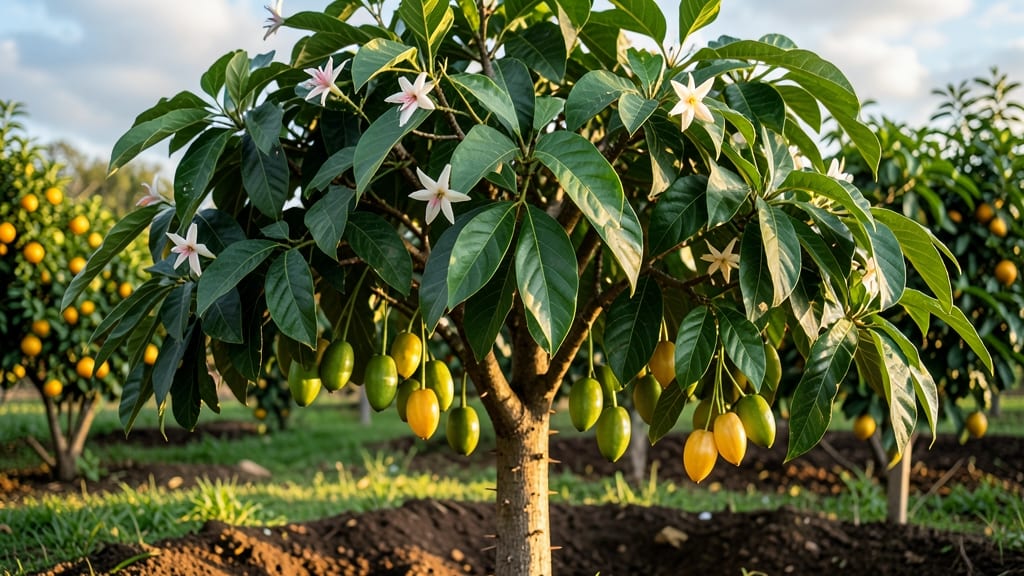
Star fruit trees grow best in USDA zones 10 through 12, where they enjoy frost-free winters and temperatures consistently above 30°F. These tropical plants need full sun exposure and well-draining soil to thrive, making coastal or subtropical regions their natural habitat.
These tropical trees are sensitive to cold, so even brief dips below 30°F can damage leaves or kill the plant entirely. 🌴 The ideal growing conditions mimic their native environments—think of Florida's coastal areas or California's inland valleys, where warm nights and humid air support vigorous growth.
Without these conditions, fruit production suffers, and the tree may struggle to recover from stress. For gardeners in cooler zones, container growing with winter protection becomes essential to extend the growing season.
What sets star fruit apart is its need for consistent warmth year-round. Unlike some citrus trees that can tolerate brief cold snaps, star fruit trees have no frost tolerance at all.
This makes selecting the right location—or using microclimate strategies like mulching or row covers—critical for success. Even a single night below 32°F can cause irreversible damage, so planning ahead is key.
💡 In This Article
- USDA Zones 10-12: Ideal Climate Conditions for Star Fruit Trees
- Microclimate Adjustments for Growing Star Fruit Outside USDA Zones 10-12
USDA zones 10-12: ideal climate conditions for star fruit trees
The star fruit tree's native habitat in Southeast Asia and tropical regions explains why it thrives in USDA zones 10-12. These zones provide the consistent warmth the tree needs, with average annual minimum temperatures between 30°F and 40°F.
The key threshold is 30°F—any colder, and the tree's delicate leaves begin to blacken from frost damage, while fruit production halts entirely below 45°F. This sensitivity occurs because star fruit trees are evergreens that rely on warm temperatures to maintain photosynthesis year-round.
Humidity levels also play a critical role in star fruit growth. In zones 10-12, relative humidity typically ranges from 60% to 80%, mimicking the tropical environments where these trees evolved.
Low humidity (40%) causes leaf edges to brown and curl, while excessive dryness stresses the plant's root system. Coastal areas naturally provide this moisture through ocean breezes, which also help moderate extreme heat—ideal for star fruit trees that prefer daytime temperatures between 75°F and 95°F.
Without this balance, the tree's energy shifts from fruit production to survival, resulting in smaller, less flavorful harvests.
Microclimates within these zones create additional growing opportunities. Urban heat islands in cities like Miami or Los Angeles can push temperatures 5-10°F warmer than rural areas, extending the growing season. Similarly, south-facing slopes capture more sunlight, creating microclimates that may support star fruit cultivation in marginal zones like 9b.
The tree's shallow root system benefits from these localized heat pockets, allowing it to establish faster in well-draining volcanic soil common in Hawaii or Southern California—both prime growing regions for star fruit.
What most gardeners overlook is how nighttime temperatures affect fruit set. Star fruit trees require warm nights (above 65°F) to pollinate successfully, which is why coastal zones with mild evenings outperform inland areas with larger temperature swings.
The tree's flowers are particularly sensitive to cold nights, often dropping blooms entirely when temperatures fall below 60°F. This explains why star fruit production peaks in Florida's coastal regions, where nighttime lows rarely dip below 68°F even in winter.
Soil composition in these zones further supports star fruit growth. The ideal mix combines 60% sand, 20% silt, and 20% clay, creating a loose structure that prevents waterlogging while retaining enough moisture for deep root development.
Organic matter content should stay between 3% and 5%, providing essential nutrients without compacting the soil. In zones 10-12, natural decomposition rates match this balance perfectly, eliminating the need for heavy amendments in established gardens.
The combination of these factors—warm nights, high humidity, and well-draining soil—creates the perfect storm for star fruit trees. When all conditions align, a mature tree can produce 50-100 pounds of fruit annually, with each star-shaped fruit containing 10-15% natural sugars and a crisp, slightly tart flavor.
This tropical fruit's success in zones 10-12 isn't just about survival—it's about thriving in conditions that maximize both yield and quality. 🌿