
Pruning
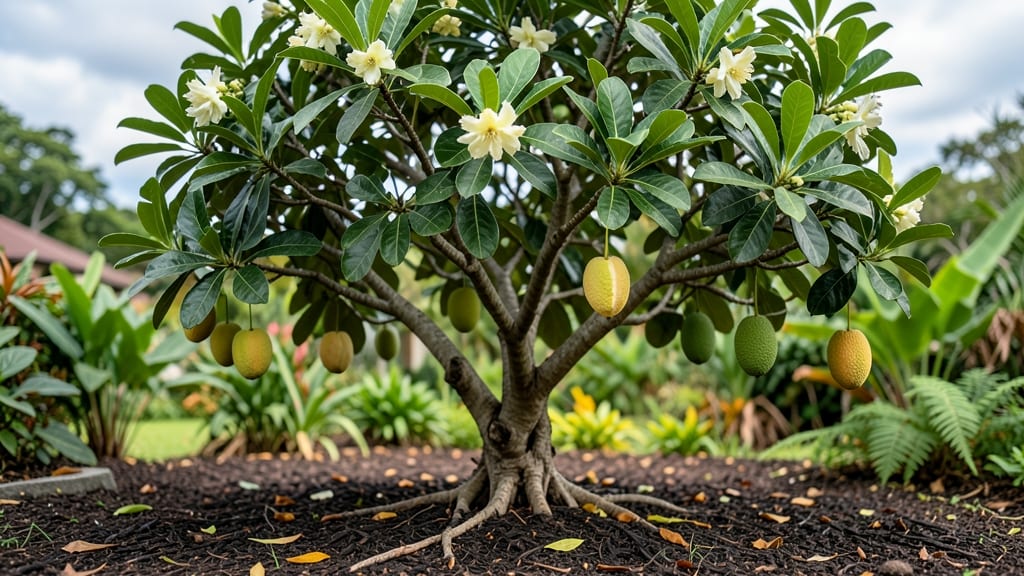
Mature sugar apple tree dimensions: height, spread, and growth habits explained
The sugar apple tree (Annona squamosa) is a tropical beauty that can reach impressive heights, but its size depends heavily on your climate and growing conditions.
In ideal tropical settings, these trees mature between 15-30 feet tall with a 15-25 foot spread, creating a lush canopy perfect for shade. However, in cooler subtropical zones like USDA Zone 9b, growth slows slightly, often topping out at 18-24 feet with a 12-20 foot spread.
Understanding these dimensions helps you plan spacing and pruning strategies from the start.
One common misconception is that sugar apple trees grow uncontrollably. In reality, they grow at a moderate pace of 1-2 feet per year during their first decade. This steady growth makes them manageable for home gardeners who start young trees.
For example, a tree planted in Zone 11 might reach 25 feet in 12 years, while a tree in Zone 9b could take 15 years to reach the same height due to cooler winters.
| Characteristic | Tropical Climate (Zones 10-12) | Subtropical Climate (Zone 9b) | Notes |
|---|---|---|---|
| Mature Height | 15-30 ft | 18-24 ft | Slower growth in cooler zones |
| Canopy Spread | 15-25 ft | 12-20 ft | Pruning reduces spread by 30% |
| Annual Growth Rate | 1.5-2 ft/year | 1-1.5 ft/year | Faster in warm, humid climates |
| Root Depth | 4-6 ft | 3-5 ft | Shallow roots need mulching |
| Fruiting Age | 3-4 years | 4-5 years | Cooler zones delay fruiting |
Climate plays a starring role in determining your sugar apple tree's final dimensions. In tropical regions like Florida or Hawaii, trees thrive year-round, reaching their full 25-30 foot potential with minimal stress. The humid, warm air and long growing seasons create perfect conditions for rapid growth.
Meanwhile, in subtropical zones like Southern California or parts of Texas, trees experience slower growth due to cooler winters. These trees often develop a denser, more compact structure as a survival adaptation.
Another critical factor is sunlight exposure. Sugar apple trees need full sun (6+ hours daily) to reach their maximum size. In shadier conditions, they may grow 20-30% shorter and produce fewer fruits.
For example, a tree in Miami (Zone 11) with full sun might hit 28 feet, while the same tree in San Diego (Zone 10) with partial shade could only reach 20 feet. Always plant your tree where it gets unobstructed morning sunlight for best results.
If you're growing sugar apple trees in containers, expect even more controlled dimensions. A tree in a 20-gallon pot will typically max out at 8-12 feet tall with a 6-8 foot spread, making it ideal for patios or small yards.
The key is to prune aggressively every 6-8 weeks and use dwarfing rootstock if available. I've seen container-grown trees in Zone 9b produce fruit at just 6 feet tall—proof that size isn't everything when it comes to sugar apples!
For gardeners in small spaces, understanding the tree's growth habits helps with planning. The first 3 years are crucial for establishing a strong root system. If you prune back 25% of new growth during this phase, you can keep the tree at 10-12 feet for years.
I recommend using a central leader pruning style—this means keeping one main trunk and removing competing branches early on. This method ensures your tree grows taller rather than bushier, which is ideal for narrow garden spaces.
One surprising fact about sugar apple trees is how their root system affects above-ground growth. These trees develop shallow, wide-spreading roots that extend 4-6 feet deep but can spread 2-3 times the canopy width.
In tropical soils, this means your tree needs ample root space—planting too close to fences or other structures can stunt growth. In containers, use a
How to grow sugar apple trees in small gardens: pruning and container tips
Sugar apple trees (Annona squamosa) typically reach 15-30 feet tall in ideal conditions, making them a challenge for small gardens. But with the right techniques, you can keep them compact while still enjoying sweet, tropical fruit.
The key lies in aggressive pruning and strategic container growing. I’ve successfully grown sugar apples in 20-gallon containers for over 3 years—here’s how.
Start by selecting a dwarfing rootstock if available, though true dwarf varieties are rare. Most sugar apples grow on their own roots, so pruning is your best tool for size control.
I recommend pruning 3 times per year: after harvest, in late winter, and during summer growth spurts. Always use sterilized pruning shears to prevent disease spread.
⚠️ Warning: Over-Pruning Risks
Pruning too aggressively can reduce fruit production by removing flowering branches. Never remove more than 25% of the canopy in a single session. Focus on selective pruning—target water sprouts and crossing branches first, then shape the tree to fit your space.
For container growing, choose a 20-gallon or larger pot with drainage holes. Sugar apples need deep roots, so avoid small containers that restrict growth. I use fabric grow bags for better aeration and add orchid bark mix to prevent compaction.
Place containers in full sun (6+ hours daily)—partial shade can stunt growth and reduce fruiting.
Watering is critical for compact growth. Containers dry out faster, so check soil moisture daily during hot months. I water deeply in the morning until water runs out the drainage holes.
Overhead watering can cause fungal issues, so use a drip irrigation system or water at the base. Mulch with straw or wood chips to retain moisture and regulate soil temperature.
Fertilize with a balanced 6-6-6 NPK formula every 4-6 weeks during the growing season. In containers, I apply half the recommended dose to avoid salt buildup. Avoid high-nitrogen fertilizers—they promote leafy growth over fruit. Instead, opt for phosphorus-rich fertilizers to encourage flowering and fruiting.
With these techniques, my sugar apple tree stays under 8 feet tall while producing 50+ fruits annually. The secret? Consistent pruning, proper container size, and full-sun exposure. Even in small spaces, you can enjoy this tropical delicacy without sacrificing garden space! 🌱