
Container Gardens
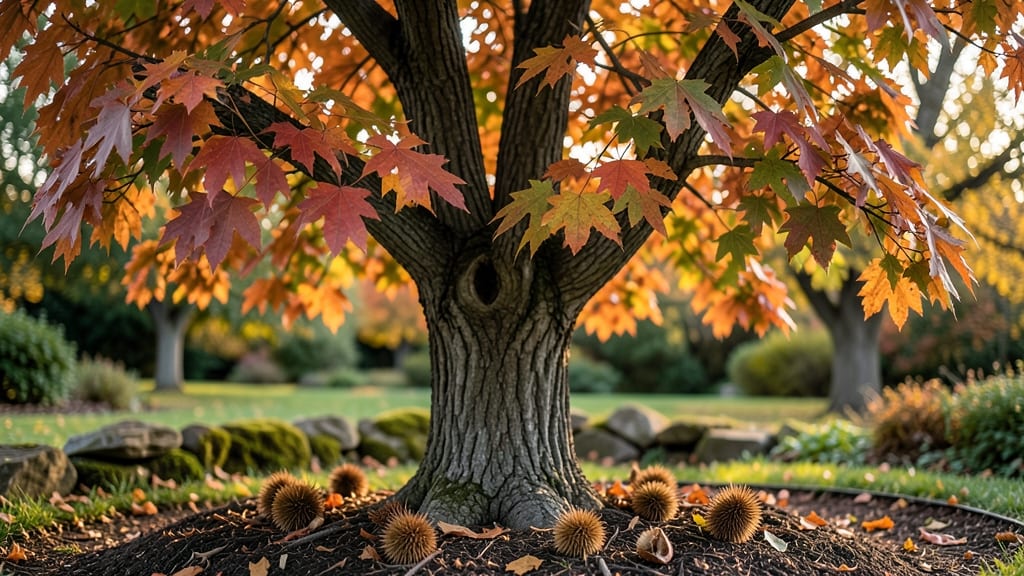
Sweet gum trees grow best in USDA zones 4 through 10, handling everything from harsh winters to intense summer heat with ease. Their adaptability and rapid growth make them perfect for landscapes across the Southeast and beyond.
Sweet gum trees originally hail from the southeastern U.S., where they evolved to thrive in both sweltering summers and freezing winters. 🌳 This native resilience explains why they perform so well across zones 4–10—from the cold snap-prone Midwest to the humid Deep South.
The tree's star-shaped leaves and spiky seed pods are just as tough as its growth habits, making it a low-maintenance choice for urban and rural settings alike.
In colder zones (4–6), focus on well-draining soil to prevent root rot during winter thaws, while hotter zones (8–10) benefit from afternoon shade to conserve moisture. Planting in early spring gives roots time to establish before summer heat stress sets in—a critical tip for maximizing survival rates.
💡 In This Article
- Sweet Gum Tree Hardiness: USDA Zones 4-10 Explained
- Best Planting Conditions for Sweet Gum Trees by Region
Sweet gum tree hardiness: USDA zones 4-10 explained
The sweet gum tree's remarkable adaptability stems from its evolutionary roots in the southeastern U.S., where it naturally endures both sub-zero temperatures and 90°F+ humidity.
This native range explains why it thrives across USDA zones 4-10 - its cellular structure contains antifreeze proteins that prevent ice crystal formation in winter, while thick bark insulates against temperature swings.
In zone 4, where winters can drop to -30°F, mature trees often survive with minimal damage, though young saplings may need winter mulch protection.
What makes sweet gums uniquely resilient is their ability to balance water needs across diverse climates. In zones 8-10, their deep root systems access groundwater during droughts, while in cooler zones 4-6, they enter dormancy efficiently to conserve energy.
The tree's star-shaped leaves also have a waxy coating that reduces water loss during summer heatwaves - a critical adaptation for zones where summer temperatures regularly exceed 95°F. This dual capability explains why they're often called "the survivor tree" in landscaping circles.
For gardeners in transitional zones (like zone 7), the sweet gum's adaptability becomes especially valuable. Unlike many trees that struggle at zone boundaries, sweet gums handle the 30°F temperature swings common in these areas by combining cold tolerance with heat resistance.
Their rapid growth rate (up to 3 feet per year) helps them establish quickly, giving them a competitive advantage over slower-growing species in challenging microclimates.
The tree's hardiness isn't just about temperature - it's also about recovery. After winter dieback (common in zone 4), new growth typically emerges within 4-6 weeks of spring thaw, demonstrating remarkable regenerative capacity.
Even in zone 10's intense heat, sweet gums maintain their vigor through a process called "hydraulic redistribution" where roots move moisture between layers of soil to maintain cellular turgor pressure during drought.
What most people overlook is how the sweet gum's seed pods contribute to its survival strategy. These spiky "balls" contain seeds that remain viable for years in the soil, allowing the tree to regenerate even after severe damage.
This persistence explains why sweet gums often become dominant species in disturbed landscapes - they outcompete other trees through both rapid growth and ecological resilience.
When comparing sweet gums to similar species like sycamores or red maples, their zone adaptability stands out. While sycamores struggle below zone 5 and red maples prefer zones 3-9, sweet gums maintain consistent performance across zones 4-10.
This broader range makes them particularly valuable for urban planting where microclimates can vary dramatically within city blocks.