
Plants
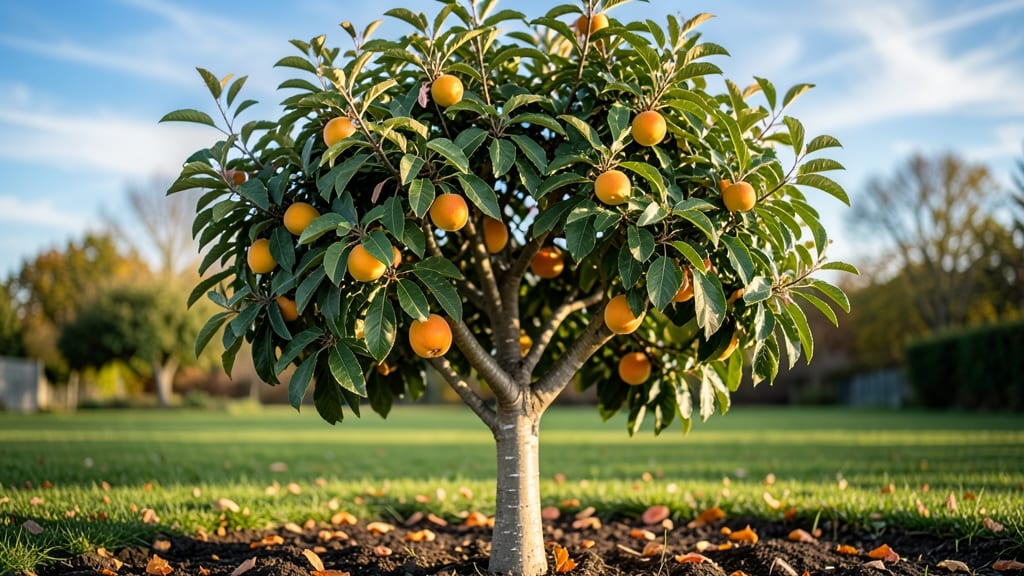
A nectarine tree looks like a smaller, smooth-skinned version of a peach tree, featuring glossy green leaves, delicate white-pink blossoms in spring, and round fruit without fuzz that clings tightly to the pit. Its gray bark roughens with age, and branches form an open, vase-like structure.
A nectarine tree's most striking visual trait is its hairless fruit—unlike peaches, which always have a fuzzy skin. 🌿 The leaves are slightly narrower than peach tree foliage, with a serrated edge that catches light beautifully in sunlight.
Even the blossoms hint at the difference: nectarine flowers often have a slightly deeper pink hue, though both trees share that classic spring spectacle. What really sets them apart when mature is the bark's texture—nectarine bark develops deeper fissures over time, creating a more dramatic, craggy appearance than peach bark.
One pro tip I've learned from years of gardening: examine the fruit's pit if you're still unsure. Nectarine pits are noticeably more oval-shaped and adhere more tightly to the flesh than peach pits, which often separate cleanly when the fruit ripens.
This subtle but consistent difference helps even novice gardeners tell them apart at a glance.
💡 In This Article
- Identifying Nectarine Tree Leaves, Blossoms, and Bark
- Comparing Nectarine Fruit to Peaches: Key Visual Differences
Identifying nectarine tree leaves, blossoms, and bark
Nectarine tree leaves are one of the first clues to spot these trees in your landscape. They're typically 2-4 inches long with a smooth, slightly waxy surface that reflects sunlight beautifully.
The edges have fine, sharp serrations that create a saw-toothed appearance, though they're slightly less pronounced than peach tree leaves. 🌿 What's fascinating is how these leaves change color—nectarine foliage often turns a vibrant golden-yellow in fall, sometimes with hints of orange, creating a stunning contrast against the tree's darkening bark.
The blossoms are where things get interesting for identification. Nectarine flowers appear in late winter or early spring, just like peaches, but they tend to have 5 delicate petals with a slightly deeper pink hue (often described as "blush pink").
These blossoms grow in clusters of 2-4 along the branches, creating a romantic, almost fairy-tale appearance. The key difference from peaches is that nectarine blossoms often have a slightly more open, cup-shaped structure, which helps bees pollinate them more efficiently.
This floral display typically lasts 7-10 days, depending on your climate zone.
When examining the bark, you'll notice nectarine trees develop a distinctive pattern as they mature.
Young trees have smooth, gray bark that resembles elephant skin, but as they age (typically after 5-7 years), the bark develops deep, irregular fissures that create a dramatic, almost sculptural texture. 🌳 This contrasts with peach trees, whose bark tends to have shallower grooves.
The bark's color deepens to a rich brown-gray over time, adding to the tree's mature character. One trick gardeners use is to look for these bark patterns on the lower trunk—if you see deep, craggy fissures, it's likely a nectarine.
Branch patterns also provide valuable clues. Nectarine trees naturally grow in an open, vase-shaped form with 4-6 main scaffold branches that spread outward at wide angles (typically 45-60 degrees). This growth habit creates excellent air circulation around the fruit, which helps prevent fungal diseases.
The branches themselves are relatively slender compared to peach trees, with a lighter green color when young that matures to a silvery-gray. In winter, these branches become more visible as the tree enters dormancy, making them easier to identify against the bare landscape.
Seasonal changes reveal even more about nectarine trees. In summer, the leaves develop a slightly darker green hue than peach leaves, often with a subtle bluish tint when viewed from certain angles. This color difference becomes more apparent in full sunlight conditions.
In winter, the tree's open branching structure makes it easy to spot even when leafless. The combination of these visual traits—leaves, blossoms, bark, and branch patterns—creates a distinctive silhouette that becomes familiar with experience. 🌳
For those interested in the science behind these differences, it's worth noting that nectarine trees are actually a genetic mutation of peach trees where the fuzzy skin gene (fuzz) is recessive.
This single genetic difference creates all the visual distinctions we observe, from the smooth fruit skin to the slightly different leaf structure. Understanding this helps explain why nectarines and peaches can sometimes grow on the same tree—though this is rare and typically occurs through accidental pollination.