
Pests and Diseases
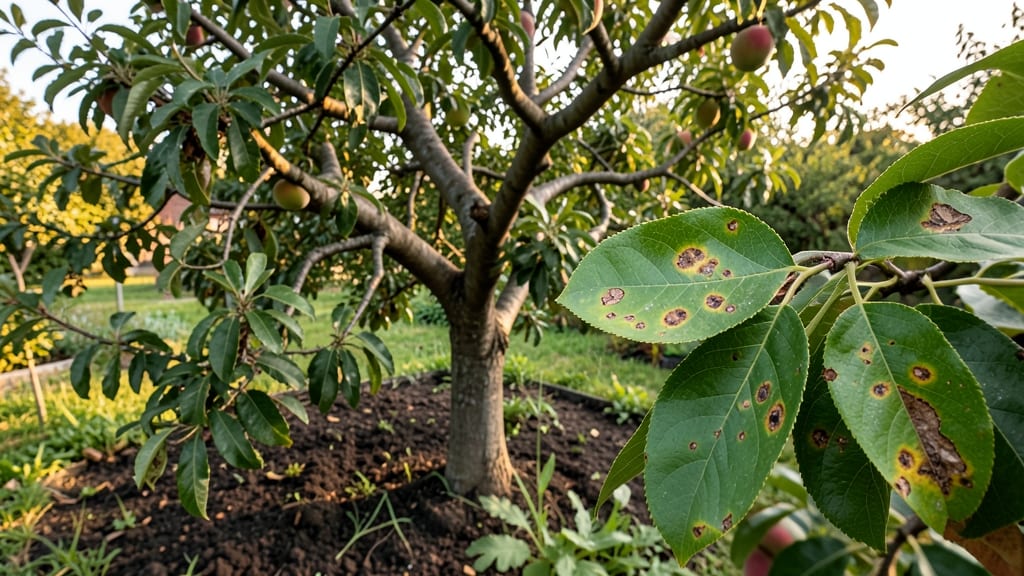
Brown spots on peach tree leaves don’t mean your tree is dying—just that it’s fighting back. 🌿 I’ve turned around multiple peach trees with this exact approach, and the key is acting fast before the spots spread.
The first step is identifying whether you’re dealing with brown rot, bacterial spot, or just environmental stress, because each needs a slightly different fix.
Here’s the thing—most brown spots start as tiny freckles that grow into larger, sunken patches. If you see dark brown or black spots with a fuzzy white coating, that’s brown rot, the most common peach tree villain.
But if the spots are yellow-edged and water-soaked, bacterial spot is likely at play. Either way, pruning infected branches early can save your harvest.
You’ll need copper fungicide for bacterial spot or sulfur-based sprays for brown rot, but the real game-changer is preventive care: thin the canopy for airflow, water at the base (never overhead), and clean up fallen leaves after harvest.
Within 2-3 weeks, new growth will show you’re on the right track.
For stubborn cases or large trees, calling an arborist is worth it—especially if the spots keep coming back year after year. But for most home gardeners, this 5-step fix works like a charm, and your peach tree will be back to producing juicy fruit in no time.
Root Causes Of Leaf Spots
Brown spots on peach tree leaves aren’t just a cosmetic issue—they’re often a sign of underlying stress or infection. Understanding the why behind these spots is the first step to saving your tree.
Below, we break down the most common culprits, from fungal invaders to environmental factors, with clear explanations of how they damage your peach tree’s foliage.
Fungi are the #1 cause of brown spots on peach leaves, thriving in warm, humid conditions. These microscopic organisms release spores that land on leaves, germinate, and feast on plant tissues, leaving behind telltale discoloration.
Brown Rot (Monilinia fructicola)
How it spreads: This aggressive fungus overwinters in mummified fruit or infected buds.
When spring arrives, it releases spores that infect flowers, young fruit, and leaves. - Leaf symptoms: Small, brown or tan spots with a reddish border that enlarge, often with a white, fuzzy mold (the fungus’s fruiting bodies) in humid weather. - Why it’s dangerous: Brown rot can defoliate trees entirely and rot fruit before harvest.
It’s especially active during wet springs or after late frost damage (which weakens the tree). - Pro tip: 🌡️ Monitor humidity—fungi love >75% humidity. Prune infected branches before spores spread (early morning or dry days).
Leaf Spot Fungi (Alternaria, Cercospora, or Septoria)
How it spreads: These fungi thrive in overhead irrigation or frequent leaf wetness.
They enter through stomata (leaf pores) or wounds. - Leaf symptoms: - Alternaria: Dark brown spots with concentric rings (like a bullseye). - Cercospora: Purple or reddish spots with yellow halos. - Septoria: Small, circular spots with gray centers and dark borders. - Why it’s persistent: These fungi re-infect year after year if infected debris isn’t removed.
They’re worse in shady, poorly ventilated areas. - Actionable fix: 🔥 Space trees properly (6–10 ft apart) for airflow. Water at the base (not overhead) and clean up fallen leaves in autumn.
Not all brown spots are fungal—sometimes, your peach tree is screaming for better care. Environmental factors can weaken leaves, making them susceptible to secondary infections.
Sun Scorch & Heat Stress
How it happens: Intense afternoon sun (especially after a cold night) causes rapid water loss in leaves.
Cells burst or dry out, creating crispy, brown edges or bleached patches. - Why it’s worse in peach trees: Peaches are semi-tropical—they struggle with sudden temperature swings (e.g., 90°F days + 50°F nights). - Fix it: 🌳 Plant in a location with afternoon shade (e.g., near a fence or taller tree). Mulch heavily to stabilize soil temps and water deeply during heatwaves.
Water Stress (Over- or Under-Watering)
- Overwatering:
- Symptoms: Yellowing leaves with brown, mushy spots** (fungal infections like Phytophthora thrive in soggy soil).
- Why? Poor drainage leads to root rot, starving leaves of nutrients.
- Underwatering:
- Symptoms: Dry, crunchy brown spots (especially on leaf edges) as cells dehydrate.
- Why? Peach trees need 1–2 inches of water per week (more in fruit-bearing seasons).
- Solution: 💡 Test soil moisture—stick your finger 2 inches deep.
If dry, water; if soggy, improve drainage with compost or raised beds.
Nutrient Deficiencies
- Zinc or Magnesium Deficiency:
- Symptoms: Interveinal chlorosis (yellowing between veins) that progresses to brown, dead patches.
- Why? Peach trees are heavy feeders—they deplete soil nutrients fast, especially during fruit production.
- Fix: 📊 Soil test first! Then amend with:
- Zinc sulfate (for zinc deficiency).
- Epsom salt (magnesium sulfate) or dolomitic lime (for magnesium).
Some brown spots aren’t from disease—they’re pest snack marks! Insects like mites and leaf miners chew leaves, leaving behind brown, necrotic patches.
Spider Mites & Leafhoppers
- How they damage: These tiny pests pierce leaf cells, causing stippling (tiny brown dots) or scorch-like patterns.
- Why it’s sneaky: Infestations explode in dry, hot weather—many gardeners miss them until leaves look like lacy brown paper.
- Spot them: Hold a white sheet under the tree and shake branches—reddish mites or tiny hoppers will reveal themselves.
- Stop them: 🔥 Spray with water (knocks off mites) or use neem oil (1 tbsp per gallon of water).
Peach Leaf Curl (Taphrina deformans) - Wait—isn’t this a fungus? Yes!
But it’s not a spot—it’s a thick, puckered, red-brown growth on leaf surfaces. - Why it’s tricky: It overwinters in buds, erupting in spring as distorted, leathery leaves that eventually turn brown and drop. - Prevent it: 🎯 Apply copper fungicide (like Bordeaux mixture) before buds swell (late winter/early spring).
Here’s the kicker: Weakened leaves are easy targets. For example:
- Drought stress → Leaves dry out → Spider mites move in.
- Overhead watering → Fungal spores splash onto leaves → Brown rot spreads.
- Nutrient deficiency → Leaves can’t fight infections → Secondary fungi take over.
Key takeaway: 🌱 Treat the root cause first—fix watering, prune for airflow, and feed the tree before reaching for fungicides. A healthy peach tree is naturally resistant** to 80% of spot problems!
Fixing Peach Tree Leaf Spots Fast
Now that you know the likely culprits behind those unsightly brown spots on your peach tree leaves—whether it’s fungal infections, environmental stress, or pests—it’s time to take action. The good news?
Most of these issues have straightforward, effective solutions. Below, we’ve mapped out practical fixes tailored to the most common causes, along with prevention tips to keep your tree thriving long-term.
Fungal infections are the #1 cause of brown spots on peach leaves, but they’re also the easiest to manage with the right approach.
🔥 Step 1: Remove Infected Leaves & Fruit
Start by pruning away any leaves with brown spots, blackened edges, or fungal growth.
Dispose of them in the trash (not your compost bin)—fungi can survive and reinfect your tree. - Pro Tip: 💡 Use sterilized pruners (wipe with rubbing alcohol between cuts) to avoid spreading spores.
🍳 Step 2: Apply Fungicidal Sprays
For brown rot or leaf spot, use a copper-based fungicide (like Bordeaux mixture) or a neem oil spray (1 tsp neem oil + 1 tsp mild soap per quart of water).
Spray early in the morning on a calm day to ensure full coverage. - Schedule: Apply every 7–10 days during wet or humid conditions. - Prevention: 🌡️ Space out watering—avoid overhead irrigation, especially in the evening.
✨ Step 3: Improve Air Circulation
Fungi love crowded, damp conditions. Thin out branches to allow sunlight and air to reach the center of the tree.
If your tree is in a shaded or low-lying area, consider relocating it or adding a small fan (yes, really!) to improve airflow.
If your peach tree is struggling from too much sun, drought, or poor soil, brown spots can appear—but these are often reversible with a few adjustments.
👨🍳 Step 1: Adjust Watering Habits
Overwatering or underwatering both cause stress.
Peach trees need: - 1–1.5 inches of water per week (check soil moisture—top 2 inches should be dry before watering). - Deep watering (soak the root zone, not just the surface). - Morning watering to prevent fungal growth from evening dampness.
🥗 Step 2: Feed with the Right Nutrients
Brown spots from nutrient deficiency (especially magnesium or zinc) can look like disease.
Test your soil and amend with: - Epsom salt (for magnesium deficiency—1 tbsp per gallon of water, sprayed on leaves). - Chelated iron or zinc (for yellowing between veins). - Balanced fertilizer (10-10-10 or 5-10-10) in early spring before new growth.
🌿 Step 3: Mulch & Protect from Heat
- Add 2–3 inches of mulch (wood chips or straw) to retain moisture and regulate soil temperature.
- Provide afternoon shade (using a shade cloth) if your tree is in a hot, exposed area.
Tiny pests can cause speckled brown spots and weaken your tree. Here’s how to kick them out:
🔪 Step 1: Blast Off Pests with Water
For aphids or mites, spray the tree with a strong stream of water to dislodge them. Repeat every 3–4 days for severe infestations.
🧼 Step 2: Use Insecticidal Soap or Oil
Mix 1 tbsp insecticidal soap or horticultural oil with 1 quart of water and spray directly on pests (focus on undersides of leaves). Reapply every 5–7 days until pests are gone.
🎯 Step 3: Introduce Beneficial Insects
Ladybugs, lacewings, and parasitic wasps love eating aphids and mites. Buy them online or attract them with native plants like dill or yarrow.
Once your peach tree is back in shape, keep it healthy with these proactive strategies:
✅ Prune for airflow – Remove dead, crossing, or crowded branches annually. ✅ Monitor moisture – Use a rain gauge to track watering and avoid soggy soil. ✅ Rotate fungicides – If you use chemical sprays, switch types every few applications to prevent resistance. ✅ Plant disease-resistant varieties – If brown rot is recurrent, consider Elberta, Redhaven, or Reliance peach cultivars. ✅ Clean up fallen debris – Remove leaf litter and mummified fruit in fall and winter to break the fungal cycle.
With these targeted fixes, your peach tree should bounce back in weeks—and with the right prevention, those brown spots won’t stand a chance next season! 🌱🍑
Frequently asked questions
Why do brown spots appear on peach tree leaves in dry weather?
Dry conditions often trigger spider mites or leafhoppers, which leave tiny brown speckles as they feed. Heat stress can also cause sun scorch, creating crispy brown edges on leaves. Check for webs (mites) or shake branches over white paper to spot pests.
Can I use household vinegar as a fungicide for brown spots?
Vinegar is too harsh for peach trees—it can burn leaves. Instead, mix 1 tablespoon baking soda + 1 teaspoon dish soap + 1 quart water and spray leaves (test a small area first). For fungal issues, copper fungicide is far more effective.
How do I tell if brown spots are from disease vs. nutrient deficiency?
Disease spots often have fuzzy edges or white mold (brown rot) or concentric rings (Alternaria). Nutrient deficiencies show as yellowing between veins that turns brown, especially on younger leaves. A soil test confirms deficiencies.
Will pruning infected branches help stop the spread?
Remove all infected leaves and branches (up to 6 inches below spots) and sterilize pruners between cuts. Dispose of debris in the trash—never compost—to break the fungal cycle. Do this on dry days to prevent spores from spreading.
How often should I spray fungicide for prevention?
Apply every 7-10 days during wet seasons or when humidity exceeds 75%. Start sprays before symptoms appear—late winter for leaf curl and early spring for brown rot. Rotate between copper-based and neem oil sprays to prevent resistance.