Lawn
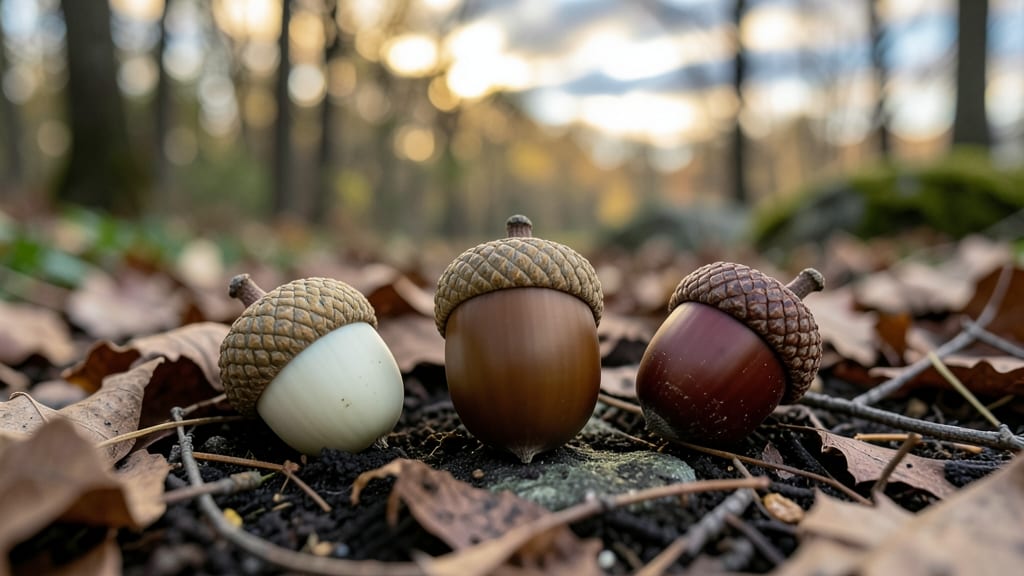
An oak tree seed, or acorn, looks like a small oval nut—usually 1-2 inches long—with a smooth or textured surface and a pointed tip. It's encased in a cup-like cap (cupule) that varies by species, often resembling a tiny football or teardrop shape.
Oak tree seeds, or acorns, come in fascinating variations that reflect their species' adaptations.
The cupule, that distinctive cap-like structure, isn't just decorative—it protects the nut from pests and weather while the seed matures. 🌰 For example, white oak acorns have a smoother, more rounded shape with a thicker shell, while red oak acorns tend to be more elongated with a pointed tip.
These differences aren't just visual; they influence how animals disperse the seeds and where new oak trees will grow.
What's particularly interesting is how these features change as the acorn matures. Young acorns often appear lighter in color and may have a softer shell, while fully mature ones develop their characteristic brown hues and harder textures.
The size can also vary dramatically—some species produce acorns as small as a pea, while others can reach nearly 3 inches long. This diversity makes identifying oak species from their seeds a rewarding challenge for nature enthusiasts.
💡 In This Article
- Acorn Structure: Key Parts of an Oak Seed
- Identifying Common Oak Tree Seeds by Species
Acorn structure: key parts of an oak seed
The acorn's anatomy is a marvel of evolutionary design, where every part serves a critical survival function. At its core, you'll find the nut, which houses the seed itself—a tiny embryonic oak tree waiting for the right conditions to sprout.
This nut is encased in a hard, woody shell that protects the seed from predators and environmental damage, much like armor plating.
The most recognizable feature is the cupule, that cup-like structure that cradles the nut. This isn't just for show—it plays a vital role in seed dispersal and protection. The cupule's shape and texture vary dramatically by species.
For instance, white oak acorns have a smooth, bowl-shaped cupule with shallow ridges, while red oak cupules are more cup-shaped with deep, scalloped edges that can look almost like tiny fingers.
These variations influence how animals interact with the acorns—squirrels, for example, prefer red oak acorns because their cupules make them easier to crack open.
Here's where it gets fascinating: the cupule's structure also affects how the acorn matures. In white oaks, the cupule remains tightly closed until the acorn is fully mature, protecting the seed for up to 18 months in some cases.
Red oaks, however, often release their acorns earlier, with cupules that may even open slightly to expose the nut. This timing difference explains why white oak seedlings appear in spring while red oak seedlings often emerge in fall.
The acorn's pointed tip isn't just for aesthetics—it's a clever adaptation that helps the seed orient properly when it germinates. When the acorn falls to the ground, this pointed end typically faces downward, positioning the seed's root (radicle) correctly for immediate growth.
Some species even have a small hole at this tip where water can enter, triggering the germination process.
The shell's thickness varies too: white oak shells are thicker and harder (up to 0.1 inches thick), while red oak shells are thinner and often have visible vertical ridges that give them a striped appearance.
What's particularly interesting is how these structural differences relate to the oak's life cycle. White oak acorns, with their thicker shells and delayed release, are adapted for environments where winter conditions might kill immature seedlings.
Red oak acorns, with their thinner shells and earlier release, are better suited for areas with milder winters. This structural diversity is why you'll find white oaks dominating colder climates while red oaks thrive in warmer regions.
Take a close look at the acorn's base, where it attaches to the cupule. This junction often reveals the species—white oak acorns have a smooth, rounded base while red oaks show a more tapered connection with visible lines where the cupule meets the nut.
These subtle differences can be the key to identifying oak species from their seeds alone. 🌰