
Companion Plants
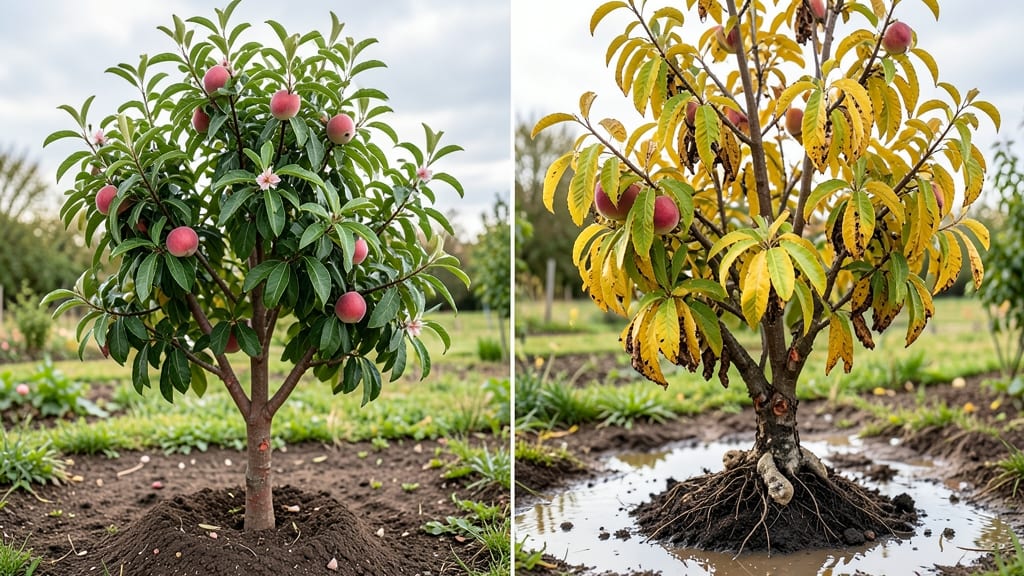
Your peach tree’s drooping leaves and mushy roots aren’t just sad—they’re screaming for help. 🌱 Overwatered peach trees look nothing like their healthy cousins: no crisp green foliage, no sturdy branches, just limp limbs and a trunk that feels hollow when you tap it.
The first sign? Leaves turn yellow at the edges, then brown, while the soil stays soggy even days after watering.
Peach trees need 1-1.5 inches of water per week, but too much turns their roots into a fungus buffet.
You’ll spot black, foul-smelling soil at the base and maybe even mushrooms popping up—nature’s way of saying, "We’ve got a problem." Worse, the bark starts peeling or oozing sap, and new growth looks stunted or wilted by midday, even when the ground’s damp.
Here’s the good news: recovery starts with cutting back water and improving drainage. Let the top 6 inches of soil dry out before watering again, and consider raised beds or gravel layers if your yard stays waterlogged.
Within 2-4 weeks, you’ll see leaves perk up and new growth that’s firm, not squishy—proof your tree’s back in balance.
This isn’t just about saving your tree—it’s about preventing next year’s disaster. Mulch properly, test soil moisture with your finger (not your watering schedule), and watch for pests like borers that move in when roots rot. Trust me, your peach’s future harvests depend on it.
Root Causes Of Overwatering
Overwatering a peach tree isn’t just about giving it too much love—it’s often a mix of environmental factors, human error, and even soil behavior. Understanding these causes helps you spot the warning signs early and adjust your care routine before damage sets in.
Let’s dig into the science behind why your peach tree might be drowning in its own moisture.
Peach trees thrive in well-draining soil, but if your garden’s composition leans toward clay or compacted dirt, water pools around the roots instead of draining away. Here’s why this happens:
- Clay-heavy soil acts like a sponge that never lets go. When watered, it absorbs moisture but releases it extremely slowly, keeping roots saturated for days.
Peach trees, native to temperate climates, prefer soil that dries out between waterings. - Compacted or hardpan layers beneath the surface create a barrier, trapping water near the root zone. This is common in urban gardens or areas with heavy foot traffic. - Organic matter deficiency reduces soil porosity.
Without enough compost or mulch, water can’t infiltrate deeply, leading to surface runoff and waterlogged roots.
💡 Pro Tip: Test your soil’s drainage by digging a hole, filling it with water, and timing how long it takes to drain. If it’s still soggy after 6 hours, your tree is at risk.
Even with good soil, human habits can lead to overwatering. Peach trees are drought-tolerant once established, but many gardeners assume they need frequent hydration—especially in hot weather.
- Automatic irrigation systems (like sprinklers or drip lines) may run longer than necessary, especially if not programmed for rainfall or soil moisture levels.
- Surface watering (pouring at the base without soaking deeply) encourages shallow root growth and leaves deeper roots vulnerable to rot.
- Ignoring weather conditions—watering on rainy days or after heavy dew can double the moisture in the root zone, suffocating the tree.
⏰ Actionable Fix: Water deeply but infrequently. Aim for 1–1.5 inches of water per week (including rainfall) and let the top 2–3 inches of soil dry out between sessions.
Sometimes, the issue isn’t what you’re doing but what’s happening around your tree. Peach trees in the wrong microclimate or with poor airflow are more prone to overwatering-related stress.
- High humidity + poor airflow (like in dense forests or against walls) slows evaporation, keeping foliage damp longer.
This creates a breeding ground for fungal diseases while also trapping moisture in the soil. - Low-lying areas or slopes where water naturally pools after rain or irrigation. - Heavy mulch layers (over 3–4 inches) can smother roots and trap moisture if not paired with loose, breathable mulch (like straw or wood chips).
🌡️ Climate Check: If your region has frequent rain or high humidity, adjust watering schedules and ensure mulch is fluffy, not compacted.
Peach tree roots need oxygen as much as water. If they’re constantly submerged, they suffocate, leading to rot and nutrient uptake failures.
- Flooded roots (from poor drainage or heavy rain) block oxygen, triggering anaerobic bacteria that produce toxic compounds like ethanol, which poison the tree.
- Root-bound containers (if growing in pots) have no escape for excess water, leading to girdling roots and waterlogging.
- Weak or damaged roots from past overwatering or disease make the tree more vulnerable to future saturation.
🔥 Emergency Fix: If roots are visibly mushy or black, prune the affected areas with sterilized shears and repot in fresh, well-draining soil.
Key Takeaway: Overwatering is rarely just about "too much water"—it’s about the combination of soil, climate, and care habits. By addressing these root causes, you’ll help your peach tree recover faster and thrive long-term. 🌳💧
Revive Your Peach Tree Now
Overwatering can feel like a slow-motion disaster for your peach tree—🌱 but don’t panic! With the right steps, you can nurse it back to health and prevent future soggy soil struggles. Below, we’ll match common overwatering symptoms to practical fixes, plus pro tips to keep your tree thriving.
Cause: Too much water suffocates roots, starving them of oxygen and nutrients. Fix:
- Stop watering immediately—let the soil dry out for at least 3–5 days. 🚰
- Improve drainage by amending the soil with:
- Compost (20% of the top 6–12 inches)
- Perlite or coarse sand (1 part to 3 parts soil) to aerate compacted areas.
- Raise the tree’s base (if in a container) by adding gravel or a layer of wood chips to create airflow beneath.
Prevention Tip: 💡 Use a moisture meter or the "squeeze test" (grab a handful of soil—if it’s damp after 24 hours, wait before watering again).
Cause: Waterlogged roots rot quickly, cutting off the tree’s lifeline. Fix:
- Gently loosen the soil around the roots with a fork or trowel (be careful not to damage them further). 🔪
- Trim any mushy, black roots with sterilized pruners—healthy roots are firm and white.
- Repot or mound soil (if in a container) to elevate roots above standing water. For in-ground trees, create a berm (a low mound of soil) around the base to encourage runoff.
Pro Tip: ✨ Root stimulator (like mycorrhizal fungi) can help regenerate damaged roots—apply it after pruning.
Cause: Overwatering + poor drainage = wilting, even when the tree isn’t thirsty. Fix:
- Water deeply but infrequently—aim for 1–1.5 inches per week (including rain). Use a drip irrigation system or soaker hose to deliver water slowly.
- Mulch properly: Spread 2–4 inches of organic mulch (wood chips, straw) around the base, but keep it 6 inches away from the trunk to prevent rot.
- Check for pests: Overwatered trees attract fungus gnats or root-knot nematodes. Treat with neem oil or beneficial nematodes if needed.
Prevention Tip: 🌡️ Monitor weather—adjust watering during heavy rains or humidity spikes.
Even after fixing the immediate issue, your peach tree may take weeks to months to bounce back.
Here’s how to support it: - Fertilize lightly with a balanced 10-10-10 formula once roots stabilize (avoid nitrogen-heavy feeds, which worsen root stress). - Prune dead branches to redirect energy to healthy growth. - Avoid stress triggers: Don’t transplant or fertilize heavily until the tree shows new leaf growth.
Final Reminder: 🎯 Prevention is easier than cure—most overwatering disasters start with well-meaning (but overzealous) gardeners. Next time, let the soil dry between waterings, and your peach tree will reward you with juicy fruit and lush foliage for years!
Frequently asked questions
How can I tell if my peach tree is overwatered vs. underwatered?
Overwatered peach trees show yellowing leaves with brown edges, mushy stems when pressed, and soil that stays damp for days. Underwatered trees have crispy, curled leaves (especially at the edges) and dry, cracked soil. Check the soil 2 inches down—if it's wet, you're overwatering; if bone-dry, you need to hydrate.
What do fungal growths on my peach tree mean?
Mushrooms or mold at the tree's base signal root rot from chronic overwatering. These fungi thrive in soggy conditions, competing with your tree for nutrients. Remove any visible growth immediately and improve drainage—this is a critical warning sign that roots are drowning.
Can I save a peach tree with black, mushy roots?
Yes, but act fast! Prune all black/mushy roots with sterilized shears, then repot in fresh, well-draining soil. For in-ground trees, create a berm (soil mound) around the base to prevent future water pooling. Recovery takes 4-6 weeks with proper care.
Why does my peach tree wilt even when the soil is wet?
This classic overwatering symptom occurs when roots can't absorb oxygen from waterlogged soil. The tree "thirsts" for air, causing leaves to droop. Stop watering immediately, loosen compacted soil, and let it dry out completely before watering again.
How often should I water a recovering peach tree?
Once you've fixed drainage issues, water only when the top 6 inches of soil are completely dry. For established trees, this typically means every 7-10 days in summer, less in cooler months. Use a moisture meter to avoid guesswork.