
Propagation
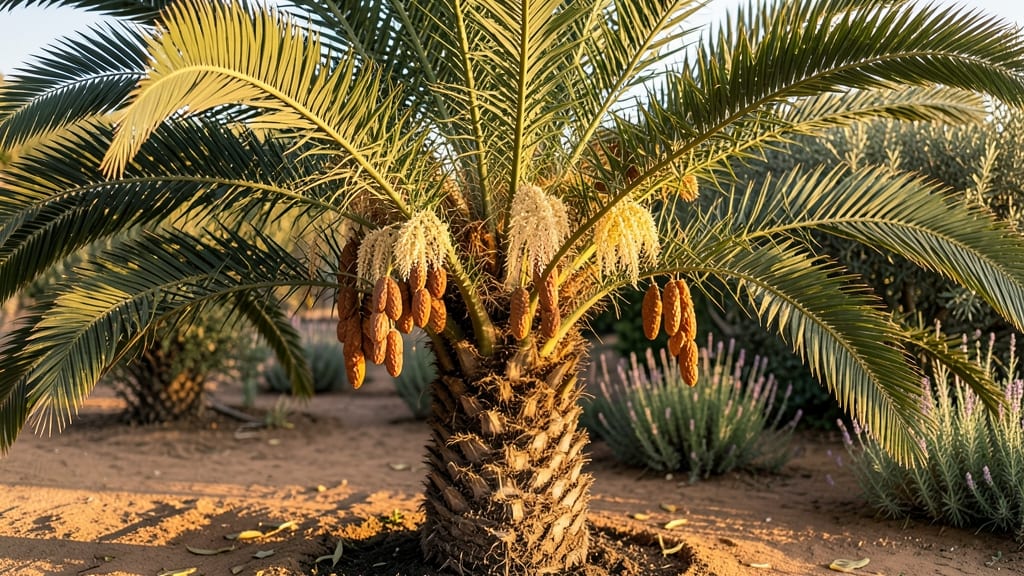
Dates come from the Phoenix dactylifera tree, also called the date palm, a hardy species thriving in arid climates with its distinctive fan-shaped fronds and sweet, nutrient-rich fruit. This ancient palm requires full sun, well-draining soil, and minimal watering once established.
This remarkable palm tree isn't just drought-resistant—it actually thrives in hot, dry conditions where most plants would struggle. 🌵 The Phoenix dactylifera can grow up to 100 feet tall in ideal environments, though many home-grown varieties stay between 30-50 feet.
What's fascinating is how its root system spreads wide to access deep water sources, making it perfect for desert landscapes. While it takes 5-7 years to produce fruit when grown from seed, established trees can yield 100-200 pounds of dates annually under proper care.
The tree's scientific name gives us clues about its origins—Phoenix refers to its mythical resilience (like the phoenix bird), while dactylifera means "date-bearing." Native to the Middle East and North Africa, these palms have been cultivated for over 5,000 years, making them one of the oldest domesticated crops.
Today, they're grown commercially in California's Coachella Valley and Arizona, where the climate mimics their natural desert habitat.
💡 In This Article
- Phoenix Dactylifera Tree Characteristics and Growth Requirements
- How to Grow Date Palms from Seeds or Offshoots
Phoenix dactylifera tree characteristics and growth requirements
The Phoenix dactylifera is a single-trunk palm that can reach heights of 65-100 feet in its native desert environments, though most cultivated varieties grow between 30-50 feet with proper pruning.
What's remarkable about its structure is the pinnate leaves—each leaf has 100-150 segments arranged in a fan shape, which maximizes sunlight capture while minimizing water loss through transpiration. The tree's lifespan can exceed 150 years, with some ancient specimens in the Middle East still producing fruit after centuries.
The root system is equally fascinating, featuring both shallow lateral roots for quick water absorption during rare desert rains and a deep taproot that can extend 10-15 feet underground to reach water tables.
This dual system explains why date palms thrive in USDA hardiness zones 9-11, where temperatures rarely drop below 20°F.
The tree's natural drought resistance comes from its waxy leaf cuticle and ability to enter a semi-dormant state during prolonged dry periods, a survival strategy perfected over millennia in the Arabian Peninsula's harsh climate.
When it comes to soil, date palms aren't picky—but they do demand well-draining sandy loam with a slightly alkaline pH (7.0-8.5). The key is avoiding waterlogged conditions, which can cause root rot.
In their native habitat, these trees receive only 4-8 inches of rainfall annually, so overwatering is the most common mistake in cultivation. Once established, mature palms can survive on once-weekly watering during peak growing seasons, with significantly less during winter dormancy. 🌵
One often-overlooked factor is the tree's sexual reproduction system: male and female flowers appear on separate trees, meaning you'll need at least one male palm for every 10-20 female palms to ensure pollination and fruit set.
The male flowers produce pollen that must be transferred to female inflorescences—either by wind (in natural settings) or by hand (in commercial orchards). This biological quirk explains why many home gardeners start with off-shoot propagation rather than seeds, as it guarantees the gender of the resulting plant.
The fruit production cycle begins with yellow male flowers and green female flowers appearing in spring, followed by pollination that leads to date development over 4-6 months.
What's particularly interesting is how the fruit changes color from green to red to brown as it ripens—a process that coincides with increasing sugar content (from 15% in unripe dates to 70% in fully mature fruit).
This natural sweetening process makes dates one of nature's most efficient energy sources, with 100 grams providing 282 calories and significant amounts of fiber, potassium, and magnesium.
For those attempting to grow date palms in non-desert climates, understanding these botanical quirks is crucial.
The tree's salt tolerance (up to 1,500 ppm in soil) makes it adaptable to coastal areas, while its carbon dioxide fixation efficiency allows it to thrive in hot, dry conditions where other crops would fail.
In places like California's Imperial Valley, where 95% of U.S. dates are grown, farmers use drip irrigation systems to deliver water directly to the roots while maintaining the dry surface conditions the tree prefers.
What most people don't realize is that date palms also have medicinal properties—their leaves contain saponins that have anti-inflammatory effects, while the fruit's high fiber content aids digestion.
The tree's sap, known as "date palm sap," is tapped in some cultures and has a sweet, honey-like flavor with 15-20% natural sugar content. This sap is collected before flowering begins, offering another reason why understanding the tree's growth cycle is essential for successful cultivation. 💛