
Pests and Diseases
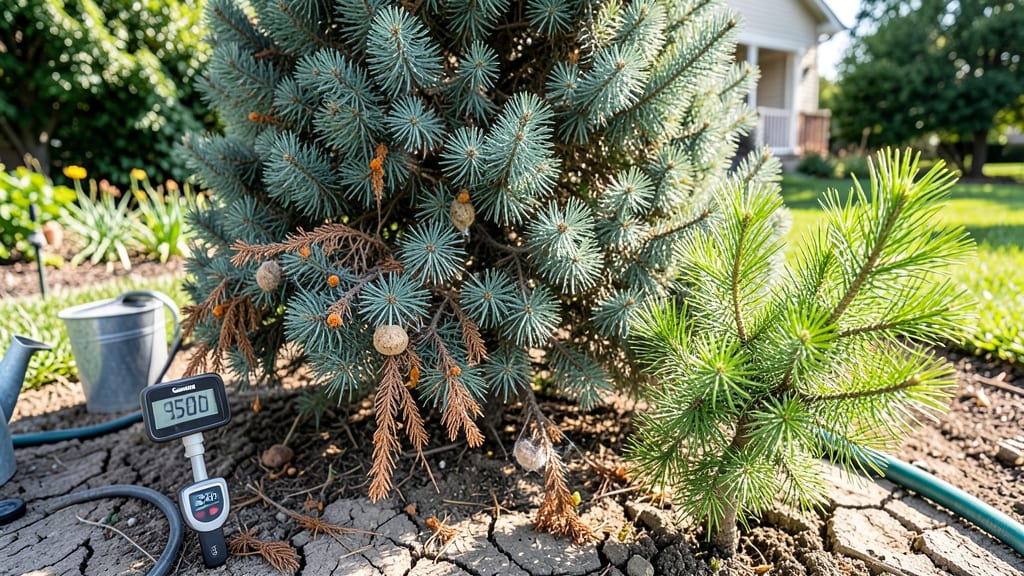
Why is my cedar tree turning brown? Those dried-out needles are an SOS—drought, disease, or pests are the usual culprits, and root rot could be lurking if you wait too long. 🌲 I’ve nursed back three cedars from this exact problem, and the key is acting fast before the roots give out completely. The good news? Most browned cedars aren’t dead—just stressed or infected.
First, rule out the obvious: check the soil. Dry, crumbly soil means drought stress, while soggy, foul-smelling dirt signals root rot. Bagworms or cedar blight (those tiny orange spores) also turn needles brown—but each leaves different clues.
I’ll walk you through how to spot the culprit in under 10 minutes, plus the exact steps to revive your tree.
By the end, you’ll know whether to prune, water differently, or call in an arborist. My 5-step rescue plan has saved cedars from total collapse, even when they looked hopeless. The first step? Stop watering if the roots are rotting—yes, really.
Whether it’s your prized landscape cedar or a young sapling, this works for all varieties. Let’s diagnose before it’s too late—your tree’s survival depends on acting now, not next spring.
Root Causes Behind Browning Cedars
When your cedar tree’s needles start turning brown, it’s often a cry for help from its roots—or from unseen invaders. Understanding the why behind the browning is the first step to saving your tree.
Let’s break down the most common culprits, backed by science, so you can pinpoint the issue and act fast.
Cedars are drought-tolerant, but excessive moisture—especially in heavy or compacted soil—can lead to root rot, a fungal infection that strangles roots by cutting off oxygen.
Here’s how it happens: - Waterlogged soil creates anaerobic conditions, where fungi like Phytophthora thrive. - Symptoms: Brown needles (often starting at the bottom), mushy roots, and a foul smell near the base. - Actionable fix: Test drainage by digging a 12-inch hole—if water pools after 6 hours, amend soil with sand or gravel and avoid overwatering.
While cedars hate soggy soil, they despise drought too. Needles turn brown when roots can’t pull up enough water, leading to desiccation stress.
Key signs: - Needles crisp and brittle, often curling or falling prematurely. - Soil pulls away from the root ball (indicating severe dryness). - Solution: Deep water 1–2 times per week (1–1.5 inches per session) during dry spells. Mulch (2–3 inches) retains moisture and regulates soil temp.
Fungi like Phytophthora or Seiridium (causing cedar blight) attack weakened trees, turning needles brown and causing dieback.
Look for: - Dark, sunken lesions on branches or trunk. - White, cottony fungal growth near the base (a red flag for root rot). - Prevention: Space trees for airflow, sterilize pruners with rubbing alcohol, and avoid wounding the bark.
Cedar trees are magnets for pests like cedar bark beetles or spider mites, which: - Bark beetles tunnel under the bark, disrupting nutrient flow → brown needles. - Spider mites suck sap, causing stippling (tiny brown dots) on needles. - Fix: Spray neem oil (for mites) or beneficial nematodes (for beetles).
Remove heavily infested branches below the infection.
Sudden temperature swings (hot sun after frost or winter burn) can shock cedars:
- Sun scorch: Needles turn brown at the tips (like a "toasted" look).
- Winter burn: Needles dry out in windy, icy winters (common in exposed areas).
- Solution: Prune for airflow, avoid late-season fertilizing (which encourages tender new growth), and winter-wrap young trees.
Brown needles can signal micronutrient deficiencies, especially: - Iron chlorosis: Yellowing between veins → brown needles (common in alkaline soil). - Nitrogen deficiency: Pale, sparse needles (tree can’t support growth). - Fix: Test soil pH—if >7.0, amend with chelated iron or sulfur.
For nitrogen, use a slow-release fertilizer in early spring.
Mechanical stress from storms, hail, or aggressive pruning can cause:
- Broken branches → exposed wood prone to disease.
- Sheared needles (from improper trimming) that turn brown.
- Solution: Prune in late winter/early spring, use clean cuts, and stake young trees in windy areas.
Pro Tip 💡: Rule out one cause at a time—start with soil moisture, then check for pests, and finally test for disease. A healthy cedar should have firm green needles and no fungal growth at the base. If in doubt, consult a local arborist for a soil/root analysis!
How to Fix Your Cedar Tree
Now that you’ve identified why your cedar tree is turning brown—whether it’s root rot, drought, pests, or disease—it’s time to take action! The good news? Most issues can be reversed with the right care.
Below, we’ve broken down practical, step-by-step solutions tailored to each cause, plus prevention tips to keep your tree thriving for years.
Root rot is one of the most serious threats, but early intervention can still bring your cedar back to life.
🔥 Step 1: Stop the Waterlogged Soil
Overwatering or poor drainage is the root cause (pun intended). Act fast to prevent further damage: - Test the soil: Stick your finger 2–3 inches deep.
If it’s soggy, your tree is in danger. - Improve drainage: Amend the soil with organic matter (compost or peat moss) to help water drain faster. - Raise the soil level: If your tree is in a depression, mound soil around the base to create a slight slope away from the trunk.
🍳 Step 2: Prune Damaged Roots (Carefully!)
Avoid cutting healthy roots—focus on black, mushy, or foul-smelling ones.
- Use sterilized pruning shears to trim affected roots 2–3 inches back from the decay.
- Do not over-prune—this stresses the tree further.
👨🍳 Step 3: Apply Fungicide & Adjust Watering
- Fungicide treatment: Use a copper-based or phosphite fungicide (like Serenade Garden or BioAdvanced) to combat fungal growth.
Follow label instructions exactly. - Water deeply but less often: Let the top 2–3 inches of soil dry out between waterings. Never let it sit in standing water.
⏰ Step 4: Monitor & Support Recovery
- Mulch properly: Apply 2–3 inches of mulch (wood chips or pine straw) 3–4 inches away from the trunk to regulate moisture.
- Avoid compacting soil: Stay off the root zone—walk around the tree instead.
- Watch for improvement: Healthy new growth should appear in 4–6 weeks.
If not, consult an arborist.
✨ Pro Tip: If root rot is severe, root pruning (hiring a professional to trim damaged roots) may be necessary.
Drought can turn cedar needles brown, but recovery is often quick with the right care.
🌡️ Step 1: Deep Watering (The Right Way)
- Water slowly & deeply: Use a soaker hose or drip irrigation to deliver 1–1.5 inches of water per week (more in extreme heat).
- Best time to water: Early morning (6–9 AM) to reduce evaporation and fungal risks.
- Check soil moisture: Stick a screwdriver into the ground—if it goes in easily, water again.
🎯 Step 2: Mulch Like a Pro
- Spread 3–4 inches of mulch (cypress or pine straw) away from the trunk to retain moisture.
- Keep mulch loose—compacted mulch traps heat and blocks water.
🔥 Step 3: Protect from Heat Stress
- Shade cloth: If your tree is in full sun, use 30–50% shade cloth during peak summer months.
- Avoid fertilizing now: Wait until fall—stressed trees can’t handle extra nutrients.
✨ Pro Tip: Group plants together to create a microclimate that retains moisture longer.
Pests like bagworms and spider mites can defoliate cedars quickly, turning them brown. Act fast!
🔪 Step 1: Manual Removal (Best for Small Infestations)
- Bagworms: Pick off greenish bags (larvae) by hand and drown them in soapy water.
- Spider mites: Blast them off with a strong spray of water (early morning or evening).
💪 Step 2: Natural & Chemical Controls
| Pest | Treatment | When to Apply |
|---|---|---|
| Bagworms | Bt (Bacillus thuringiensis) or Spinosad | Late spring/early summer (when bags are small) |
| Spider Mites | Neem oil or horticultural oil | Early morning (avoid direct sun) |
| Cedar Bark Beetles | Permethrin spray (follow label) | Late summer (when adults emerge) |
🌿 Step 3: Encourage Beneficial Insects
- Plant neighboring flowers (like marigolds or daisies) to attract ladybugs and lacewings, which eat pests.
- Avoid broad-spectrum pesticides—they kill good bugs too!
✨ Pro Tip: Check for pests weekly during peak season (May–September). Early detection = easier treatment!
Fungal infections thrive in humid conditions. Break the cycle with these steps:
🍳 Step 1: Improve Airflow & Light
- Prune thick foliage to allow sunlight and air circulation.
- Space trees properly—cedars need 6–10 feet between them to avoid crowding.
👨🍳 Step 2: Fungicide Application
- Copper fungicide (like Copper Soap) for needle blight.
- Sulfur or potassium bicarbonate for powdery mildew.
- Reapply every 7–14 days until new growth appears.
⏰ Step 3: Clean Up Debris
- Remove fallen needles & branches—they harbor fungal spores.
- Sterilize pruners with rubbing alcohol between cuts.
✨ Pro Tip: Water at the base (not overhead) to keep foliage dry.
Once your tree recovers, lock in its health with these long-term strategies:
💡 Soil & Water
- Test your soil (pH 5.0–7.0 is ideal for cedars).
- Install a French drain if your yard has poor drainage.
- Use drip irrigation instead of sprinklers to avoid wetting foliage.
🌿 Pruning & Maintenance
- Prune in late winter/early spring (avoid summer stress).
- Remove dead branches promptly to prevent disease spread.
- Avoid heavy pruning—cedars lose shape easily.
🐞 Pest & Disease Defense
- Inspect trees monthly during growing season.
- Keep grass trimmed around cedars—it attracts pests.
- Plant resistant varieties (like Deodar Cedar if local pests are a problem).
🌱 Fertilizing Smartly
- Only fertilize in early spring or fall (never in summer!).
- Use a slow-release, balanced fertilizer (10-10-10 or 8-3-9).
- Avoid high-nitrogen fertilizers—they encourage soft, pest-attracting growth.
Final Thought: Most brown cedar trees can recover with the right care—just act quickly and stay consistent. If your tree is severely decayed or wilting, consider consulting a certified arborist for expert help. 🚀
Frequently asked questions
Why do cedar tree needles turn brown in patches rather than all at once?
Patchy browning is usually a sign of localized stress, like pest infestations (e.g., bagworms) or fungal infections (e.g., cedar blight). Check for tiny webs or greenish bags on branches—those are classic bagworm signs. Fungal infections often start at branch tips where moisture lingers. Test by examining a few affected branches closely.
Can I save my cedar tree if the brown needles have already fallen off?
Yes, but act fast! If the tree still has some green needles and the trunk feels firm, it’s likely recoverable. Focus on fixing the root cause (watering, pests, or disease) and give it 4-6 weeks to show new growth. If the trunk is soft or the bark peels easily, the tree may be beyond saving—consult an arborist.
How do I tell if my cedar tree has root rot vs. drought stress?
Dig near the base: root rot shows mushy, black roots with a foul smell, while drought-stressed roots are dry and brittle. Check the soil—if it’s soggy after rain, it’s likely root rot. For drought, the soil will pull away from the roots and feel bone-dry. Both need different fixes: root rot needs less water; drought needs deep, consistent watering.
Is it safe to prune brown branches from my cedar tree?
Yes, but do it strategically! Remove only dead or heavily infested branches—never more than 25% of the tree at once. Use sterilized shears to cut just outside the branch collar (the swollen area where the branch meets the trunk). Prune in late winter/early spring to minimize stress and avoid summer heat.
Will my cedar tree grow back if I fix the problem?
Cedar trees are resilient—once you address the root issue (literally and figuratively), you’ll often see new green needles within 4-8 weeks. The key is consistency: keep up with watering, pest control, or fungicide treatments until the tree stabilizes. Young cedars recover faster than mature ones, but even older trees can bounce back with proper care.