
Pests and Diseases
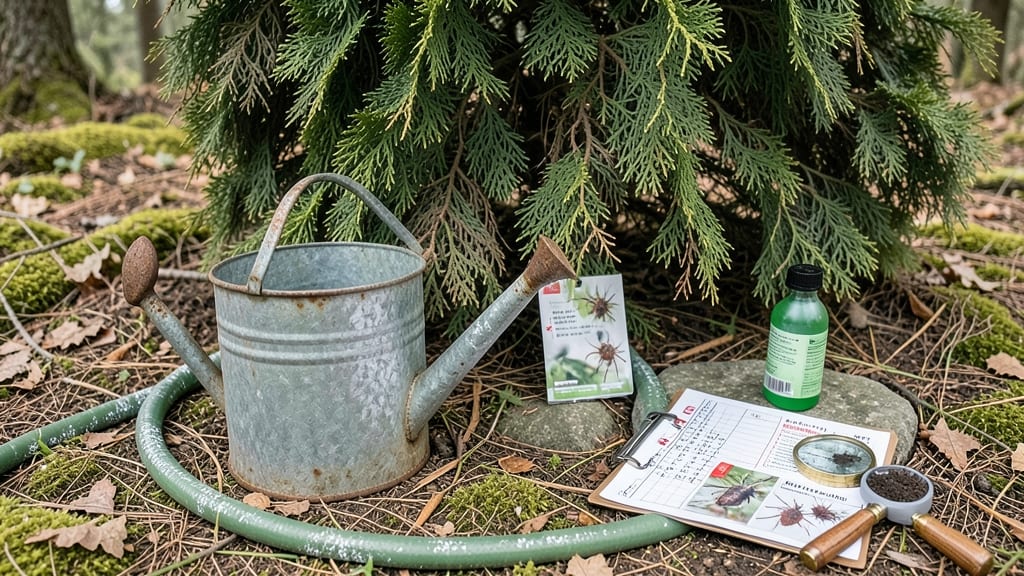
Why is my cypress tree turning brown? Those sad, brown needles are a clear SOS—usually one of three culprits: root rot, fungal diseases like Seiridium canker, or stress from drought or poor drainage.
I’ve nursed back enough cypresses to know the difference between a quick fix and a full-scale rescue mission, and the first step is figuring out which problem you’re dealing with.
Start by checking the bark for sunken, discolored patches (that’s Seiridium canker), then dig into the soil—if it’s soggy or smells foul, root rot is your enemy. Drought stress shows up as crispy needles at the tips, while nutrient deficiencies make the whole tree look uniformly dull.
The good news? Each problem has a targeted solution, from pruning infected branches to adjusting your watering routine.
You’ll likely see improvement within 4-6 weeks if you act fast—healthy new growth will push out, and the brown patches will fade. For stubborn cases, a copper-based fungicide or soil amendments can make all the difference. The key is catching it early before the tree’s health spirals.
Prevention is easier than repair: improve drainage, avoid overhead watering, and mulch properly to keep roots happy. If the tree is beyond saving, don’t panic—removing it now prevents the problem from spreading to other plants. Here’s how to diagnose and fix it step by step.
Root Causes Of Browning Cypress
Cypress trees are resilient, but when their leaves start turning brown, it’s often a sign of stress—usually from water-related issues, fungal infections, or environmental factors. Let’s break down the most common culprits and why they trigger browning in your cypress tree.
Cypress trees thrive in well-draining soil, but when they sit in soggy conditions, their roots suffocate. Overwatering or poor drainage forces roots to starve for oxygen, leading to root rot—a fungal infection that blocks nutrient uptake.
- How it happens: Excess moisture creates anaerobic conditions, where harmful fungi like Phytophthora thrive.
The roots decay, and the tree can’t absorb water or nutrients, causing leaves to brown and drop. - Signs to watch for: - Mushrooms or mold at the base of the tree - Soft, mushy roots when checked - Wilting despite moist soil - Quick fix: Improve drainage by amending soil with sand or compost, and avoid watering until the top 2 inches of soil are dry.
While overwatering is a common issue, drought stress can also turn cypress leaves brown. These trees prefer consistent moisture, especially in hot climates. When roots dry out, the tree struggles to transport water, leading to desiccation (leaf browning from lack of hydration).
- How it happens: Cypress trees have shallow roots that spread widely.
If the soil dries out too quickly (common in sandy or rocky soil), the tree can’t replenish lost moisture fast enough. - Signs to watch for: - Crispy, brittle leaves (not just brown) - Soil pulling away from the roots - Leaf edges curling upward - Quick fix: Deep water 1-2 times per week (depending on heat) and mulch around the base to retain moisture.
Fungal diseases like cypress canker (Seiridium cardinale) or diplodia tip blight (Sphaeropsis sapinea) love warm, humid conditions—perfect for spreading in cypress trees. These infections clog the tree’s vascular system, cutting off water and nutrients to the leaves.
- How it happens:
- Canker fungus enters through wounds (pruning cuts, storms) and spreads under the bark, girdling branches.
- Diplodia blight thrives in wet foliage, causing dark, sunken spots that expand and kill leaf tissue.
- Signs to watch for:
- Dark, tar-like spots on leaves or branches
- Dieback (dead branches starting at the tips)
- Sawdust-like spores near infections
- Quick fix:
- Prune infected branches 6+ inches below the damage (sterilize tools with rubbing alcohol).
- Apply copper fungicide in early spring before new growth.
- Space trees for better airflow to reduce humidity.
Cypress trees are adaptable, but extreme heat, cold snaps, or salt buildup can shock them into browning leaves. These factors weaken the tree’s defenses, making it vulnerable to pests or disease.
- How it happens:
- Salt damage: If your tree is near a road (de-icing salt) or coastal area, salt accumulates in the soil, disrupting nutrient absorption.
- Winter burn: Freezing winds or sudden cold snaps can scorch new growth.
- Herbicide drift: Nearby lawn treatments (like glyphosate) can be absorbed through roots or foliage.
- Signs to watch for:
- Brown patches only on one side (windburn)
- Yellowing between leaf veins (salt toxicity)
- Sudden browning after a frost
- Quick fix:
- Flush soil with fresh water if salt is suspected.
- Protect young trees with burlap wraps in winter.
- Avoid herbicides near cypress (opt for organic weed control).
While less common than fungal issues, sap-sucking insects (like spider mites, scale, or bagworms) can drain a cypress tree’s vitality, leading to browning. These pests inject toxins or block stomata (leaf pores), preventing gas exchange.
- How it happens:
- Spider mites spin webs and suck cell sap, causing stippled, yellow-brown leaves.
- Bagworms defoliate branches, leaving behind skeletonized leaves.
- Scale insects excrete honeydew, which fosters sooty mold (a black fungal growth).
- Signs to watch for:
- Tiny webs on undersides of leaves
- Small, brown "pouches" (bagworm nests)
- Sticky residue on leaves (honeydew)
- Quick fix:
- Spray with neem oil or insecticidal soap for mild infestations.
- Prune heavily infested branches and dispose of them.
- Introduce beneficial predators (ladybugs, lacewings) for natural control.
Cypress trees don’t need heavy fertilization, but chronic lack of key nutrients (like nitrogen, iron, or manganese) can cause browning—especially in chlorotic (yellowing) patterns before turning brown.
- How it happens:
- Nitrogen deficiency: Leads to overall yellowing (chlorosis) that progresses to brown.
- Iron/manganese deficiency: Causes interveinal browning (brown patches between leaf veins).
- Soil pH issues: If soil is too alkaline (pH >7.5), micronutrients become unavailable.
- Signs to watch for:
- Yellow leaves with green veins (classic deficiency sign)
- Slow growth despite regular watering
- Brown, brittle new growth
- Quick fix:
- Test soil pH and amend with sulfur (to lower pH) or lime (to raise it).
- Apply a balanced fertilizer (10-10-10) in early spring.
- Use chelated iron for quick correction of deficiency.
Pro Tip 💡: Diagnose before treating! Take a close look at:
- Where browning starts (tips vs. edges vs. patches).
- Seasonality (spring vs. summer vs. winter).
- Other plant symptoms (wilting, mold, pests).
This will help you pinpoint the exact cause and stop the browning in its tracks.
Quick Fixes for Browning Cypress
Now that you’ve identified the culprit behind your cypress tree’s brown woes—whether it’s root rot, fungal infections, environmental stress, or pests—it’s time to roll up your sleeves and take action! Below are practical, step-by-step solutions tailored to each cause, plus prevention tips to keep your tree thriving long-term.
If your cypress tree is drowning in soggy soil, root rot could be the silent killer. Here’s how to revive it:
🔥 Step 1: Check the Drainage (The #1 Fix)
- 👨🍳 Test the soil: Dig a small hole (6–12 inches deep) near the tree.
If water pools or the soil stays muddy after 24 hours, drainage is poor. - 🔪 Improve drainage: Mix in organic matter like compost or coarse sand to loosen compacted soil. For severe cases, consider raising the planting bed slightly or installing a French drain if waterlogging is chronic.
🥘 Step 2: Prune Damaged Roots (Gently!)
- ⏰ Best time: Early spring or fall (when the tree isn’t stressed).
- 🔪 How to do it:
- Use sterilized pruners to trim soft, mushy roots (healthy roots are firm and light brown).
- Avoid cutting more than 20–30% of the root system at once—this can shock the tree.
- 💡 Pro tip: Water the tree lightly before pruning to make roots easier to see.
🌡️ Step 3: Adjust Watering Habits
- ✨ Water wisely: Cypress trees hate "wet feet."
Water deeply but infrequently—about 1–1.5 inches per week, letting the top 2–3 inches of soil dry out between waterings. - 🎯 Prevent future rot: Avoid overhead watering (use drip irrigation or soaker hoses) to keep foliage dry.
🔥 Prevention Tips for Root Rot
- 💡 Plant in well-draining soil (cypress trees despise clay-heavy or low-lying areas).
- ✨ Mulch correctly: Apply 2–3 inches of mulch (wood chips or pine straw), but keep it 6 inches away from the trunk to prevent moisture buildup.
- 🌡️ Monitor after heavy rains: If your yard floods often, consider planting on a slight mound or installing drainage tiles.
Fungal diseases like cypress canker, needle blight, or root rot (Phytophthora) thrive in damp conditions. Here’s how to fight back:
🍳 Step 1: Prune Infected Branches (Don’t Skip!)
- 🔪 Cut out diseased branches at least 6–12 inches below the brown or oozy spots (fungi spread invisibly).
- 💡 Sterilize tools: Wipe pruners with rubbing alcohol between cuts to prevent spreading spores.
- 🌡️ Dispose of debris: Bag and trash (don’t compost!) infected branches.
🥘 Step 2: Apply Fungicide (The Right Way)
- 🔥 Best fungicides for cypress:
- Copper fungicides (e.g., Copper Sulfate) – great for canker and blight.
- Phosphite-based fungicides (e.g., Phostrol) – systemic and effective against Phytophthora.
- Neem oil (organic option) – helps prevent fungal spores from germinating.
- ⏰ When to spray:
- Early morning or late evening (avoid midday sun, which can burn foliage).
- Every 2–4 weeks during wet seasons (spring/fall).
- 💡 Pro tip: Spray both sides of the foliage and the trunk for full coverage.
🌡️ Step 3: Improve Airflow and Light
- ✨ Thin out dense branches to allow sunlight and air to circulate.
- 🎯 Avoid planting under trees that block light (e.g., dense shrubs).
- 🌱 Space new cypress trees at least 10–15 feet apart for better airflow.
🔥 Prevention Tips for Fungal Diseases
- 💡 Water at the base (never overhead) to keep foliage dry.
- ✨ Choose resistant varieties (e.g., Leyland cypress hybrids are less prone to canker).
- 🌡️ Clean up fallen needles regularly (fungi love decaying organic matter).
If your cypress is browning due to heat, drought, or poor soil, these fixes will help it bounce back:
🍳 Step 1: Adjust Watering for Stress Relief
- 💧 Deep watering is key: Water slowly and deeply (1–2 hours per session) to encourage deep root growth.
- 🌡️ Frequency: Water 2–3 times per week in summer (more if temperatures exceed 90°F).
- 💡 Pro tip: Use a moisture meter to check soil depth—water when the top 2 inches are dry.
🥘 Step 2: Provide Temporary Shade (If Needed)
- ☀️ If scorched by sun:
- Install shade cloth (30–50%) for 2–4 weeks to let the tree recover.
- ✨ Avoid full shade—cypress trees need 6+ hours of sunlight daily.
🌱 Step 3: Fertilize Smartly (But Don’t Overdo It)
- 📊 Best fertilizers for cypress:
- Slow-release granular fertilizer (e.g., 10-10-10 or 12-4-8) in early spring.
- Iron supplements (if new growth is yellow, not brown).
- ⏰ When to avoid: Never fertilize in fall or winter—it stresses the tree.
- 💡 Pro tip: Test your soil first (pH should be 6.0–7.0 for cypress).
🔥 Prevention Tips for Environmental Stress
- 💡 Plant in the right spot: Cypress trees love full sun to partial shade but hate soggy or compacted soil.
- ✨ Mulch properly: Use pine straw or wood chips (2–3 inches thick) to retain moisture and regulate soil temp.
- 🌡️ Monitor for pests (e.g., bagworms, spider mites)—stressed trees attract them!
If bagworms, spider mites, or scale insects are to blame, here’s how to evict them for good:
🍳 Step 1: Manual Removal (Best for Small Infestations)
- 🔪 Bagworms: Handpick sack-like cocoons and drop them into soapy water.
- 🕷️ Spider mites: Spray off with a strong hose stream (disrupts their webs).
- 🐌 Scale insects: Scrape off with a plastic scraper (avoid metal—it can spread pests).
🥘 Step 2: Organic Pest Control
- 🌿 Bacillus thuringiensis (Bt): A bacteria-based spray that kills bagworms (safe for humans/pets).
- 🍋 Neem oil or insecticidal soap: Effective against mites and soft-bodied pests.
- 🐝 Beneficial insects: Release ladybugs or lacewings to prey on mites.
🌡️ Step 3: Chemical Treatments (Last Resort)
- 🔥 Pyrethrin-based sprays (e.g., Eight, PyGanic) – kills bagworms and beetles.
- 🎯 Systemic insecticides (e.g., Imidacloprid) – for severe infestations (follow label instructions).
- ⏰ Best timing: Treat early spring or
Frequently asked questions
Why are my cypress tree needles turning brown from the tips inward?
This is a classic sign of drought stress or nutrient deficiency. Cypress trees need consistent moisture—when soil dries out too quickly, the tips brown first. Check if the soil is sandy or compacted and water deeply 2-3 times per week during hot spells. If leaves also show yellowing between veins, it may be an iron or manganese deficiency—test your soil pH and consider chelated iron supplements.
How can I tell if my cypress tree has root rot vs. fungal disease?
Root rot shows mushrooms at the base, soft/mushy roots, and wilting despite wet soil. Fungal diseases like Seiridium canker create dark, sunken cankers on branches and oozing sap. Dig near the roots—if they smell foul and are discolored, it’s rot. For fungal issues, look for dieback starting at branch tips and sawdust-like spores near infections.
Can I save my cypress tree if half of it is already brown?
Yes, but act fast! Prune dead branches 6+ inches below the browning (sterilize tools with alcohol), then focus on fixing the root cause. If it’s root rot, improve drainage immediately. For fungal issues, apply copper fungicide and thin out dense growth. Healthy cypress trees can regenerate new growth from lower branches—just ensure the remaining 50% is still green for recovery.
Why does my cypress tree only brown on one side?
This usually indicates environmental stress like windburn, herbicide drift, or poor airflow. Check for exposed roots on that side or nearby lawn treatments (glyphosate is common culprit). If it’s wind damage, wrap young trees in burlap during winter. For herbicide exposure, flush the soil with water for 30 minutes daily until new growth appears.
How long does it take to see improvement after treating my cypress tree?
With proper care, you’ll typically see new green needles within 4-6 weeks. Root rot recovery may take 2-3 months as roots regenerate. Fungal diseases respond faster to fungicides (2-4 weeks for visible improvement), while drought-stressed trees bounce back in 3-5 weeks with consistent watering. Monitor for 1-2 growing seasons to confirm full recovery—patience is key!