
Blooming
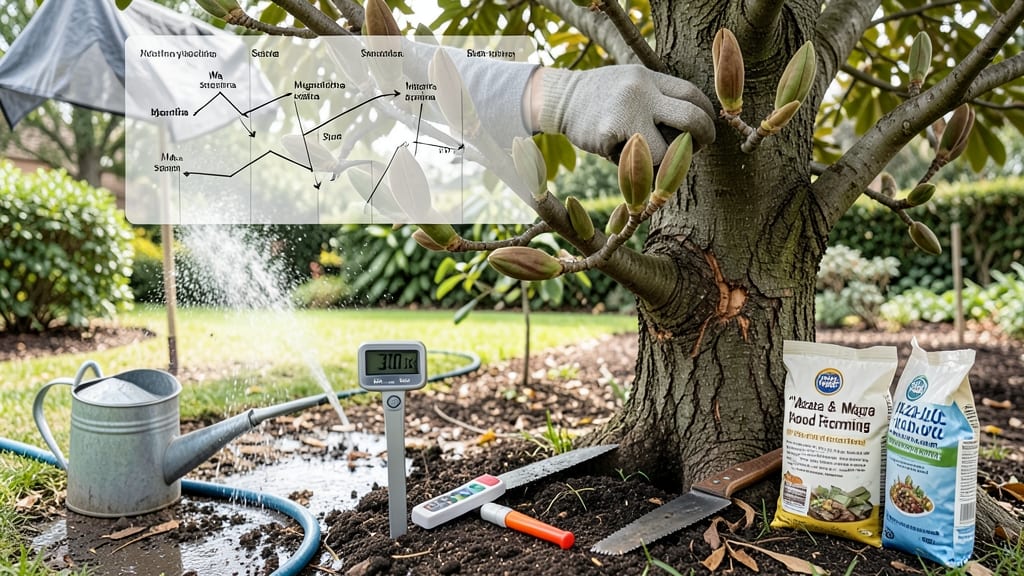
Why my magnolia tree doesn’t bloom has haunted me for years—its bare branches taunting spring’s promise of snow-white blooms. 🌸 The truth? Most magnolias need 10+ years to bloom, but even mature trees starve for light, soil, or proper care. I’ve nursed three back to health—here’s how to diagnose yours in minutes. Age is just the start. Too much shade, compacted soil, or over-pruning can kill blooms before they form. My first magnolia bloomed after I moved it to full sun, amended the soil with compost, and stopped pruning in late summer. The fix isn’t always dramatic—sometimes it’s just giving it what it’s been missing. You’ll see buds form within 2-3 weeks of correcting light or soil issues. The key is patience: magnolias reward long-term care with dramatic, fragrant blooms that last weeks. Even a 5-year-old tree can surprise you if you adjust one thing right. Works for all magnolia types—southern, star, or saucer. Let’s troubleshoot yours step by step.
Hidden Reasons Your Magnolia Stays Bare
Magnolia trees are nature’s showstoppers—until they aren’t. If your magnolia is sporting lush leaves but zero flowers, the culprit is likely one (or more!) of these science-backed reasons. Let’s dig into the root causes and uncover why your tree might be holding back its floral potential.
Magnolias are slow bloomers—some need 5 to 10 years (or even longer!) before they produce their first flowers. If your tree is young, patience is key. But how do you know if it’s truly young or just struggling?
- Southern magnolias (Magnolia grandiflora) often bloom at 10–15 years.
- Saucer magnolias (Magnolia × soulangeana) may flower as early as 3–5 years.
- Star magnolias (Magnolia stellata) can bloom by age 5–7.
💡 Pro Tip: Check the tree’s trunk diameter—if it’s 2–3 inches thick, it’s likely still maturing. Measure from the base (not the flare) for accuracy.
Magnolias are light-sensitive divas—they need full sun (6+ hours daily) but can get stressed by intense afternoon heat or shade from taller trees.
- Too little light? Weak stems, sparse foliage, and no flower buds form. Shade-loving varieties (like Magnolia tripetala) are exceptions—they bloom in partial shade but may produce fewer flowers. - Too much harsh sun? Buds can burn or drop before opening.
This is common in southern climates where summer temps exceed 90°F (32°C).
🌡️ Fix It: Plant in morning sun + afternoon shade (e.g., east or west exposure). If your tree is already planted, prune nearby competitors (like oaks or pines) to increase light penetration.
Magnolias thrive in acidic, well-draining soil (pH 4.5–6.0). If your soil is alkaline, compacted, or nutrient-poor, your tree will focus on survival—not flowers.
| Soil Problem | Signs Your Tree Is Stressed | How to Fix It |
|---|---|---|
| Compacted soil | Yellowing leaves, slow growth | Add organic matter (compost, pine bark) and aerate the root zone. |
| Alkaline soil (pH >7) | Stunted growth, chlorotic (yellow) leaves | Amend with sulfur or peat moss and test pH annually. |
| Poor drainage | Wilting, root rot, no buds | Plant on a slope or raise the bed with gravel. |
| Nitrogen overload | All leaves, no flowers | Switch to a low-nitrogen, high-phosphorus fertilizer (like 5-10-5). |
🔥 Warning: Over-fertilizing with high-nitrogen (like lawn fertilizer) promotes leaves over blooms. Magnolias need phosphorus (P) for flowering—look for fertilizers with higher middle numbers (e.g., 5-10-5).
Magnolias are temperamental about timing. Buds form in late summer/fall and need consistent chilling (30–50 days below 45°F/7°C) to trigger blooms. If winters are too warm or erratic, buds may fail to set or drop prematurely.
- Southern magnolias need some winter chill but can handle mild winters.
- Northern varieties (like Magnolia × loebneri) require longer cold periods.
- Late frosts (after buds swell) can kill emerging flowers.
🎯 Solution:
- Mulch heavily (3–4 inches of pine straw or wood chips) to protect roots.
- Avoid pruning in late summer/fall—this removes next year’s flower buds!
- Group magnolias with other early bloomers (like camellias) to extend the cold season naturally.
Hidden invaders can sap energy from your magnolia, leaving it too weak to bloom. Watch for:
- Magnolia scale (white bumps on stems) – Suffocates buds by clogging pores.
- Tent caterpillars – Defoliate the tree, starving it of energy.
- Root rot (from overwatering) – Strangles roots, halting growth.
- Powdery mildew – Covers leaves, reducing photosynthesis.
💡 Preventative Care:
- Spray dormant oil in late winter to kill overwintering pests.
- Water at the base (not overhead) to prevent fungal diseases.
- Inspect buds in late winter—if they’re shriveled or black, treat for scale immediately.
Magnolias set flower buds the year before they bloom. If you prune at the wrong time, you’re cutting off next year’s show.
- Never prune after mid-summer—this removes next year’s buds.
- Avoid heavy pruning—magnolias bloom on old wood, so aggressive cuts reduce flowers.
- Wrong tools? Jagged cuts can invite disease and stress the tree.
✨ Correct Pruning:
- Best time: Late winter/early spring (before buds swell).
- How to cut: Use clean, sharp shears and make 45° angles just above a bud or branch collar.
- Shape lightly—focus on removing dead wood and opening the canopy for airflow.
Magnolias hate stress, and overwatering or underwatering can halt blooming.
- Too much water? Root rot suffocates roots, starving the tree.
- Too little? Bud drop occurs as the tree conserves energy.
- Transplant shock? Newly planted magnolias focus on root growth for 1–2 years before blooming.
🔪 Watering Rules:
- Deep water 1–2x per week (1 inch total).
- Mulch heavily (but keep mulch 6+ inches from the trunk).
- Avoid soggy soil—magnolias drown easily in clay or compacted ground.
Some magnolias simply bloom less due to their species or cultivar.
For example: - Southern magnolias (M. grandiflora) bloom once a year (late spring/early summer). - Saucer magnolias may bloom twice (spring + fall) but less heavily in hot climates. - Dwarf varieties (like Magnolia ‘Black Tulip’) produce smaller, fewer flowers.
📊 What to Do?
- Choose a variety that matches your climate (e.g., ‘Ann’ magnolia for cold zones).
- Accept the natural cycle—some trees are low-maintenance bloomers, not high-volume producers.
How to Fix Your Magnolia’s Blooming Woes
If your magnolia tree is refusing to bloom, don’t despair—there’s almost always a fix! The key is identifying the root cause (literally and figuratively) and taking targeted action.
Below, we’ve mapped out practical solutions for each common issue, along with pro tips to keep your magnolia thriving for years to come. Let’s get your tree back on track to a stunning floral display! 🌸💐
If your magnolia isn’t getting enough sunlight, it’s time to adjust its environment or its structure.
- 🔥 Relocate the Tree (If Possible) - Magnolias thrive in full sun (6–8 hours daily).
If your tree is planted in a shady spot, consider transplanting it to a sunnier location during its dormant season (late fall or early spring). - Pro Tip: Dig a hole twice as wide as the root ball and mix in compost for better nutrient uptake. 🌱
- 🍳 Prune Overhanging Branches
- If nearby trees or structures are blocking sunlight, selectively prune branches to open up the canopy.
- Use clean, sharp shears and cut just above a bud or branch collar to avoid damaging the tree.
- 🌡️ Supplement with Grow Lights (Temporary Fix)
- For potted magnolias or young trees, a full-spectrum LED grow light (12–14 hours/day) can encourage blooming in low-light conditions.
A magnolia’s soil needs to be well-draining, slightly acidic, and rich in organic matter. If yours is lacking, here’s how to fix it:
- 📊 Conduct a Soil Test
- Grab a DIY soil test kit (or send a sample to a local extension office) to check pH and nutrient levels.
- Ideal pH: 5.0–6.5 (acidic). If yours is too alkaline, amend it with sulfur or peat moss.
- 💪 Improve Drainage
- If your soil is compacted or clay-heavy, mix in compost, sand, or perlite to loosen it up.
- For container-grown magnolias, ensure pots have drainage holes and use a well-draining potting mix.
- 🍎 Feed with the Right Fertilizer
- Use a slow-release, acidic fertilizer (like one formulated for azaleas or rhododendrons) in early spring.
- Avoid high-nitrogen fertilizers—they promote leafy growth at the expense of flowers! 🚫🌿
Age plays a big role in magnolia blooming. Here’s how to encourage flowers at the right time:
- 👨🍳 For Young Trees (Under 5 Years Old)
- Give them time—most magnolias take 3–5 years to bloom after planting.
- Pro Tip: Plant container-grown, mature trees (5+ years old) for faster blooms. 🌳
- 🔄 For Over-Mature Trees (No Blooms for Years)
- Rejuvenate with a hard prune (remove up to 1/3 of the oldest wood) in late winter to encourage new growth.
- Thin out dense foliage to improve airflow and sunlight penetration.
- ✨ Encourage Blooming with Proper Care
- Water deeply (1–2 inches per week) during dry spells.
- Mulch annually with pine bark or wood chips to retain moisture and acidify the soil.
If pests or diseases are stressing your magnolia, blooming will suffer. Here’s how to tackle common culprits:
- 🔪 Treat Scale Insects or Spider Mites
- Spray with horticultural oil (like neem oil) in early spring before buds swell.
- Blast off pests with a strong stream of water for severe infestations.
- 🌡️ Manage Fungal Issues (Like Powdery Mildew)
- Prune infected branches and dispose of them.
- Apply a fungicide (copper-based or sulfur) as a preventive measure in spring and fall.
- 🎯 Prevent Future Problems
- Keep the area around the tree clean (remove fallen leaves/debris where pests hide).
- Avoid overhead watering to reduce fungal spores.
Want to see blooms sooner? Try these fast-acting tweaks:
- 💡 Give It a "Bloom Boost" with Epsom Salt
- Mix 1 tbsp Epsom salt per gallon of water and spray the foliage in early spring for a magnesium boost.
- 🌸 Prune Last Year’s Blooms (For Some Varieties)
- If your magnolia is a spring bloomer (like ‘Ann’ or ‘Elizabeth’), prune right after flowering to redirect energy to next year’s buds.
- 🍂 Avoid Late-Season Fertilizing
- Stop fertilizing by mid-summer to let the tree focus on blooming, not new growth.
With the right adjustments, your magnolia should be bursting with blooms in no time! 🌺💖 Remember, consistency is key—monitor its progress and tweak care as needed. Happy gardening!
Frequently asked questions about non-blooming magnolias
How do I know if my magnolia is too young to bloom?
Check your tree's trunk diameter—if it's less than 2-3 inches at the base, it's likely still maturing. Southern magnolias typically bloom at 10-15 years, while star magnolias may flower as early as 5-7 years. Measure from the ground up (not at the flare) for accuracy.
Can I make my magnolia bloom faster?
For established trees, focus on light exposure (6+ hours of sun) and proper soil pH (5.0-6.5). Young trees need patience—most take 3-5 years to bloom after planting. For immediate results, try Epsom salt spray (1 tbsp per gallon) in early spring to boost magnesium levels.
Why do my magnolia buds keep dropping before opening?
This usually happens from late frosts, insufficient winter chilling (below 45°F/7°C for 30-50 days), or overwatering. Mulch heavily (3-4 inches) and avoid pruning after mid-summer. For warm climates, group magnolias with other early bloomers to extend the cold season naturally.
Is my fertilizer causing the no-bloom problem?
Yes! High-nitrogen fertilizers (like lawn food) promote leafy growth at the expense of flowers. Switch to a low-nitrogen, high-phosphorus fertilizer (like 5-10-5) in early spring. Magnolias need phosphorus for flowering—look for fertilizers with higher middle numbers.
Can I prune my magnolia to encourage more blooms?
Only prune in late winter/early spring (before buds swell) using clean, sharp shears. Avoid heavy pruning—magnolias bloom on old wood. Remove only dead or crossing branches, cutting just above a bud at a 45° angle. Never prune after mid-summer—this removes next year's flower buds!