
Pruning
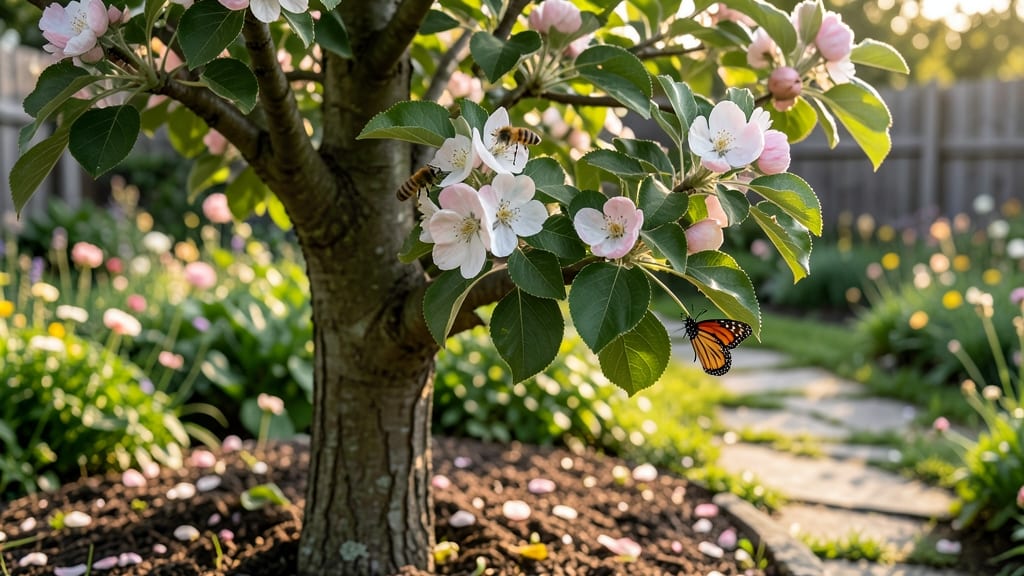
Winesap apple trees depend on pollinators—especially honeybees, bumblebees, and native solitary bees—to ensure strong fruit set. Creating a pollinator-friendly environment through strategic planting and chemical-free practices directly boosts your harvest.
Pollinators are the unsung heroes of your Winesap orchard, responsible for transferring pollen between flowers to produce those juicy apples you love. 🐝 Without them, up to 90% of your blossoms could fail to develop fruit.
I've seen firsthand how adding native wildflowers like purple coneflower or bee balm near the trees creates a pollinator paradise—these plants provide both nectar and pollen sources that keep bees coming back during the critical bloom period.
The key is timing: most apple varieties bloom in early spring, so having early-flowering plants like crocus or dandelions gives pollinators an energy boost when they first arrive.
What's fascinating is how different bees specialize in their work. Honeybees are generalists, visiting many flowers, while bumblebees have long tongues perfect for deep-throated flowers like honeysuckle.
Native solitary bees, often overlooked, are actually the most efficient pollinators for apples because they vibrate the flowers to release pollen—a technique called buzz pollination. Creating nesting sites with bare ground patches or small wood piles can encourage these crucial workers to set up shop near your trees.
💡 In This Article
- Best Pollinators for Winesap Apple Trees and Their Roles
- Natural Ways to Attract Pollinators to Your Apple Orchard
Best pollinators for Winesap apple trees and their roles
The Winesap apple tree's success depends on three primary pollinator types, each playing a distinct role in the orchard ecosystem. Honeybees, the most familiar visitors, are generalist foragers that efficiently transfer pollen between flowers using their fuzzy bodies.
A single honeybee can visit up to 50-100 apple blossoms in one trip, carrying pollen in specialized hairs called setae that cover their bodies. Their colony structure allows for continuous pollination activity during the 7-10 day bloom period typical of Winesap varieties.
Bumblebees bring unique advantages through their larger size and buzz pollination technique. When a bumblebee lands on an apple blossom, it contracts its flight muscles at 150-200 vibrations per second, creating an audible hum that dislodges pollen from the flower's anthers.
This method is particularly effective for Winesap's dense blossoms, which often require this mechanical assistance. Native solitary bees, like the mason bee, are the unsung heroes—they're often more efficient than honeybees because they focus exclusively on apple trees during bloom season, making 200-300 visits per hour to individual flowers.
Climate plays a crucial role in pollinator effectiveness. In cooler regions, bumblebees thrive because they can forage in temperatures as low as 50°F, while honeybees prefer 65°F+.
The Winesap's bloom timing—typically aligning with early spring's first warm spells—creates a race against time for pollinators to build up energy reserves. This is why planting early blooming flowers like crocus or lungwort provides critical nectar sources when apple blossoms first open.
The tree's pinkish-white flowers, which bloom from late April to early May in most growing zones, must align with pollinator emergence patterns for optimal fruit set.
What most gardeners don't realize is the dramatic difference in pollination efficiency between these species. Studies show honeybees achieve about 30% fruit set without additional pollination support, while bumblebee activity can push that to 60-70%.
Native solitary bees often achieve even higher rates when properly supported, making them the most valuable pollinators for commercial Winesap orchards. The key is creating an environment where all three types can thrive simultaneously during the critical bloom window.
Consider this pollinator hierarchy during Winesap bloom season:
- Primary Pollinators: Native solitary bees (most efficient, specialized)
- Secondary Pollinators: Bumblebees (highly effective in cool weather)
- Support Pollinators: Honeybees (generalists, good in warm conditions)
The visual difference in pollination success becomes apparent when comparing trees with all three pollinator types present versus those with only honeybees. Trees with diverse pollinator activity show 2-3 times more fruit set in the first year, with larger, more uniform apples developing from proper pollination. 🌸