
Trees
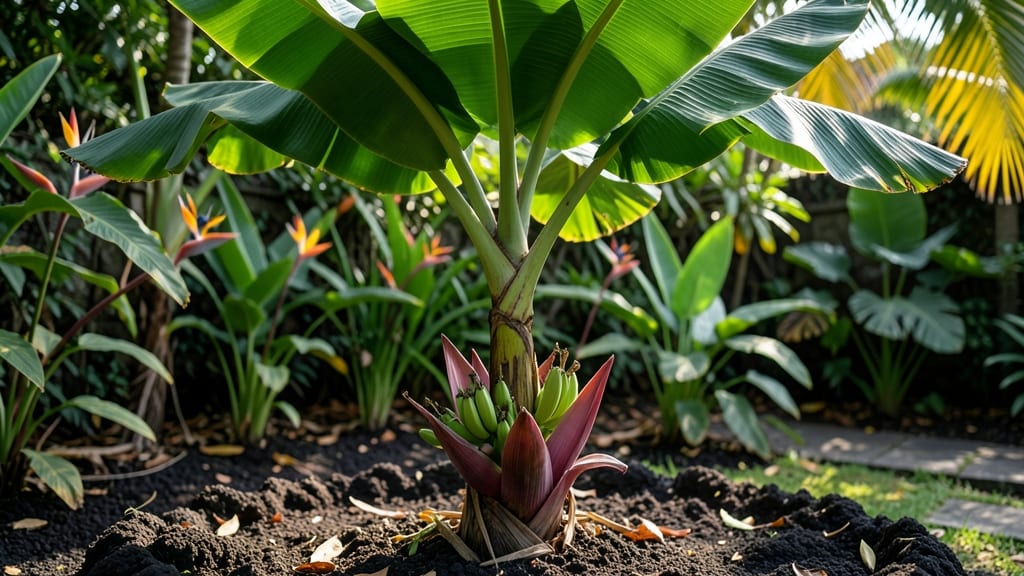
Banana trees thrive in warm climates with consistent temperatures between 70°F and 85°F, preferring USDA zones 10-12. They tolerate brief dips to 30°F but suffer permanent damage below 28°F, requiring winter protection in colder regions. Humidity above 50% and well-draining soil are essential for optimal growth.
Banana trees originate from tropical regions where heat and moisture are constant, making them highly sensitive to temperature swings. 🌴 The ideal banana tree climate mimics their native environment—think of Florida's coastal areas or Hawaii's year-round warmth.
Even a single night below 30°F can cause irreversible damage by disrupting cellular functions, while humidity below 50% leads to leaf browning and stunted growth.
I've seen firsthand how container-grown banana trees in colder zones need extra care, like wrapping pots in bubble wrap or moving them indoors before frost season.
What's fascinating is how different banana varieties handle cold differently. For example, dwarf banana trees might survive a few degrees cooler than lady finger varieties, which are more delicate. This is why gardeners in zones 8-9 often choose cold-hardy cultivars or implement microclimate solutions like greenhouses.
The key is replicating their natural habitat as closely as possible—whether through soil insulation, windbreaks, or even indoor lighting during shorter winter days.
💡 In This Article
- USDA Zones and Banana Tree Cold Hardiness
- Creating Ideal Microclimates for Banana Trees in Cooler Regions
USDA zones and banana tree cold hardiness
Banana trees suffer from what botanists call "chilling injury" when temperatures drop below 50°F. This occurs because their tropical cells lack the protective mechanisms found in temperate plants—like antifreeze proteins or membrane-stabilizing compounds. When frost forms, ice crystals puncture cell walls, disrupting nutrient flow and causing irreversible damage.
The critical threshold is 28°F, where even brief exposure can kill the pseudostem (the "trunk") by rupturing vascular tissues responsible for transporting water and nutrients.
USDA zones 10-12 align perfectly with banana trees' native habitats, where daytime highs consistently stay between 70°F and 85°F. The difference between these zones is subtle but critical: Zone 10 averages 30-40°F winters, while Zone 12 sees 45-50°F minimums.
This 15°F range explains why dwarf banana varieties (like 'Dwarf Cavendish') survive occasional 30°F dips better than ornamental types (such as 'Lady Finger'), which are more sensitive due to thinner pseudostems and larger leaves that radiate heat faster.
What most growers don't realize is that even without frost, prolonged exposure to 55-60°F temperatures triggers metabolic slowdown. The tree's photosynthesis rate plummets by 30-40% below 65°F, stunting growth and reducing fruit quality.
This is why banana trees in zones 8-9 often produce smaller, less sweet fruit unless given supplemental warmth. The solution lies in understanding their thermal time model—the cumulative heat units (growing degree days) they need to thrive.
Here's how the science breaks down: Banana trees require 1,800-2,200 growing degree days annually (calculated as daily average temperature minus 50°F). In Zone 9, this means they need 10-12 months of warm weather, while Zone 8 gardeners must extend the growing season with protective measures.
The key is maintaining soil temperatures above 60°F—cooler roots directly impact the pseudostem's ability to transport nutrients upward.
For visual comparison, imagine a banana tree as a tropical orchid—both require 60-80% humidity and bright, indirect light. The difference is that orchids can tolerate 50°F nights, while banana trees begin cellular damage at 55°F.
This is why even experienced growers in Zone 9 lose trees when winter nights dip below 45°F without protection. The damage isn't always obvious: leaves may appear healthy, but the internal vascular system is compromised, leading to sudden collapse during heatwaves.
One fascinating adaptation is how banana trees in their native range (like Musa acuminata varieties) develop thicker pseudostems as they mature, gaining 1-2°F more cold tolerance per year of growth.
This is why established trees in Zone 10 can sometimes survive 25°F brief dips, while young plants (under 2 years old) are far more vulnerable. The lesson? Patience and proper winter care can extend a banana tree's lifespan by 3-5 years in marginal zones.