
Diseases
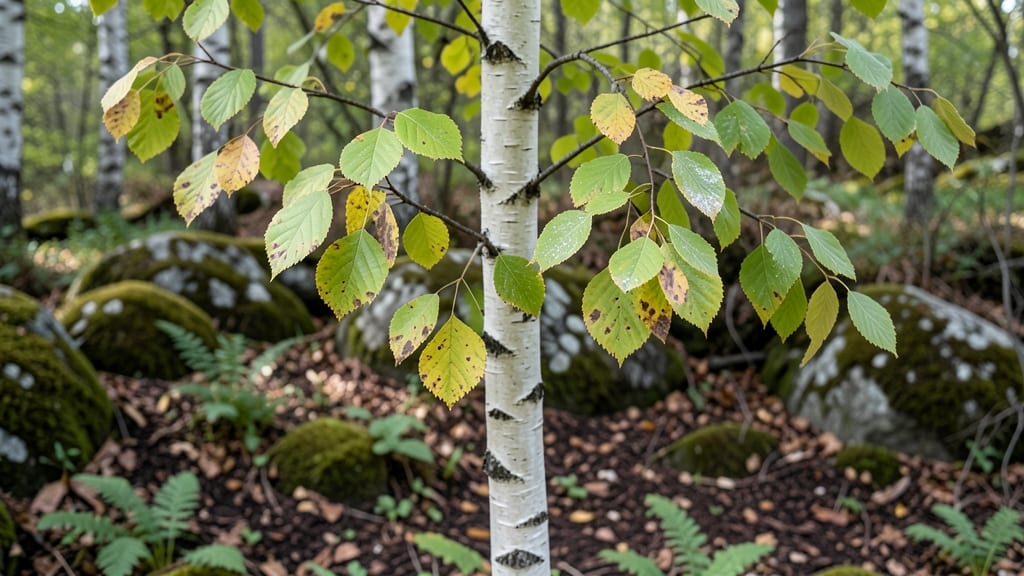
Your birch tree’s leaves are telling you something—those brown spots and wilting edges aren’t just cosmetic. 🌳 Birch leaf spot and canker diseases turn vibrant foliage into a sad, patchy mess, and ignoring them weakens the whole tree over time.
The good news? Most of these issues have clear symptoms and simple fixes once you know what to look for.
Leaf spot shows up as dark, irregular splotches that spread like ink in a glass of water, while cankers appear as sunken, cracked patches on branches. Bronze birch borer damage looks different—tiny holes in bark and sawdust-like frass at the base of the tree.
These aren’t just eyesores; they signal deeper problems like fungal infections or invasive pests that can kill your tree if left unchecked.
You’ll learn to identify each issue by its unique marks, then tackle it with organic sprays, pruning techniques, or soil treatments that actually work. The goal isn’t just to save the leaves—it’s to restore your tree’s health so it bounces back stronger next season.
Let’s get those branches looking lively again.
Whether you’re dealing with a young sapling or a mature birch, the same principles apply: early action prevents permanent damage. We’ll cover when to prune, what sprays to use, and how to protect your tree’s roots—so you can enjoy that signature birch bark and lush canopy for years to come.
Root Causes Of Leaf Trouble
Understanding why birch tree leaves develop diseases like leaf spot or canker starts with peeling back the layers of environmental and biological stressors. These issues rarely happen in isolation—they’re often the result of a perfect storm of conditions.
Below, we break down the key triggers behind birch leaf diseases, so you can spot the warning signs before they spiral out of control.
Fungi are the #1 culprit behind birch leaf diseases, thriving in damp, humid conditions. Here’s how they hijack your tree’s health:
- Overhead Watering or Rainfall 💦 Fungal spores (like Marssonina for leaf spot or Nectria for canker) splash onto leaves or bark, germinating in 24–48 hours if moisture lingers. Birch trees are especially vulnerable because their thin bark and delicate leaves provide easy entry points.
- Poor Air Circulation Dense foliage or nearby structures trap humidity, creating a fungal buffet. Example: A birch tree growing too close to a brick wall or another tree with thick branches is at higher risk for anthracnose (a leaf-spotting disease).
- Weakened Tree Defense Stress from drought, poor soil, or pest damage (like borers or aphids) weakens the tree’s natural antifungal compounds. A stressed birch is like an open invitation for fungi—resistance drops by 30–50% compared to healthy trees.
Insects don’t just munch leaves—they carve entry points for diseases. Here’s how they team up with pathogens:
- Birch Leafminers & Sawflies 🐛🍃 These pests burrow into leaves, creating wounds that fungi exploit. Sawfly larvae, for instance, leave behind silver-gray trails—perfect highways for Marssonina brunnea (a leaf spot fungus).
- Aphids & Scale Insects 🐜 Their sticky honeydew attracts sooty mold, a secondary fungus that blocks sunlight and stresses the tree. Over time, this weakens leaves, making them prime targets for primary pathogens like canker-causing Botryosphaeria.
- Borers & Bark Beetles 🪲 While they attack bark, their tunnels disrupt the tree’s vascular system, reducing nutrient flow to leaves. Weakened leaves? Game over for disease resistance.
Birch trees are hardy, but push them too far, and their leaves become disease magnets. Key triggers include:
- Extended Wet Periods Leaves stay damp for more than 12 hours daily, and fungal spores double in growth rate. Pro tip: If your area gets >3 inches of rain in a week, expect leaf spot outbreaks within 2 weeks.
- Extreme Temperature Swings ❄️☀️ Sudden cold snaps followed by warm, humid days shock the tree’s immune system. Birch trees in USDA Zones 4–6 are especially prone to canker diseases when spring temperatures fluctuate wildly.
- Nutrient Deficiencies Low nitrogen or potassium weakens leaf cell walls, making them 3x more susceptible to fungal penetration. Test your soil! A deficiency in magnesium (symptom: yellowing between leaf veins) is a red flag.
Even well-meaning gardening habits can invite diseases. Common mistakes include:
- Over-Fertilizing with Nitrogen While nitrogen boosts growth, excessive use leads to soft, tender leaves—fungi’s favorite snack. Rule of thumb: Use slow-release fertilizer and avoid applications in late summer/fall.
- Pruning at the Wrong Time ⏰✂️ Cutting birch branches during wet seasons (spring/fall) leaves fresh wounds exposed to spores. Best practice: Prune in late winter/early spring when the tree is dormant.
- Ignoring Mulch Piles or Debris Old leaves, bark, or mulch near the trunk create fungal reservoirs. Action step: Clear a 3-foot radius around the base and sterilize pruners with 70% isopropyl alcohol after each cut.
Combine 2+ of these factors, and your birch tree is in the danger zone: ✅ Damp leaves + poor airflow = Leaf spot ✅ Stressed tree + pest damage = Canker ✅ Hot, humid summer + nutrient deficiency = Anthracnose
💡 Pro Tip: Keep a disease diary—note when symptoms appear, recent weather, and any changes in care. Patterns will reveal the root cause faster than guesswork.
Revive your birch tree leaves
If your birch tree’s leaves are showing signs of disease—whether it’s unsightly spots, oozing cankers, or wilting foliage—don’t panic! With the right approach, you can nurse your tree back to health and prevent future outbreaks.
Below, we’ve mapped out practical solutions tailored to each common birch tree disease, along with proactive tips to keep your tree thriving.
Leaf spot diseases like Birch Leaf Spot or Anthracnose thrive in damp, humid conditions. Here’s how to tackle them:
🔥 Remove Infected Foliage
- Step 1: Collect all fallen or visibly diseased leaves from the ground and prune away heavily spotted branches.
- Step 2: Bag the debris and dispose of it in the trash (not compost)—fungal spores can survive in compost piles.
- Pro Tip: 💡 Wear gloves and avoid shaking branches, as spores can spread through the air.
🍳 Apply Fungicide (When Needed)
- Step 1: Choose a copper-based fungicide or a neem oil solution (1 tbsp neem oil + 1 quart water + a drop of dish soap).
These are organic and effective for early-stage infections. - Step 2: Spray the undersides of leaves (where spores often hide) and the trunk during early morning or evening to avoid burning foliage. - Pro Tip: 🌡️ Apply fungicide before rain to give it time to absorb.
👨🍳 Improve Airflow & Drainage
- Step 1: Thin out dense branches to allow sunlight and air to circulate.
- Step 2: Ensure the tree’s root zone has well-draining soil—amend clay soil with compost or sand.
- Pro Tip: ✨ Avoid overhead watering; use drip irrigation or soaker hoses to keep leaves dry.
Cankers (like Birch Canker or Nectria Canker) create sunken, oozing wounds on bark. Act fast to stop their spread:
🔪 Prune Infected Branches
- Step 1: Cut 6–12 inches below the canker (healthy tissue) using sterilized pruners (wipe with rubbing alcohol between cuts).
- Step 2: Seal the wound with pruning sealant or tree wound paint to prevent further infection.
- Pro Tip: ⏰ Do this in late winter or early spring when the tree is dormant.
🌡️ Disinfect Tools & Wounds
- Step 1: Sterilize pruners with bleach (1 part bleach to 9 parts water) or 70% isopropyl alcohol before and after each cut.
- Step 2: For large cankers, apply a baking soda paste (1 tbsp baking soda + 1 cup water) to the wound to create an alkaline barrier against fungi.
- Pro Tip: 🎯 Avoid over-pruning—remove only dead or severely infected branches to reduce stress on the tree.
🌱 Strengthen Tree Resilience
- Step 1: Fertilize with a balanced, slow-release fertilizer (10-10-10 ratio) in early spring to boost immunity.
- Step 2: Water deeply once a week (1–1.5 inches) during dry spells to encourage strong growth.
- Pro Tip: 💪 Mulch around the base (2–3 inches thick) with wood chips to retain moisture and regulate soil temperature.
Stop diseases before they start with these easy, ongoing habits:
| Prevention Task | How to Do It | Best Time |
|---|---|---|
| Clean Up Debris | Rake and remove fallen leaves/branches. | Fall & Spring |
| Monitor for Pests | Check for birch leafminers or borers. | Spring & Summer |
| Avoid Overwatering | Water at the base, not the leaves. | All Season (Adjust for Rain) |
| Prune Regularly | Remove dead/diseased branches yearly. | Late Winter |
| Space Trees Properly | Plant birches 15–20 feet apart for airflow. | Planting Time |
With consistent care, your birch tree can bounce back from diseases and grow stronger. Act early, stay vigilant, and your tree will reward you with lush, healthy foliage for years to come! 🌳💚
Frequently asked questions
What do brown spots on birch leaves mean?
Those brown spots are likely leaf spot disease, caused by fungal spores thriving in damp conditions. Start by removing infected leaves immediately and improve airflow around the tree. Copper fungicide sprays can help prevent further spread during humid weather.
Can birch trees recover from canker diseases?
Yes, but you must act fast! Prune infected branches 6–12 inches below the canker using sterilized tools, then seal the wound. Apply a baking soda paste to create a protective barrier. Regular pruning in late winter helps prevent future outbreaks.
Why are my birch leaves turning yellow?
Yellowing leaves often signal nutrient deficiency (like magnesium or nitrogen) or fungal issues like anthracnose. Test your soil and fertilize with a balanced 10-10-10 mix in early spring. Improve drainage if your area gets heavy rainfall.
How often should I spray fungicide on my birch tree?
Apply fungicide every 7–14 days during wet seasons (spring/fall) as a preventive measure. For active infections, follow up with a second application 10 days later. Always spray in the early morning or evening to avoid leaf burn.
Is it safe to compost fallen birch leaves with spots?
No—never compost diseased leaves! Fungal spores survive composting and can reinfect your tree. Bag and trash infected foliage immediately to prevent spreading spores to other plants or soil.