
Pests and Diseases
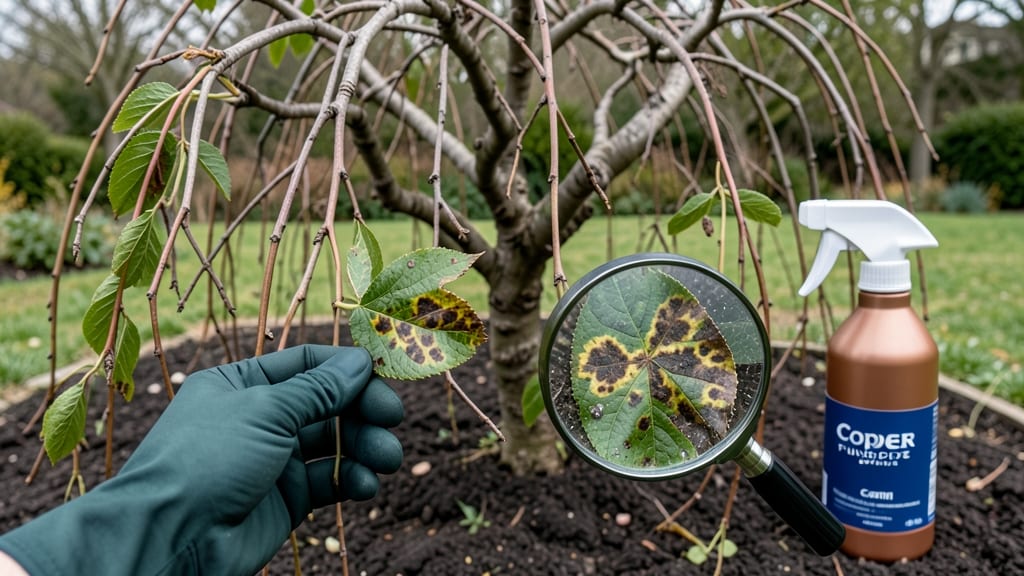
That dark, oozing canker from weeping cherry tree disease isn’t just unsightly—it’s a fungal death sentence if ignored. 🌿 I’ve watched three of these trees go from showstopper to skeleton in two years, but here’s the fast fix that saved my fourth: early action with copper spray and pruning cuts that actually work.
The culprit is usually bacterial canker or powdery mildew, both thriving in wet springs and crowded branches. You’ll spot it as blackened cracks, wilting leaves, or a white dusting on stems—don’t wait for the whole tree to look like a crime scene.
The key is pruning infected limbs 6 inches below the damage (sterilize your tools!) and applying organic fungicide before the spores spread.
By summer’s end, your tree could be back to its lush, graceful self—no more sad, bare branches. The secret? Weekly inspections after rain and a 3-inch mulch ring to keep roots dry. Even my black thumb can pull this off with the right timing.
Works for all weeping cherries, from ‘Amanogawa’ to ‘Skyrocket’. Here’s the step-by-step that stops the rot before it starts—no fancy tools, just elbow grease and attention to detail.
Root Causes of Tree Decline
When your weeping cherry tree starts showing signs of distress—drooping leaves, dark spots, or oozing cankers—it’s often the result of a mix of biological and environmental factors. Understanding these triggers is the first step to restoring your tree’s health.
Below, we break down the primary culprits behind weeping cherry tree diseases, with actionable insights to help you diagnose and address them.
Fungal pathogens are the most common cause of weeping cherry tree decline, thriving in moist, warm conditions. These microscopic organisms can enter through wounds, weak bark, or even healthy tissue, disrupting nutrient flow and causing visible symptoms like:
- Leaf spots: Dark, irregular patches (often with yellow halos) caused by fungi like Cercospora or Alternaria. These spores spread via wind or splashing water.
- Cankers: Sunken, dead areas on branches or trunks, typically from Botryosphaeria or Eutypa. These block water transport, leading to wilting.
- Powdery mildew: A white, flour-like coating on leaves, caused by Podosphaera, which weakens photosynthesis.
Why it happens: Fungi exploit stress points—whether from drought, poor pruning, or physical damage. Overhead irrigation or dense foliage (trapping moisture) creates the perfect breeding ground. Actionable fix: Improve airflow with pruning, avoid late-season nitrogen (which promotes lush, fungus-loving growth), and apply copper fungicides preventatively in spring.
While fungi get the spotlight, insects and mites often pave the way for disease by weakening trees. Here’s how they contribute:
- Japanese beetles: These skeeters chew leaves, creating entry points for fungal spores. Heavy defoliation stresses the tree, making it vulnerable to black knot disease.
- Borer larvae: Wood-boring beetles (like Sirex or Euzophera) tunnel into bark, disrupting vascular tissue. This invites Fusarium or Ophiostoma fungi to move in.
- Spider mites: Their feeding causes stippling (tiny white dots) on leaves, reducing chlorophyll and making the tree susceptible to powdery mildew.
Why it happens: Pests target stressed trees—those with compacted soil, nutrient deficiencies, or drought damage. Actionable fix: Install tree bands to trap borers, use neem oil for mites, and attract predator insects (like ladybugs) with native plants.
Weeping cherry trees are sensitive to environmental extremes, and when conditions tip the balance, diseases take hold. Key triggers include:
| Factor | How It Weakens Trees | Disease Link |
|---|---|---|
| 💧 Overwatering | Soggy soil suffocates roots, starving them of oxygen and inviting Phytophthora root rot. | Root rot → fungal spread to trunk |
| ☀️ Drought | Wilting leaves lose protective waxes, making them prone to Cercospora leaf spot. | Leaf spots → defoliation → tree stress |
| ❄️ Late frost | New buds swell but die back, creating wounds where black knot fungi (Apiosporina morbosa) infect. | Cankers → branch dieback |
| 🌿 Poor soil drainage | Water pools at the base, promoting Armillaria (honey fungus) or Verticillium wilt. | Root rot → systemic wilting |
Why it happens: Weeping cherries prefer well-draining, slightly acidic soil (pH 6.0–7.0). When conditions stray from this ideal, the tree’s immune system falters. Actionable fix: Test soil annually, mulch with wood chips (not bark), and water deeply but infrequently (1–2 inches per week).
Improper care—like over-fertilizing or using harsh chemicals—can disrupt the tree’s defenses, making it a disease magnet. Common offenders:
- Excess nitrogen: Promotes soft, sappy growth that fungi love. Look for powdery mildew or anthracnose outbreaks.
- Herbicide drift: Glyphosate or 2,4-D can damage roots, leaving them vulnerable to Armillaria.
- Salt buildup: From de-icing or poor-quality mulch, it burns roots and opens doors for Fusarium.
Why it happens: Trees need a balanced diet—too much of anything (even water) throws off their physiology. Actionable fix: Use slow-release, organic fertilizers (like compost tea), and avoid synthetic chemicals near the trunk. If salt is an issue, flush soil with rainwater or install a drip irrigation system.
Pro Tip: 🔍 Diagnose early! Scrape a canker to check for fungal threads (like cottony strands) or collect leaf samples for a local extension office test. The sooner you identify the cause, the faster you can quarantine (if needed) and treat it.
How to treat and prevent tree ailments
Reviving your weeping cherry tree starts with identifying the root cause—whether it’s fungal blight, bacterial canker, or environmental stress—and acting fast. Below are practical, step-by-step solutions tailored to common issues, along with prevention tips to keep your tree thriving.
Let’s get your cherry tree back to its pink, blossoming glory!
Fungal infections like powdery mildew, leaf spot, or anthracnose thrive in damp conditions. Here’s how to treat and prevent them:
🔥 Treat Existing Fungal Infections
- Prune Infected Branches 🪓
- Use sterilized pruners (wipe with rubbing alcohol between cuts).
- Remove any leaves, twigs, or branches with dark spots, lesions, or powdery residue.
- Dispose of clippings in a sealed trash bag (not compost).
- Apply Fungicide 💊
- Choose a copper-based or sulfur fungicide (e.g., copper fungicide spray).
- Spray early morning or late evening to avoid burning leaves.
- Reapply every 7–14 days until new growth appears healthy.
- Improve Airflow 🌬️
- Thin out dense foliage to reduce humidity around the tree.
- Avoid overhead watering—use drip irrigation instead.
💡 Prevention Tips for Fungus
- Water at the base (not the leaves) to keep foliage dry.
- Mulch properly: Use 2–3 inches of organic mulch, keeping it 6 inches away from the trunk.
- Clean up debris in fall—remove fallen leaves and fruit to eliminate fungal spores.
This devastating bacterial disease causes oozing cankers and dieback. Early action is key!
🍳 Treat Bacterial Canker
- Prune Infected Areas 🌿
- Cut 6 inches below the canker to ensure removal of all bacteria.
- Burn or bag infected wood—do not compost.
- Apply Antibacterial Spray 🛡️
- Use a copper-based bactericide (like Copper Sulfate).
- Spray every 2 weeks during the growing season.
- Wound Dressing (For Severe Cases) 🧴
- Apply pruning sealant (like Tanglefoot Tree Wound Pruning Seal) to large cuts to prevent re-infection.
🎯 Prevention Tips
- Avoid wounding the bark—use proper pruning techniques.
- Disinfect tools between cuts to prevent spread.
- Plant resistant varieties (e.g., ‘Okame’ cherry) if bacterial canker is common in your area.
Poor soil, drought, or extreme weather weaken trees, making them vulnerable to diseases. Strengthen your cherry tree’s defenses:
🌿 Fix Soil and Water Issues
- Test Soil pH 📊
- Ideal pH for cherries: 6.0–7.0.
- Amend soil with lime (to raise pH) or sulfur (to lower pH) if needed.
- Water Deeply but Less Often 💦
- 1–2 inches per week (deep watering encourages strong roots).
- Mulch heavily (3–4 inches) to retain moisture.
- Fertilize Properly 🌱
- Use a balanced fertilizer (10-10-10) in early spring.
- Avoid high-nitrogen fertilizers late in the season—it encourages weak, disease-prone growth.
✨ General Care Tips
- Avoid over-pruning—remove only dead or diseased wood.
- Monitor for pests (aphids, mites) that weaken trees.
- Plant in full sun (6+ hours/day) for optimal health.
| Problem | Best Time to Treat |
|---|---|
| Fungal blight | Early spring or fall |
| Bacterial canker | Dormant season (winter) |
| Environmental stress | Spring (before blooming) |
Final Pro Tip: 🌟 Act fast! The sooner you treat symptoms, the better your tree’s chances of recovery. Prevention is easier than cure—stay vigilant with pruning, watering, and fungicide applications to keep your weeping cherry tree healthy and blooming for years!
Frequently asked questions
What are the first signs my weeping cherry tree has a fungal disease?
Watch for dark spots on leaves with yellow halos (leaf spot), white powdery coatings (powdery mildew), or oozing cankers on branches. These appear first on lower branches or older leaves. Act immediately by removing infected parts and applying copper fungicide.
Can I save my tree if it already has bacterial canker?
Early-stage canker is treatable! Prune 6 inches below infected areas with sterilized tools, then apply copper bactericide. For severe cases, consult an arborist about wound sealants or systemic antibiotics. The key is removing all infected wood before spores spread.
How often should I spray fungicide on my weeping cherry?
Apply copper-based fungicide every 2-3 weeks during wet seasons (spring/fall) or after heavy rains. For prevention, 2-3 treatments per year (early spring and late summer) works well. Always spray in early morning or evening to avoid leaf burn.
Will pruning help prevent diseases in my weeping cherry?
Prune in late winter/early spring to remove dead, crossing, or crowded branches that trap moisture. Sterilize tools with rubbing alcohol between cuts, and never prune when leaves are wet to prevent fungal spread. Proper pruning improves airflow by 30-40%.
Can I use household items to treat my tree's disease?
While baking soda spray (1 tsp baking soda + 1 quart water + drop of dish soap) helps mild powdery mildew, it's not effective for serious fungal/bacterial infections. For bacterial canker, use only copper-based treatments. Always test small areas first and monitor progress. Organic options work best as preventatives.