
Pruning
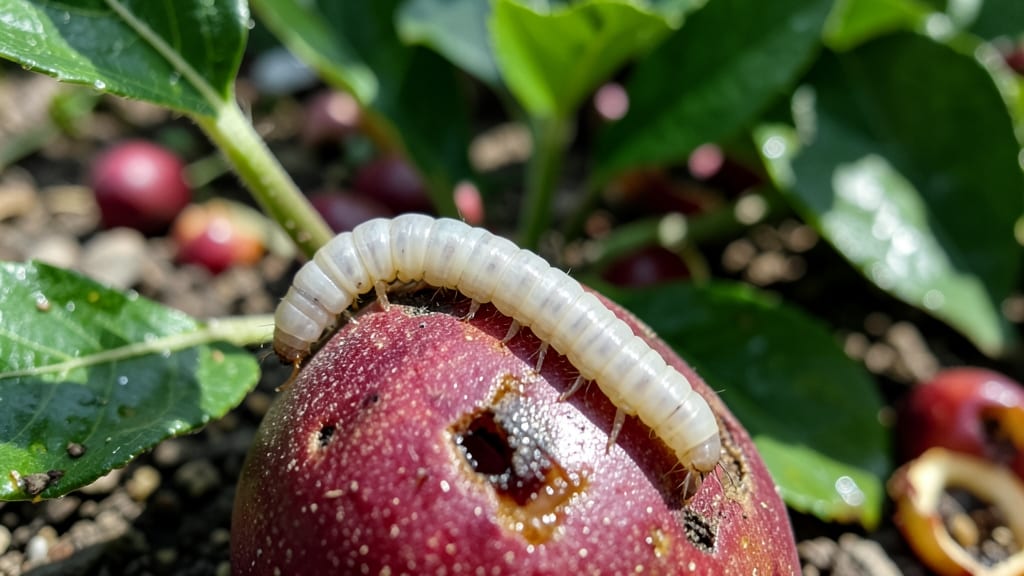
Cherry tree maggots turn your sweet harvest into a battle with tiny, relentless invaders. 🌿 I’ve battled these pests in my backyard and learned the fastest ways to evict them before they ruin your fruit—no harsh chemicals needed. The first sign? Curled leaves and tiny white larvae burrowing into stems.
These maggots thrive in wet, compacted soil, so fixing drainage and pruning infected branches early can stop their spread. Neem oil sprays work within 48 hours if applied right after blooming. You’ll see fewer maggots within 2 weeks if you combine pruning, soil aeration, and natural sprays.
The key is acting before the larvae mature—once they’re inside the fruit, it’s too late. Works for both sour and sweet cherries, and organic gardeners will love these methods. Let’s get those trees healthy again!
Root Causes Of Fruit Fly Infestations
Understanding why cherry trees attract maggots starts with the life cycle of these tiny but destructive pests. The primary culprit is the cherry fruit fly (Rhagoletis indifferens), a species that thrives in the warm, moist environment of ripening fruit.
Here’s why these pests target your cherries—and how their behavior creates a cycle of infestation.
Mature, soft cherries are a magnet for adult fruit flies. These insects use volatile organic compounds (VOCs) emitted by ripe fruit—like ethanol and esters—as chemical signals to locate their next meal (and breeding ground).
Once a cherry softens, female flies lay 100–200 eggs directly into the flesh, where larvae will hatch in 3–5 days.
Why it matters:
- Delayed harvesting leaves fruit vulnerable longer.
- Rain or high humidity speeds up ripening, accelerating fly activity.
- Wild cherries or nearby orchards act as "fly reservoirs," increasing local populations.
Actionable insight: 💡 Pick cherries as soon as they ripen—even if some are slightly underripe. Overripe fruit on the tree is an open invitation to flies.
Stressed cherry trees—whether from drought, nutrient deficiencies, or disease—produce fruit with thinner skins and higher sugar content. These conditions make fruit more appealing to flies and easier for larvae to penetrate.
Key stress factors:
| Issue | Effect on Fruit | Fly Attraction Risk |
|---|---|---|
| Nitrogen deficiency | Thin skin, poor color development | ⚠️ High (soft targets) |
| Water stress | Shriveled, uneven ripening | ⚠️ High (concentrated sugars) |
| Fungal infections (e.g., brown rot) | Rotted or cracked fruit | ⚠️ Critical (flies love decay) |
Actionable insight: 🌡️ Monitor soil moisture and fertilize with balanced NPK (e.g., 10-10-10) in early spring. Healthy trees produce fruit flies resist due to tougher skins.
Cherry fruit flies don’t just target cultivated trees—they also infest wild cherries, plums, and apricots. If your orchard is near wooded areas, abandoned farms, or even backyard plum bushes, these "fly hotspots" can re-infest your trees year after year.
How it spreads:
- Adult flies migrate from wild hosts to domestic trees in late spring/early summer.
- Larvae pupate in soil and emerge as adults the following season, creating a 2-year infestation cycle.
Actionable insight: 🔥 Scout nearby wild trees in early summer. Remove fallen fruit or prune heavily infested branches to disrupt their life cycle.
Cherry fruit flies are cold-sensitive but thrive in temperatures above 70°F (21°C). Warmer climates or early heatwaves shorten their life cycle, allowing 3–4 generations per season instead of just one.
Breeding timeline:
- Eggs hatch in 3–5 days (faster in heat).
- Larvae mature in 10–14 days.
- Pupae overwinter in soil, emerging as adults in late spring.
Actionable insight: ⏰ Set up yellow sticky traps in late May to monitor fly activity. If you see flies before June, take preventive action (like protein bait sprays to disrupt mating).
Once maggots infest a cherry, they bacteria and fungi (like Botrytis cinerea) to break down fruit tissue, making it easier for them to feed.
This creates a feedback loop:
- Flies lay eggs → larvae hatch → fruit rots.
- Rotting fruit attracts more flies, worsening the infestation.
Why it’s dangerous:
- Infested fruit drops prematurely, spreading larvae to the soil.
- Fallen fruit becomes a breeding ground for next year’s flies.
Actionable insight: 👨🍳 Remove all fallen fruit from under trees immediately. Composting infested fruit can spread pupae—burn or trash it instead.
These causes don’t act alone—they reinforce each other. A single overripe cherry can trigger a chain reaction: flies → larvae → rot → more flies. Breaking the cycle requires early intervention on all fronts: tree health, sanitation, and monitoring.
The good news? With targeted strategies, you can starve out infestations before they start.
Quick Fixes for Wormy Cherry Trees
Now that you know why those pesky maggots are invading your cherry tree, let’s tackle the problem head-on with effective, natural solutions tailored to the root cause.
Whether your tree is already infested or you want to prevent future attacks, these steps will help you reclaim a healthy, fruit-filled harvest. 🌿🐛→🍒
If you spot small holes, sawdust-like frass, or wriggling larvae in your cherries or fruit drop, act fast! Early intervention prevents the maggots from spreading deeper into the tree.
What to do:
- 🔍 Inspect fruit regularly (every 3–5 days during peak season). Remove any infested cherries immediately—don’t let them fall to the ground, where larvae can pupate and return next season.
- 🧹 Drop cloth method: Lay a tarp or thick fabric under the tree to catch fallen fruit. Shake the tree gently to dislodge infested cherries, then dispose of them in a sealed bag (not your compost!).
- 💦 Water blast: Use a strong hose spray to dislodge eggs and young larvae from branches. Focus on clusters where fruit is forming.
Chemical pesticides can harm beneficial insects and leave residues on your fruit. Instead, use these plant-based or microbial solutions to smother maggots without harsh chemicals.
🥘 Spinosad Spray (Best for Active Infestations)
Why it works: Derived from soil bacteria, spinosad disrupts the nervous system of maggots and larvae—safe for humans once dried (follow label instructions!).
- 🛒 Where to buy: Garden centers, online (e.g., Captain Jack’s, Bonide).
- 🌿 How to apply:
- Mix according to package directions (typically 1 tsp per gallon of water).
- Spray early morning or late evening to avoid harming bees.
- Cover the top and bottom of leaves, fruit clusters, and bark crevices where eggs hide.
- Reapply every 7–10 days during peak maggot season (late spring to early summer).
- ⏰ Timing: Start spraying before you see signs of infestation (early June in most climates).
🍋 Neem Oil (Preventative & Egg-Smothering)
Why it works: Neem oil disrupts maggot feeding and reproduction while being low-toxicity. It’s also a fungicide, so it’s a two-for-one solution!
- 🛒 Recipe: Mix 1 tbsp neem oil + 1 tsp mild soap (as an emulsifier) per quart of water.
- 🌿 Application tips:
- Spray every 5–7 days during blooming and fruit set.
- Avoid spraying directly on bees—apply when they’re less active (e.g., late afternoon).
- Reapply after rain.
- 💡 Pro tip: For extra stickiness, add 1 tsp vegetable oil to help the spray cling to leaves.
🐝 Beneficial Nematodes (Soil Treatment)
Why it works: Microscopic nematodes (Heterorhabditis bacteriophora) infect and kill maggot larvae in the soil, breaking their life cycle.
- 🛒 Where to buy: Online (e.g., Arbico Organics, Garden Safe).
- 🌱 How to apply:
- Water the tree thoroughly the day before application.
- Mix nematodes with water (follow package rates) and apply to soil under the tree and around the drip line.
- Apply early morning or late evening to avoid UV damage.
- Reapply every 4–6 weeks during maggot season.
- 🌡️ Best for: Warm climates (nematodes thrive in 60–85°F soil).
Sometimes, the best defense is keeping maggots out in the first place. Adjust your tree’s environment and maintenance to make it less inviting.
🍎 Prune for Better Airflow
Why it works: Maggots thrive in dense, humid conditions. Pruning improves airflow, reducing moisture where eggs and larvae love to hide.
- ✂️ When to prune: Late winter or early spring (before blooming). Remove:
- Dead or crossing branches.
- Suckers at the base of the tree.
- Overcrowded fruit clusters (thin to 6–8 inches apart).
- 🌿 Post-pruning tip: Apply a 1-inch layer of mulch (wood chips or straw) around the base to deter adult flies from laying eggs.
🕷️ Encourage Natural Predators
Why it works: Birds, parasitic wasps, and ground beetles eat maggots and eggs. Create a predator-friendly habitat!
- 🐦 Birdhouses & feeders: Install near the tree to attract robins, starlings, and chickadees—they love munching on cherry maggots.
- 🌼 Plant companion flowers: Marigolds, dill, and fennel attract beneficial wasps that prey on maggots.
- 🍄 Avoid broad-spectrum pesticides: They kill predator insects too!
🧽 Sanitation: The #1 Prevention Tool
Why it works: 90% of maggot problems start with last year’s fallen fruit. Break the cycle with these steps:
- 🗑️ Clean up thoroughly: Rake up all dropped cherries, leaves, and debris from under the tree throughout the season. Bag and trash them—do not compost.
- 🔪 Remove mummified fruit: After harvest, inspect branches for dried, shriveled cherries (a maggot buffet!). Prune them off.
- 🌱 Rotate planting spots: If possible, avoid planting new cherry trees in the same location for 3–4 years.
Stay one step ahead with this month-by-month guide to maggot control:
| Month | Task | Action |
|---|---|---|
| Late Winter | Prune & Sanitize | Remove dead wood, thin branches, and rake up old debris. |
| Early Spring (Before Blooms) | Apply Neem Oil | Spray to prevent egg-laying on buds. |
| June–July (Peak Maggot Season) | Weekly Inspections + Spinosad | Remove infested fruit daily; spray every 7–10 days. |
| August–September | Nematode Treatment | Apply to soil to target pupating larvae. |
Fall
Frequently asked questions
1
What do cherry tree maggots look like, and how can I tell if my tree is infested?Cherry maggots are tiny, white, legless larvae about 1/4-inch long that wriggle when disturbed. Look for small holes in cherries or sawdust-like frass (larval droppings) near fruit clusters. Curled leaves or premature fruit drop are also red flags. Check for these signs during late spring to early summer when maggots are most active.
2
Can I still eat cherries from a tree with maggots?Only if you remove the maggots first! Cut open any infested cherries and scoop out the larvae before eating. However, heavily infested trees may have secondary fungal infections (like brown rot) that make fruit unsafe. When in doubt, discard the entire batch to avoid spreading pupae in your compost.
3
How long does it take for neem oil to work on cherry maggots?Neem oil starts disrupting maggot activity within 24–48 hours of application, but full effectiveness takes 7–10 days of consistent spraying. For best results, apply it every 5–7 days during blooming and fruit set. Combine with physical removal of infested fruit for faster results.
4
Will birdhouses actually help control cherry maggots?Birds like robins and starlings love eating cherry maggots—they can reduce maggot populations by up to 70% if properly attracted. Install birdhouses near your tree and add feeders with high-protein foods (like mealworms) to encourage them to stick around.
5
Is it too late to treat my cherry tree if maggots are already in the fruit?Not completely! While you can't save the current crop, you can prevent next year's infestation by removing all infested fruit immediately (don't compost!) and applying beneficial nematodes to the soil. Prune the tree in late winter and start neem oil sprays before blooming to break the maggot cycle. |