
How To
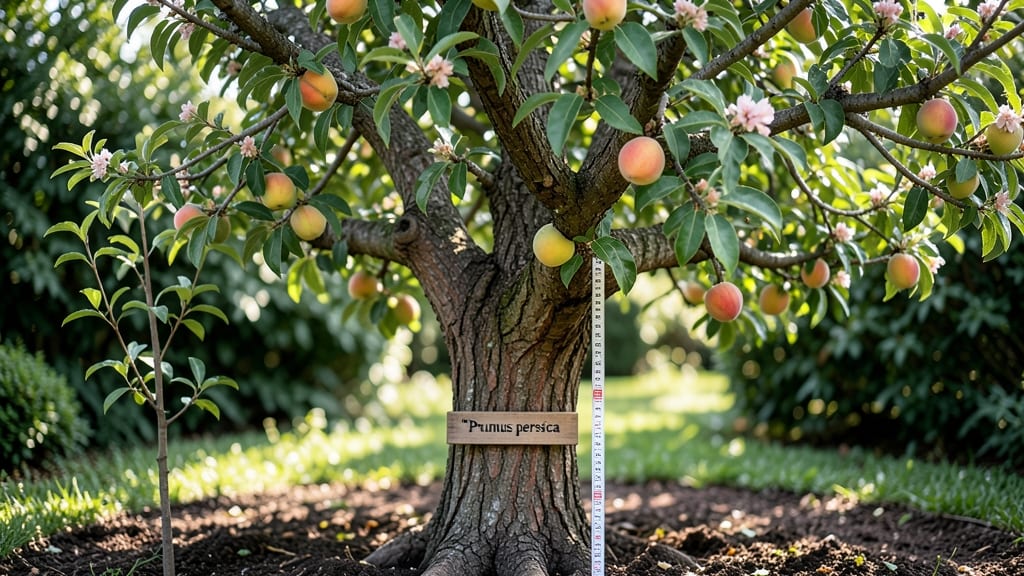
A peach tree can grow how tall can a peach tree grow anywhere from 8 feet to towering 30 feet, depending on the variety and care you provide.
Picture this: a standard peach tree reaching the second story of your home, its branches heavy with fruit, while a dwarf variety stays cozy at waist height. The difference isn’t just about space—it’s about how you’ll prune, harvest, and even whether you can grow one in a container.
But here’s the key: choosing the right size for your garden makes all the difference in your success.
Dwarf peach trees are perfect for small backyards or urban spaces, while standard varieties thrive in rural orchards. Factors like rootstock, pruning, and climate play a huge role in how tall your tree will grow.
Below, I’ll break down the height differences, growth factors, and how to pick the best size for your garden setup.
Whether you’re dreaming of a homegrown peach orchard or just want a few trees for fresh fruit, knowing the height potential helps you plan spacing, sunlight, and even your pruning strategy. Let’s get into the details so you can grow the perfect peach tree for your space.

Peach tree height variations: dwarf, semi-dwarf, and standard sizes compared
Choosing the right peach tree size starts with understanding rootstock types, which control height and growth habits. Dwarf varieties stay between 3-8 feet, while standard trees can reach 20-30 feet—that’s taller than most homes!
The rootstock you select determines whether your peach tree will be a compact backyard gem or a towering orchard staple.
Most gardeners focus on mature height, but early growth matters too. A dwarf peach tree might only hit 2-4 feet in its first year, while a standard tree can grow 6-10 feet by year two.
This rapid early growth means standard trees need more space from day one, while dwarfs give you flexibility to plant closer to fences or patios.
| Type | Rootstock Examples | Mature Height (ft) | Time to First Fruit (yrs) | Best For |
|---|---|---|---|---|
| Dwarf | Lovell, Nemaguard, Redhaven | 3-8 ft | 2-3 yrs | Containers, small yards, urban gardens |
| Semi-Dwarf | Halford, Cadaman | 12-16 ft | 3-4 yrs | Backyards, larger containers, mixed orchards |
| Standard | Seedling, Nemared | 20-30 ft | 5-7 yrs | Orchards, rural properties, long-term investments |
The rootstock isn’t just about height—it affects fruit production speed too. Dwarf trees often bear fruit in 2-3 years, while standard trees may take 5-7 years to produce meaningful harvests.
If you’re impatient for peaches, a dwarf variety like Lovell or Redhaven on dwarfing rootstock will reward you faster with smaller trees and earlier yields.
Space planning is critical when choosing a peach tree size. A standard tree needs 20-25 feet of clearance in all directions—think of it as a small treehouse! Semi-dwarf trees fit better in 12-16 foot spaces, while dwarf varieties thrive in 6-8 foot radii.
Measure your yard before buying—you’ll thank yourself later when pruning isn’t a jungle gym challenge.
Climate also plays a role in height management. In warmer zones (8-10), peach trees grow faster and may reach their mature height quicker. In cooler zones (5-7), growth slows, and trees might stay slightly shorter.
Always check your USDA zone when selecting rootstock—some dwarf varieties struggle in cold climates.
Pruning can influence height too, but only up to a point. You can top standard trees to keep them under control, but they’ll eventually revert to their natural size. Dwarf trees need minimal pruning—just remove dead wood and shape for airflow.
The key is choosing the right rootstock from the start to match your space and goals.
For container growing, stick to dwarf varieties in 15-20 gallon pots. Semi-dwarfs can work in large containers but need winter protection. Standard trees? Forget it—unless you’re planting a 50+ gallon barrel and have a crane for harvest day!
Always use well-draining soil and elevate containers to prevent root rot.
Remember: bigger isn’t always better. A dwarf peach tree in a 5-gallon container on your patio can produce just as many fruits as a standard tree in your neighbor’s orchard—if given the right care.
The trade-off? Less shade and a shorter ladder for harvest time. Weigh your priorities: space, harvest ease, and long-term maintenance.
🌳 Whether you dream of a backyard orchard or a patio peach tree, the right height starts with rootstock. Measure twice, plant once—and enjoy those juicy peaches without the ladder!
Factors that influence peach tree height beyond rootstock
Once you’ve chosen your peach tree’s rootstock, other factors still dramatically shape its height. While rootstock sets the foundation, pruning techniques, climate conditions, and even soil quality can push a tree toward the sky or keep it manageable.
For example, the 'Redhaven' variety on standard rootstock might reach 25 feet, but with aggressive pruning, you could cap it at 15 feet. Understanding these variables helps you tailor your peach tree’s growth to your space and goals.
Your local climate zone plays a surprising role in height. Trees in warmer climates (USDA Zones 7-9) often grow faster and taller due to longer growing seasons, while those in cooler zones (Zones 5-6) may stay shorter.
For instance, a 'Elberta' peach in Georgia might top 20 feet, but the same variety in Michigan could max out at 16 feet due to shorter summers. Even sunlight exposure matters—trees in full sun grow 20-30% taller than those with partial shade.
Soil quality directly impacts vertical growth. Nutrient-rich, well-draining soil fuels rapid height increases, while poor soil slows growth and can stunt a tree’s potential. I once had a 'Bonanza' dwarf peach that shot up 3 feet in a single season after amending its soil with compost and organic matter.
Conversely, a tree in clay-heavy soil might struggle to exceed 12 feet even with ideal pruning. Testing your soil’s pH (ideal: 6.0-7.0) and adding organic compost can make a 5-foot difference in mature height.
Key Factors That Shape Peach Tree Height
- 🌡️ Climate Zone: Warmer zones (7-9) = faster growth; cooler zones (5-6) = slower, shorter growth
- ✂️ Pruning Style: Open-center pruning = taller tree; central leader pruning = controlled height
- 🌱 Variety Selection: 'Redhaven' = 20-25 ft; 'Bonanza' = 8-12 ft (dwarf)
- 💧 Watering Practices: Overwatering = leggy growth; deep watering = compact growth
- 🌿 Soil Quality: Poor soil = stunted growth; rich soil = rapid height increase
Your pruning approach is one of the most powerful tools to control height. If you want a taller tree for easier harvesting, use an open-center pruning method, which encourages lateral branches and vertical growth.
For a shorter, bushier tree, opt for central leader pruning, where you train a single trunk and prune side branches aggressively. I’ve seen 'Flavor Grenade' trees kept under 10 feet with this method, while unpruned trees of the same variety reached 15 feet in just 5 years.
Not all peach varieties grow at the same rate. Fast-growing cultivars like 'Redhaven' and 'Suncrest' can add 2-3 feet per year in ideal conditions, while slower varieties like 'Elberta' or 'Relenta' (a late-blooming type) grow 1-2 feet per year.
Even within the same variety, pollination success affects growth—well-pollinated trees allocate more energy to height, while poorly pollinated ones may stay shorter but produce fewer fruits. Hand-pollinating with a paintbrush can help maintain balanced growth.
To naturally control excessive growth, focus on three key strategies: root pruning (trimming roots to limit nutrient uptake), topping (cutting the main trunk to redirect energy), and mulching (using thick organic mulch to slow root expansion).
I’ve used these techniques to keep a 'Contender' peach tree—normally 18 feet tall—under 12 feet without sacrificing fruit production. Just remember: never prune more than 25% of the tree’s canopy in a single season to avoid stress.