
How To
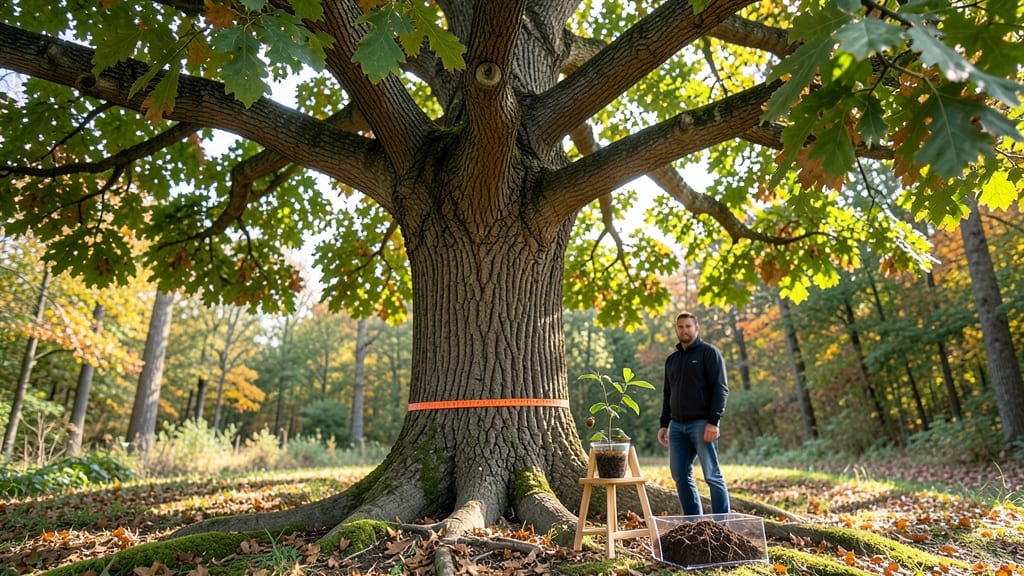
How tall does an oak tree grow? These towering giants can dwarf even the tallest buildings—some varieties stretch over 100 feet at maturity, while others stay compact enough for suburban yards.
Wondering how tall your oak tree could grow—or whether it’ll outpace your neighbor’s skyscraper? Oak trees aren’t just majestic; they’re architectural giants with heights ranging from modest shrubs to towering forest monarchs.
But not all oaks reach the same heights, and their growth rates depend on species, climate, and care. For example, a white oak might top out at 80 feet in ideal conditions, while a bur oak could hit 90 feet with proper spacing and sunlight.
Here’s how to predict your oak’s future height, compare the fastest and slowest growers, and plan your landscape with precision—so you can enjoy its shade for decades to come.

Oak tree height by species: from dwarf varieties to towering giants
Oak trees are nature’s skyscrapers, with some species reaching heights that dwarf even the tallest buildings. But not all oaks grow equally—some stay compact enough for urban yards, while others demand acres of space.
If you’re planning your landscape, knowing the mature height and growth rate of each species is critical. Let’s explore the height ranges of 12+ oak varieties, from the bur oak’s 90-foot giants to the dwarf varieties that stay under 20 feet.
First, here’s the big question: How tall do oak trees grow? The answer depends entirely on the species. Fast-growing oaks like pin oaks can add 1–2 feet per year, while slower growers like white oaks might only gain 12–24 inches annually.
Your oak’s ultimate height also hinges on soil quality, sunlight exposure, and climate conditions. Let’s dive into the specifics so you can choose the perfect oak for your space.
🌳 Comparison Table: Oak Tree Heights by Species
| Species | Mature Height (ft) | Growth Rate (ft/year) | Best For |
|---|---|---|---|
| White Oak | 75–100 ft | 0.5–1 ft | Large estates, parks |
| Red Oak | 60–90 ft | 0.75–1.5 ft | Woodlands, suburban yards |
| Bur Oak | 70–90 ft | 0.5–1 ft | Drought-resistant areas |
| Live Oak | 60–80 ft | 0.3–0.8 ft | Southern climates, shade trees |
| Pin Oak | 50–70 ft | 1–2 ft | Urban landscapes, fast growth |
| Scarlet Oak | 50–70 ft | 0.75–1.5 ft | Wildlife habitats, mixed forests |
| Swamp White Oak | 60–80 ft | 0.5–1 ft | Wetland areas, floodplains |
| Chinkapin Oak | 40–60 ft | 0.5–1 ft | Small yards, woodland gardens |
| Dwarf varieties (e.g., 'Burgundy Spire') | 15–20 ft | 0.3–0.5 ft | Urban gardens, containers |
| Willow Oak | 40–60 ft | 1–1.5 ft | Fast-growing shade trees |
| Black Oak | 50–70 ft | 0.75–1.5 ft | Open woodlands, wildlife |
| Overcup Oak | 50–70 ft | 0.5–1 ft | Swamps, wet soils |
If you’re eyeing a white oak or red oak, be prepared for a 75–100-foot giant that will dominate your landscape. These oaks take decades to reach maturity, but their slow-and-steady growth makes them ideal for long-term investments.
For faster results, consider a pin oak or willow oak, which can add 1–2 feet annually and still reach 50–70 feet at full height.
For smaller spaces, dwarf varieties like 'B
Factors that determine oak tree height: soil, climate, and care
Oak trees grow to dramatically different heights based on their environment, and understanding these factors helps you predict your tree’s future size. The soil type plays a starring role—well-draining loam fuels rapid growth, while heavy clay can stunt a tree by 30-50%.
For example, a white oak in sandy soil might reach 80 feet, but the same species in compacted clay could max out at 50 feet.
Climate zones also dictate height potential. Southern live oaks thrive in USDA zones 8-11 and often hit 60-80 feet, while Northern red oaks in zones 3-6 may only reach 50-70 feet due to shorter growing seasons.
Even within the same region, microclimates—like a sunny hillside versus a shaded valley—can alter growth by 10-20 feet.
Sunlight exposure is another game-changer. Oak trees need full sun (6+ hours daily) to reach their genetic height potential. In partial shade, growth slows dramatically—sometimes by 50% or more.
For instance, a pin oak in full sun might grow 1-2 feet per year, but in dappled shade, it could crawl along at just 6 inches annually.
⚠️ Warning: Over-Pruning Stunts Growth Forever
Many gardeners make the costly mistake of aggressive pruning on young oaks to control height. Removing more than 25% of the canopy in one session can permanently slow growth by triggering stress responses. Never prune during drought or extreme heat, and avoid "topping" (cutting the main stem)—this creates weak, unstable branches and reduces height by up to 40% over 10 years.
Pruning techniques can either accelerate or sabotage height goals. Structural pruning in early years—removing competing branches and crossing limbsmaximum potential height. However, improper pruning (like cutting too close to the trunk) can leave permanent scars that never heal, limiting future growth.
Watering habits also shape height. Young oaks need deep, infrequent watering (every 7-14 days) to develop deep root systems. Shallow watering encourages weak, shallow roots, which can reduce mature height by 15-30 feet.
In drought-prone areas, mulching with wood chips retains moisture and boosts growth by up to 20%.
Finally, genetic variability within species matters. Even two white oaks planted side by side can differ by 20 feet at maturity due to seed source and germination conditions. Always choose nursery-grown saplings with clear height projections on their tags to avoid surprises.