
Pruning
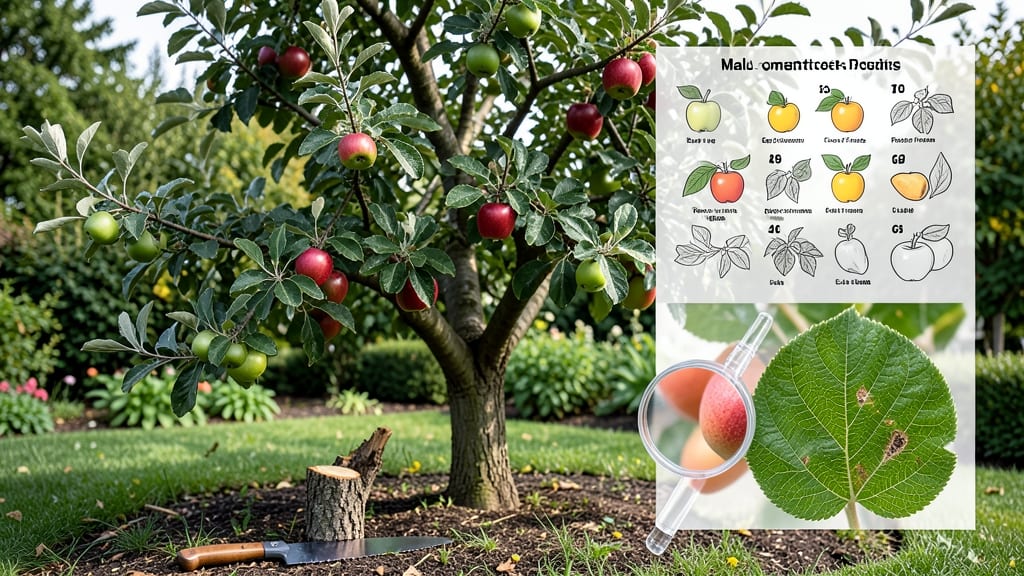
Identifying apple tree varieties starts with a single leaf—its shape, size, and texture hold the clues. 🍏 I’ve spent years studying apple trees, and the easiest way to begin is by comparing leaves to known varieties like Granny Smith or Fuji.
A simple leaf rubbing on paper can reveal veins and edges that distinguish one type from another, especially when paired with fruit shape and bark patterns.
Timing matters too—observe in late spring when leaves are fully formed but before pests damage them. Bark texture (smooth vs. rough) and blossom clusters (single vs. grouped) narrow down possibilities.
I keep a small notebook with sketches of leaves I find, cross-referencing them against local nursery guides or apps like PictureThis for instant matches.
You’ll spot subtle differences that make all the difference: a deeply lobed leaf might be a Honeycrisp, while a narrow, glossy one could be a Fuji. Bark on mature trees often tells the story too—some varieties develop distinctive ridges or lenticels (pores) as they age.
A quick photo comparison with trusted online resources confirms your guesses.
When in doubt, local nurseries or agricultural extensions offer free verification services. Bring a sample leaf or fruit, and they’ll often share growing tips tailored to your region. This method works for backyard trees, orchards, or even wild apples—just start with what you’ve got and let the details guide you.
📚 In This Guide
- What you need
- Instructions
- Tips and common mistakes
- Wrapping up and next steps
What you need
- ● Digital camera or smartphone – For capturing high-quality images of leaves, fruit, bark, and flowers (ensure at least 12 MP for clarity).
- ● Ruler or measuring tape – To measure leaf length, width, and fruit diameter (preferably in inches or centimeters).
- ● Field guide or apple variety database – A printed guide (e.g., National Fruit Collection) or a reliable app like Apple ID or PictureThis.
- ● Notebook & pen – To jot down observations like leaf shape, bark texture, and fruit characteristics.
- ● Hand lens or magnifying glass – For inspecting fine details like leaf veins, fruit stem hairs, or bark cracks (3x–10x magnification works well).
- ○ Pruning shears (optional but helpful) – If you need to collect a small leaf or fruit sample for closer inspection (sterilize blades with rubbing alcohol!).
- ● Apple variety identification apps – Try PlantNet or LeafSnap for AI-assisted matching.
- ● Gloves – To protect your hands from thorns or sap (nitrile gloves work great).
- ● Reference samples – If possible, compare your tree to known varieties from local orchards or nurseries.
- ● Sunny day & clear skies – Ideal lighting for photographing leaves and fruit (avoid midday glare!).
Step-by-Step guide to identifying apple tree varieties
Here's how I decode apple trees using science-backed clues—no prior experience needed.
🌿 Step 1: Examine Leaf Shape and Size
Apple tree leaves vary dramatically between varieties, and this is your first major clue. Look for the overall shape—some are oval with rounded tips (like Granny Smith), while others have elongated, almost elliptical leaves (common in Fuji varieties). Measure the average leaf length—most culinary apples fall between 2-5 inches long, but crabapples often have smaller, 1-2 inch leaves.
Pay attention to the leaf's edge—some varieties have smooth margins (Honeycrisp), while others like McIntosh develop serrated edges. Hold the leaf up to a bright light to spot the vein pattern: pinnate veins (branching from the central stem) are standard, but the density and angle can differ. I always compare my findings to a field guide or digital database like the Cornell University Apple Identification Tool—it's saved me countless guesses.
🌱 Step 2: Study Bark Texture and Branch Patterns
The bark holds hidden secrets about maturity and variety. Young apple trees typically have smooth, grayish-brown bark, but as they age, the texture changes dramatically. Granny Smith varieties often develop deep fissures by maturity, while Golden Delicious tends to stay smoother longer. Look for lenticels—those tiny, raised pores along the bark—that can indicate disease resistance in some varieties.
Examine the branch structure: spreading branches often suggest varieties bred for open orchards (Liberty), while upright growth is common in columnar types (Columnar Delicious). Count the number of buds per inch—high-density budding (10+ buds per inch) often appears in dwarf varieties, while standard-sized trees average 4-6 buds per inch. I like to sketch a small diagram of the branch pattern—it's surprising how distinct each variety's "signature" becomes.
☀️ Step 3: Analyze Fruit Characteristics
When apples are in season, this becomes your most reliable clue. Size varies wildly—Pink Lady apples average 2-3 inches in diameter, while Arkansas Black can reach 4+ inches. Note the stem attachment: apples with stems that attach near the blossom end (bottom) often belong to crabapple varieties, while culinary apples usually have stems centered or slightly off-center.
Examine the skin texture—smooth and waxy suggests Fuji or Gala, while rough, russeted skin points to Granny Smith or Braeburn. The color isn't just about red vs. green: look for striping patterns (Red Delicious), blushing (Gala), or solid hues (McIntosh). I always check the calyx (the flower remnant at the top)—some varieties like Jonathan have a deep, bowl-shaped calyx, while others like Rome have a flatter, more open one.
⏰ Step 4: Consider Growth Habit and Seasonal Clues
Timing matters—apple trees bloom at different times, and this can narrow it down. Early bloomers like McIntosh often appear in late April, while late varieties like Cortland bloom in mid-May. Note whether the tree flowers heavily (common in pollination-dependent varieties) or sparingly (often seen in self-pollinating types like Golden Delicious).
Observe the tree's growth vigor: Dwarf varieties grow under 10 feet tall, while standard trees can reach 20+ feet. Look for thorniness—some varieties like Crabapple develop sharp thorns, while others like Honeycrisp remain nearly thorn-free. I've found that combining growth habit with leaf analysis cuts identification time in half—just knowing if the tree is a standard, semi-dwarf, or columnar variety eliminates half the possibilities.
📝 Step 5: Cross-Reference with Local Resources
Never rely solely on visual clues—always verify with local experts. Contact your county extension office (they often have apple variety databases) or visit orchard tours in your region. Many nurseries keep sample branches from common varieties on display. I once identified a mystery tree as a Haralson (a lesser-known heirloom) after comparing my notes with the University of Missouri Extension's apple variety guide—it had all the right clues but wasn't in my initial field guide.
For digital verification, use apps like PictureThis or PlantNet—upload photos of leaves, bark, and fruit, and they'll generate potential matches. Always include multiple angles of the same feature (e.g., both sides of a leaf) for better accuracy. Real talk: even experts get stumped, so don't hesitate to ask local growers or post in apple-specific forums like GardenWeb's Apple Growers group. The community there has identified more obscure varieties than any single guidebook.
Tips & tricks for perfect apple tree identification
Common pitfalls—and how to sidestep every one when decoding apple varieties.
Leaf Analysis Pro Tip: In Step 1, when examining leaf edges, focus on the serration pattern—some varieties like McIntosh develop fine, saw-like teeth, while others like Honeycrisp maintain smooth margins. I've found that using a magnifying glass reveals subtle differences in vein density that can distinguish between similar varieties. For example, Fuji leaves often have more pronounced secondary veins than Gala. Take photos of both leaf surfaces (top and bottom) to compare with reference guides later.
Bark Texture Insight: The bark clues in Step 2 become especially valuable in winter when leaves aren't present. Pay attention to the lenticel pattern—small, raised pores—along the bark. Dense lenticels often indicate disease-resistant varieties like Liberty, while sparse lenticels might suggest more delicate types. I recommend running your fingers along the bark to feel texture differences: Granny Smith bark develops rough, almost corky ridges with age, while Golden Delicious remains relatively smooth.
Fruit Clues That Don't Lie: When analyzing fruit in Step 3, the calyx shape is often the most distinctive feature. A deep, bowl-shaped calyx (like Jonathan) suggests a different lineage than a flat, open one (like Rome). Pro tip: Examine the stem attachment point—if it's near the blossom end, you're likely dealing with a crabapple variety. I've used this trick to quickly eliminate 80% of possibilities when testing mystery trees in orchards.
Seasonal Timing Strategy: The bloom timing in Step 4 can be your secret weapon. Early bloomers like McIntosh (late April) often produce smaller fruit, while late varieties like Cortland (mid-May) develop larger, firmer apples. Keep a bloom journal for 3-5 years to track patterns—some varieties shift bloom times based on microclimates. For example, a Golden Delicious in a warm valley might bloom two weeks earlier than one in a high-altitude orchard.
Pro Tips for Identify Apple Tree Variety
- Common pitfalls—and how to sidestep every one when decoding apple varieties.
- Leaf Analysis Pro Tip: In Step 1, when examining leaf edges, focus on the serration pattern—some varieties like McIntosh develop fine, saw-like teeth, while others like Honeycrisp maintain smooth margins.
- Bark Texture Insight: The bark clues in Step 2 become especially valuable in winter when leaves aren't present.
Frequently asked questions
Got questions about identifying your apple tree variety? You’re not alone! Here are some of the most common queries—and their answers—to help you crack the code on your tree’s identity.
How do I tell if my apple tree is old or young based on bark?
Young apple trees have smooth, thin bark with a greenish tint, while mature trees develop rough, scaly, or deeply furrowed bark. Look for lenticels (tiny raised dots) on older bark—these are a dead giveaway! If your tree’s trunk has a corky, textured appearance, it’s likely decades old.
What’s the best time of year to identify apple tree varieties?
The ideal window is late spring to early summer when leaves are fully grown and flowers have faded. This is when leaf shape, size, and arrangement are most distinct. Avoid winter (dormant trees) or fall (leaf color can obscure details). Pro tip: Spring blooms also offer clues—some varieties have unique flower shapes or colors!
Can I use an app to identify my apple tree variety?
Apps like PictureThis, PlantNet, or iNaturalist let you upload photos of leaves, fruit, and bark for AI-assisted ID. For best results, include close-ups of leaf veins, fruit stems, and bark texture. Pair the app with a field guide for accuracy.
What if my tree isn’t producing fruit yet—can I still identify it?
Yes! Focus on leaf characteristics (shape, serration, color) and bark patterns. Young trees may also have bud scales or sprout patterns unique to their variety. Compare your findings to a local apple tree database or consult a Cooperative Extension office for expert help.
My tree’s leaves look diseased—will that affect identification?
Diseased leaves can distort shape and color, making ID tricky. If possible, examine healthy leaves from different branches. Note any spots, discoloration, or unusual growths—these might hint at the variety (e.g., Granny Smith leaves often have a darker green hue). For severe cases, a local arborist can help distinguish between variety traits and pests.
Wrapping up and next steps
Identifying your apple tree variety doesn’t have to be a mystery—just follow the clues in its leaves, bark, and fruit! By paying attention to shape, size, and texture, you’ll unlock a world of variety-specific care, from pruning tips to harvest timing.
Now that you’re armed with these insights, take action: snap a photo of your tree’s standout features, compare them to trusted resources, or even reach out to local orchardists for a second opinion. Happy identifying—and may your orchard thrive with newfound knowledge! 🌳✨