Pruning
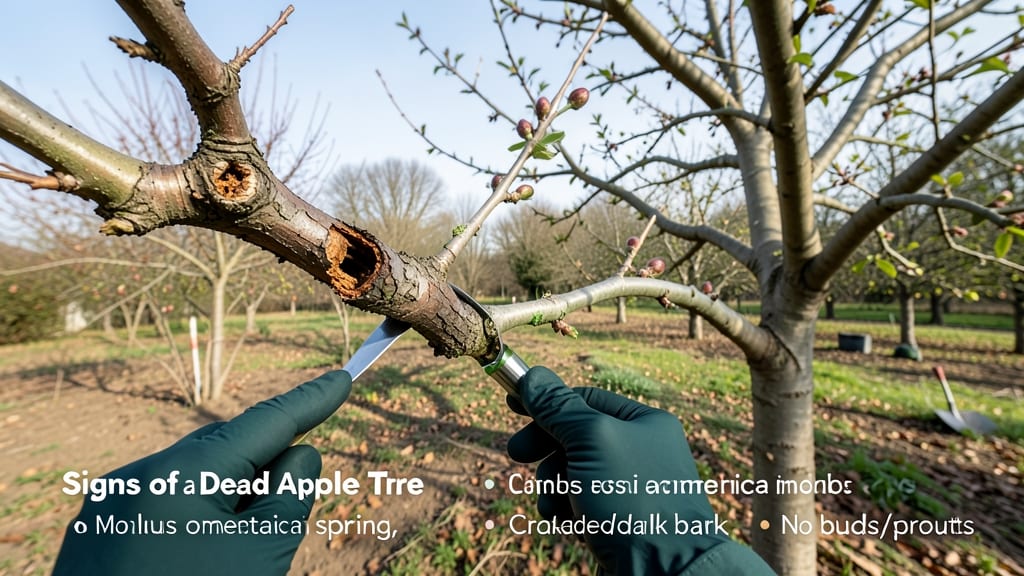
Determining if your apple tree is dead requires checking for brittle branches, peeling bark, and no new growth even after spring—though winter dormancy can mimic death. Always verify signs of life before deciding to prune or replace it.
Apple trees often fool gardeners into thinking they're dead when they're just dormant or struggling. 🌳 The key is to look beyond the obvious—healthy trees show signs of life even in winter, like buds swelling or slight green under bark.
I've seen many "dead" trees revive after proper care, so don't give up until you've ruled out reversible issues like drought stress or pest damage.
Start by testing branches for flexibility—snapping easily means trouble, but slight bending suggests life remains. Check the bark for cracks or peeling, which can indicate disease or dehydration. Remember, early spring is the best time to assess, as that's when trees should begin showing new growth if they're still alive.
For a definitive check, scrape a small section of bark to look for green tissue underneath—this is the tree's living layer. If you see only brown or black, it's likely dead. But if there's any green, your tree still has a chance with proper care and attention.
💡 In This Article
- 5 Key Signs an Apple Tree Is Truly Dead
- How to Revive a Stressed Apple Tree Before It Dies
5 Key signs an apple tree is truly dead
Apple trees exhibit distinct physical changes when they're truly dead, starting with branch brittleness that goes beyond normal winter stiffness. Healthy branches should bend slightly without snapping—think of a willow branch's flexibility.
When dead, branches break cleanly with a hollow sound when snapped, revealing dry, brown interior rather than green vascular tissue. This occurs because the tree's xylem vessels (which transport water) collapse without pressure, creating that characteristic empty core.
The bark becomes another critical indicator, especially when it peels or cracks in large, irregular sections. Healthy bark should remain intact with minor seasonal variations, but dead trees develop thick, dark patches where the cambium layer (the tree's growth engine) has died.
Run your fingers along the trunk—if you feel a rough, almost powdery texture instead of smooth bark, that's a strong sign of cellular death. Compare it to a dried-out twig: the same desiccation happens but on a larger scale.
New growth patterns provide the most definitive clues, particularly after late winter or early spring when buds should swell. Look for pinkish buds on branches—these indicate dormancy, not death. If you see no buds at all and the previous year's leaves remain brown and brittle, that's a red flag.
Even more telling is the leaf scar test: gently scrape a small area of bark to expose the cambium layer. Green tissue means life; if it's black or crumbly, the tree has succumbed to disease, pests, or environmental stress.
Root health often gets overlooked, but it's crucial for diagnosis. Dig a small trench around the base to check for white, firm roots—these indicate living tissue. Dead roots turn dark brown or black and feel mushy when pressed.
The root flare (where trunk meets soil) should be visible and firm; if it's sunken or rotting, that's a sign of advanced decline. Remember, apple trees can lose up to 30% of their root system before showing above-ground symptoms, so this underground check is vital.
Seasonal exceptions complicate diagnosis, especially during winter dormancy when trees naturally appear lifeless. The key difference is timing: dormant trees show bud swelling by late April in most climates, while dead trees remain completely still.
I've seen apple trees in Zone 5 (where winters drop to -20°F) survive by entering deep dormancy, but they'll still have slightly green bark when scraped. If your tree shows no signs of waking by mid-May, it's likely beyond revival.
Consider these environmental factors that mimic death: prolonged drought (causing bark splitting), fire blight (blackened branches), or girdling roots (roots growing around the trunk). Each creates distinct symptoms—drought-stressed trees have vertical bark cracks, while fire blight leaves oozing cankers.
Always check for these before concluding your tree is dead, as some conditions are treatable with proper care.